【Deep Dive Essays】The Clove Hitch: A Knot You Can Tie Fast and Adjust on the Fly
北村 智明
稜線ディープダイブ

Japan’s mountains are not merely physical landscapes—they are sacred spaces woven into the nation’s spiritual fabric. For foreign hikers, understanding Japanese trail culture goes beyond practical safety; it opens a window into a worldview where nature, spirituality, and community exist in delicate balance. From the reverent silence on Mt. Fuji’s summit to the unspoken rules of mountain hut etiquette, these cultural codes shape every aspect of the Japanese alpine experience.
[Article Information]
When you hike in Japan, you enter a landscape that has been venerated for over a millennium. Unlike Western alpine traditions that emphasize conquest and individual achievement, Japanese mountain culture is rooted in reverence and humility. This distinction is not merely philosophical—it manifests in concrete behaviors that foreign visitors are expected to observe.
The consequences of cultural missteps can be significant. In recent years, overtourism and cultural insensitivity have prompted local communities to implement stricter regulations. Mt. Fuji, for example, now charges a mandatory climbing fee of ¥4,000 (starting from the 2025 season on all main trails) and strictly limits access during peak season. Understanding and respecting local customs is not just polite—it is increasingly necessary for continued access to these sacred spaces.
This essay examines the cultural framework that shapes hiking behavior in Japan, with particular focus on:
Examples draw primarily from Mt. Fuji and the Japanese Alps (North, Central, and South Alps), as these ranges receive the highest concentration of foreign visitors.
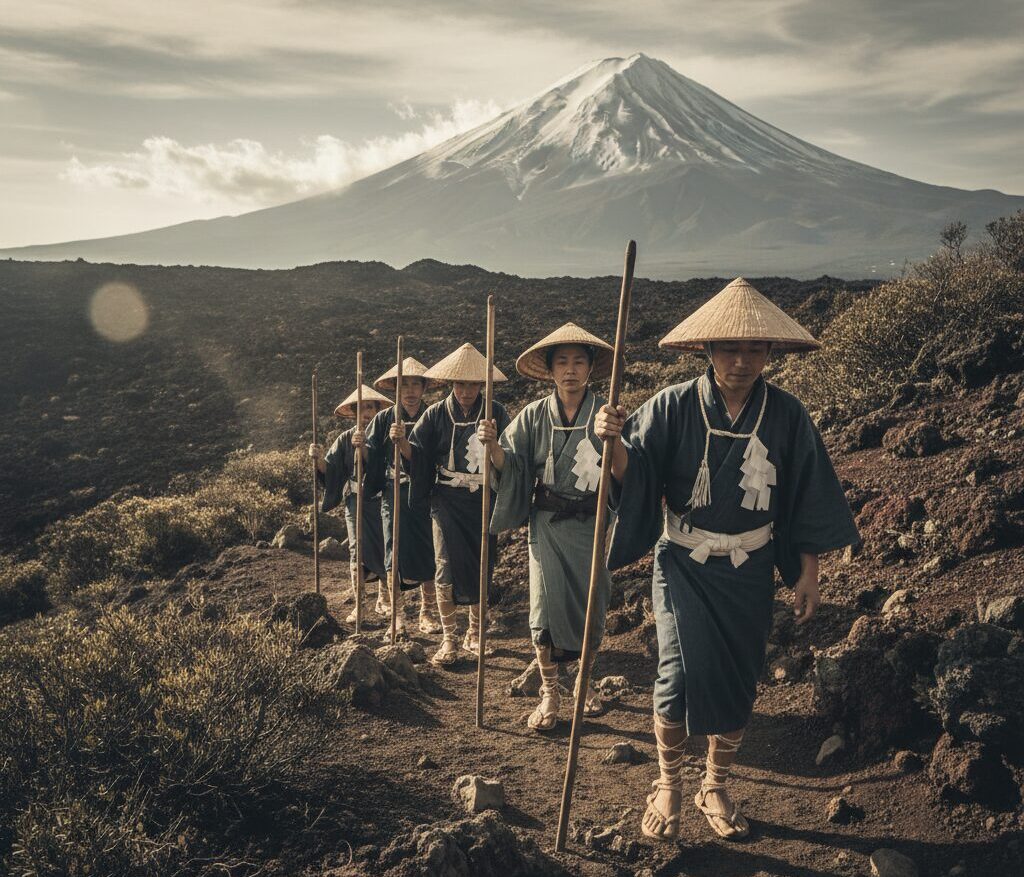
To understand Japanese mountain etiquette, one must first grasp the nation’s unique religious landscape. Unlike the monotheistic traditions dominant in the West, Japanese spirituality is syncretic—multiple belief systems coexist and interpenetrate.
Shinto, Japan’s indigenous animistic religion, views nature itself as divine. Mountains are considered shintai (神体), physical embodiments of kami (gods or spirits). This is not metaphorical. When a Japanese hiker bows before entering a trailhead shrine, they are acknowledging entry into sacred territory.
Buddhism, introduced from China in the 6th century, contributed concepts of asceticism and enlightenment through hardship. Mountain pilgrimage became a path to spiritual awakening. Many Japanese peaks—Mt. Fuji, Mt. Tateyama, Mt. Hakusan—developed as Buddhist pilgrimage sites.
Shugendō, a uniquely Japanese synthesis of Shinto, Buddhism, and esoteric practices, formalized mountain asceticism. Yamabushi (mountain monks) still practice on routes like the Dainichi-dake traverse in the North Alps, and hikers may encounter them performing rituals.
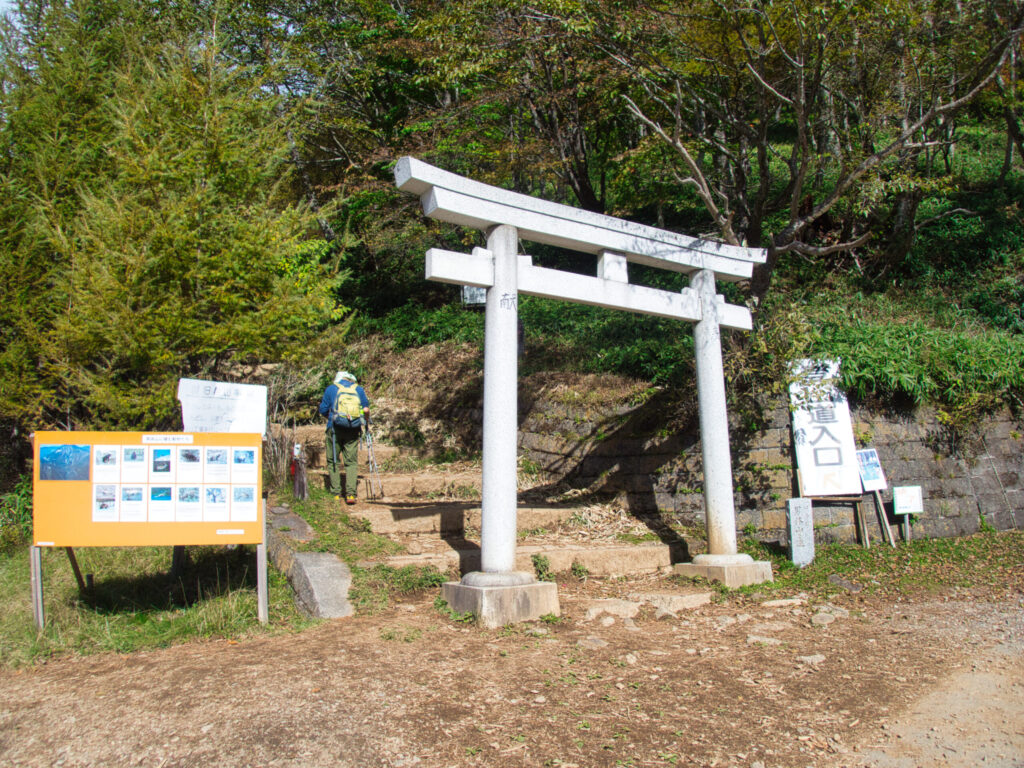
In Japanese cosmology, mountains occupy a liminal zone between the human world (sato, 里) and the realm of the divine (yama, 山). This boundary is often marked by a torii gate or small shrine at the trailhead. Crossing this threshold is symbolically significant—you leave the mundane world and enter sacred space.
This worldview has practical implications:
Japanese spirituality emphasizes ritual purity. Kegare (穢れ), often translated as “pollution” or “impurity,” can result from death, illness, or disrespect toward sacred space. Historically, this concept restricted access—menstruating women, for example, were forbidden from climbing certain mountains until the late 20th century.
While such prohibitions have largely disappeared, the underlying concern for purity persists. Hikers are expected to:
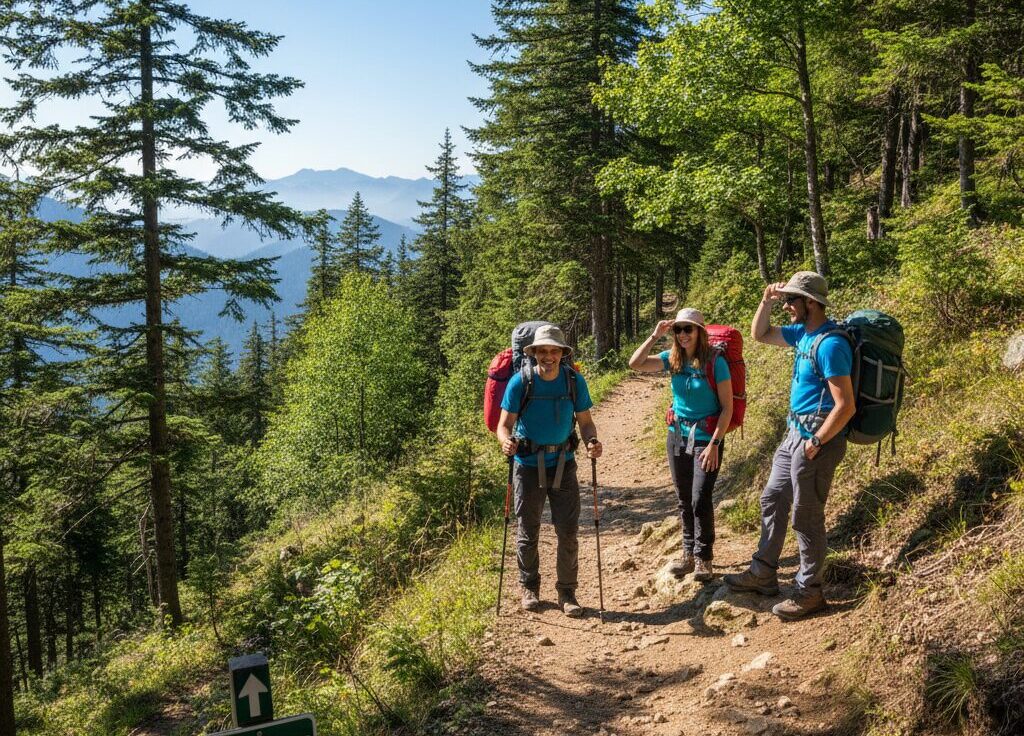
On Japanese trails, hikers typically exchange brief greetings when passing: “Konnichiwa” (hello) or “Otsukaresama” (thank you for your effort). This ritual serves multiple functions—it confirms mutual awareness, expresses solidarity, and maintains social connection in isolated environments.
However, context matters. On crowded trails like Mt. Fuji’s Yoshida route during climbing season, constant greetings become impractical. Conversely, on remote routes in the South Alps, failing to greet another hiker may be perceived as rude or even suspicious.
Key principle: Read the situation. When in doubt, a simple nod or “Konnichiwa” is appropriate.
Japanese trail etiquette follows clear hierarchies:
The proliferation of social media has created new friction points. While photography is generally accepted, consider:
Japanese culture values wa (和), social harmony achieved through restraint. On trails, this translates to:
Japanese hiking groups operate with clear structure. If hiking with a Japanese group:
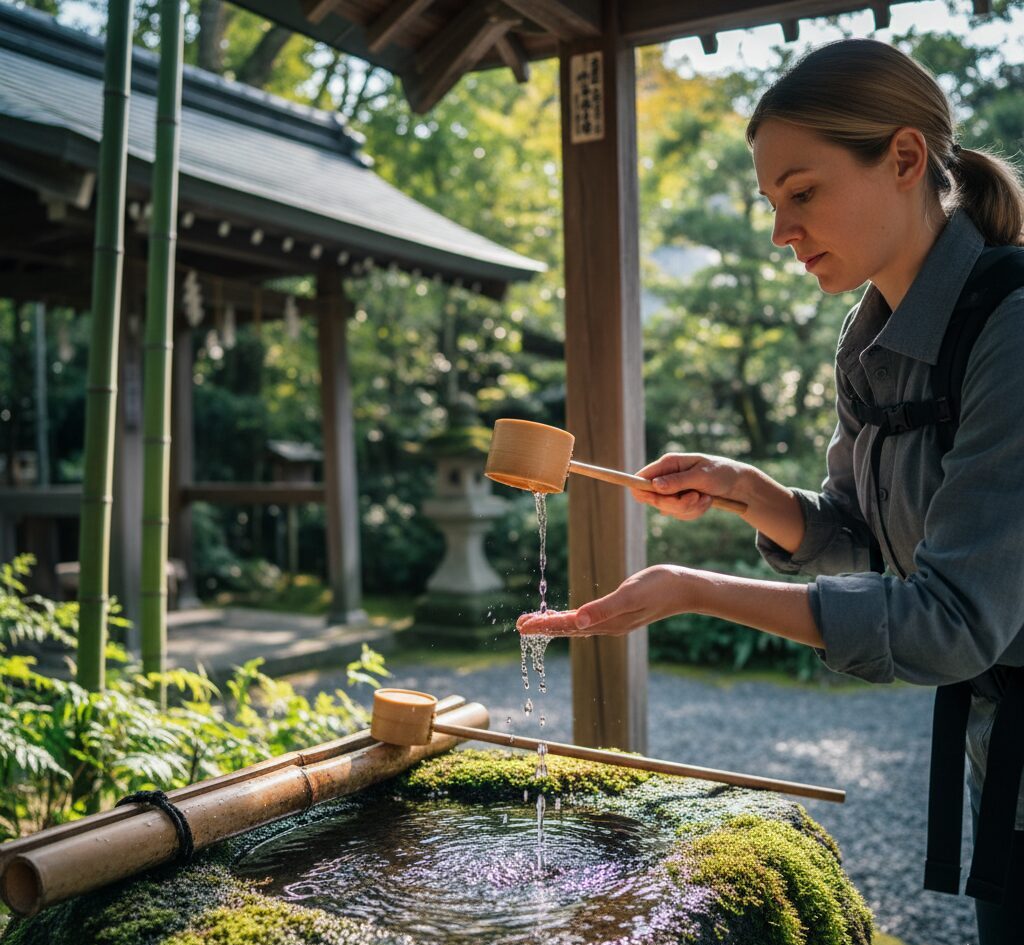
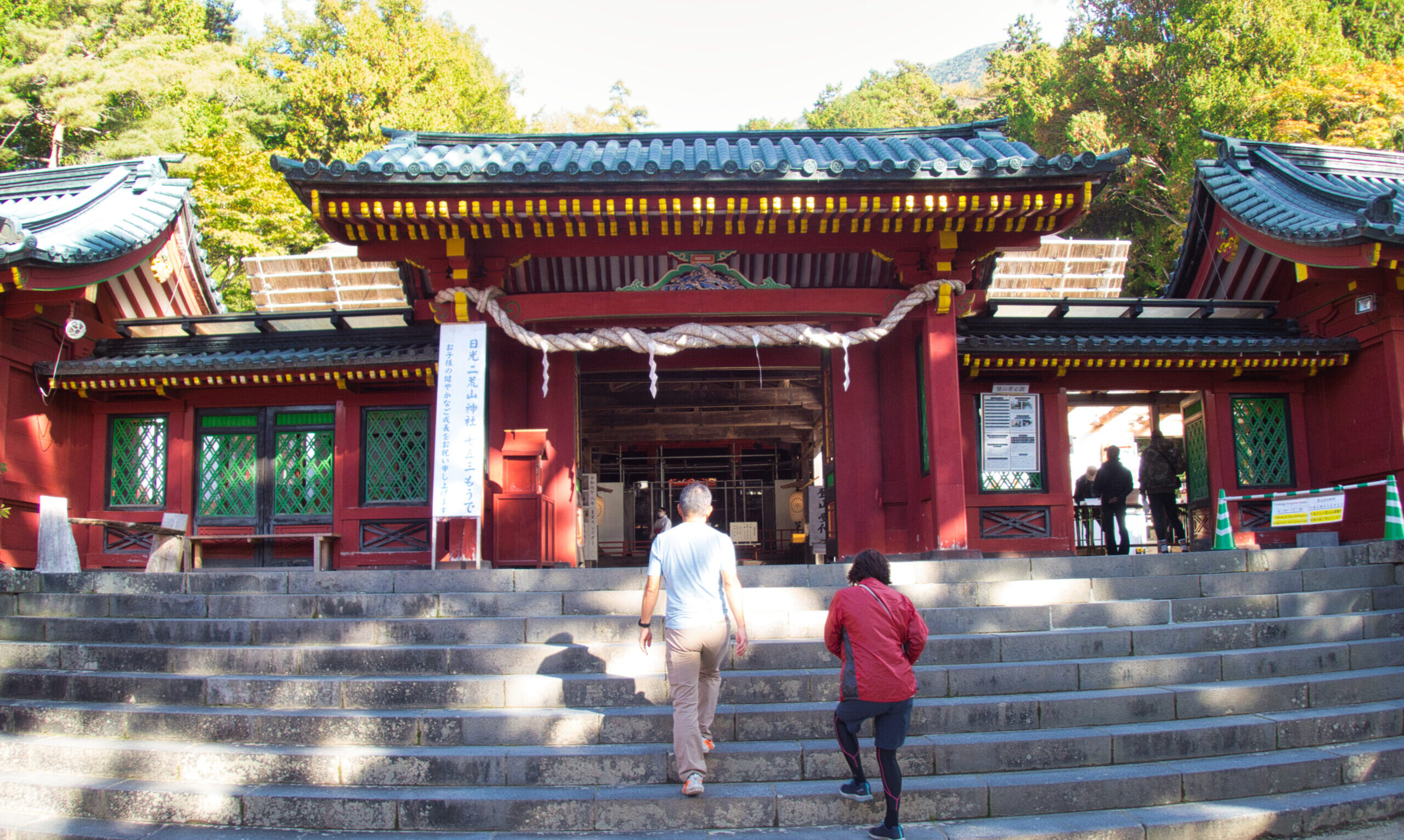
Many Japanese trails begin at shrines. These are not tourist attractions—they are active religious sites. Proper etiquette includes:
1. The Torii Gate
The torii (鳥居) marks the boundary between secular and sacred space. When passing through:
2. Purification at the Chōzuya
Before approaching the main shrine, purify yourself at the chōzuya (手水舎), a water basin:
This ritual is not optional—it is the minimum courtesy before entering sacred space.
3. Prayer at the Main Shrine
If you wish to pray:
Non-religious visitors are not required to pray, but should observe respectful silence and not treat the shrine as a photo backdrop while others are praying.
Many Japanese peaks have small shrines at the summit. Mt. Fuji’s summit hosts multiple shrines, including the Kusushi Shrine and the remains of sacred Shinto structures. The North Alps feature shrines on peaks like Mt. Yari-ga-take and Mt. Hotaka-dake.
Cultural note: These are not decorative. Climbers often leave small offerings (coins, sake, rice) and pray for safe passage. Foreign hikers need not participate, but should:
Mt. Fuji (Fuji-san, 富士山) is Japan’s most sacred mountain, a UNESCO World Heritage site recognized not for natural beauty alone but for cultural significance. The entire mountain is considered the shintai (body) of the goddess Konohanasakuya-hime.
Special considerations for Mt. Fuji:
Some mountain routes pass Buddhist temples, particularly in the Northern Alps (e.g., Murodo near Mt. Tateyama). Temple etiquette differs slightly from shrines:
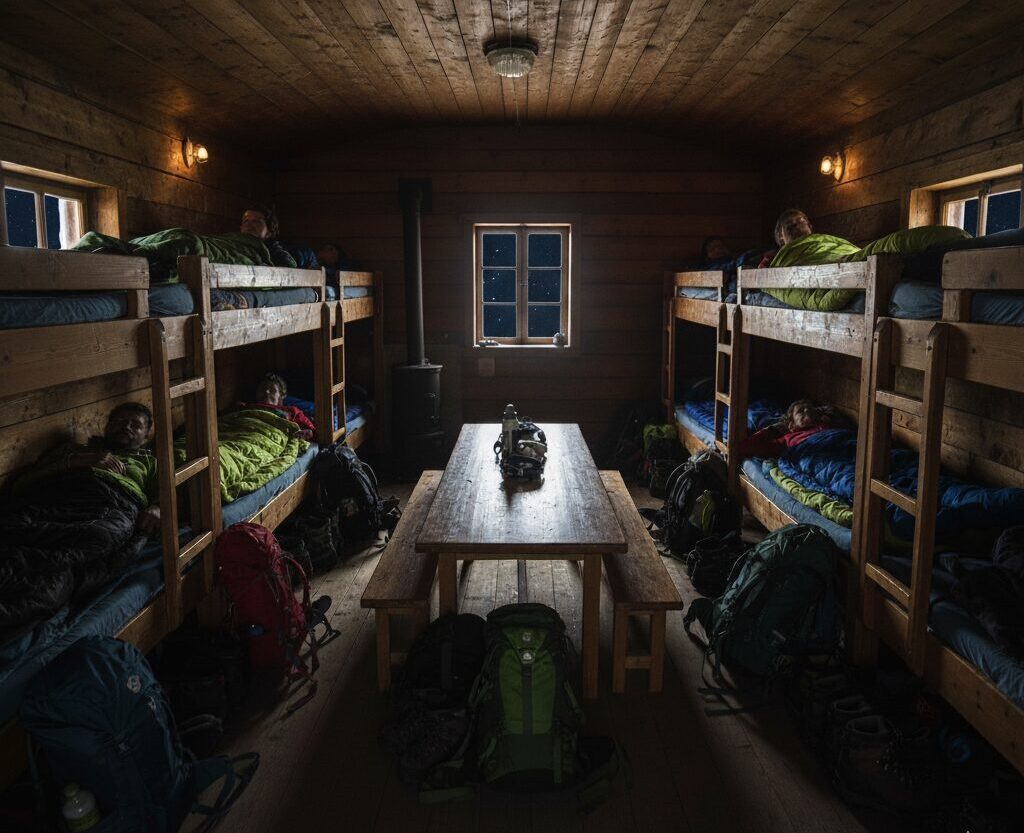
Japanese mountain huts (yamagoya, 山小屋) operate differently from Western alpine huts. They are:
Key behaviors:
Upon Arrival:
Sleeping Areas:
Meals:
Departure:
In popular hiking areas, you may encounter:
Mountain Guides: Japanese guides are certified professionals. If you observe a guided group, do not interrupt or ask to join impromptu. Respect their schedule and group cohesion.
Local Residents: In villages near trailheads (e.g., Kamikōchi in the North Alps, Hakuba in the Central Alps), be mindful that tourism is both livelihood and burden. Small courtesies matter:
Search and Rescue: Japan has professional rescue services, but they are expensive. Foreign hikers sometimes assume rescue is free (as in some European countries). It is not. Carry insurance and do not take unnecessary risks that could require rescue.
Japanese environmental philosophy centers on satoyama (里山)—the managed border zone between human settlement and wilderness. This concept implies:
This worldview differs from Western wilderness preservation models. Japanese hikers may pick edible plants (sansai, 山菜) on trails, a practice that would be taboo in U.S. national parks. However, overharvesting is condemned.
For foreign hikers: Foraging requires local knowledge and legal permission. Do not assume you may take plants or mushrooms.
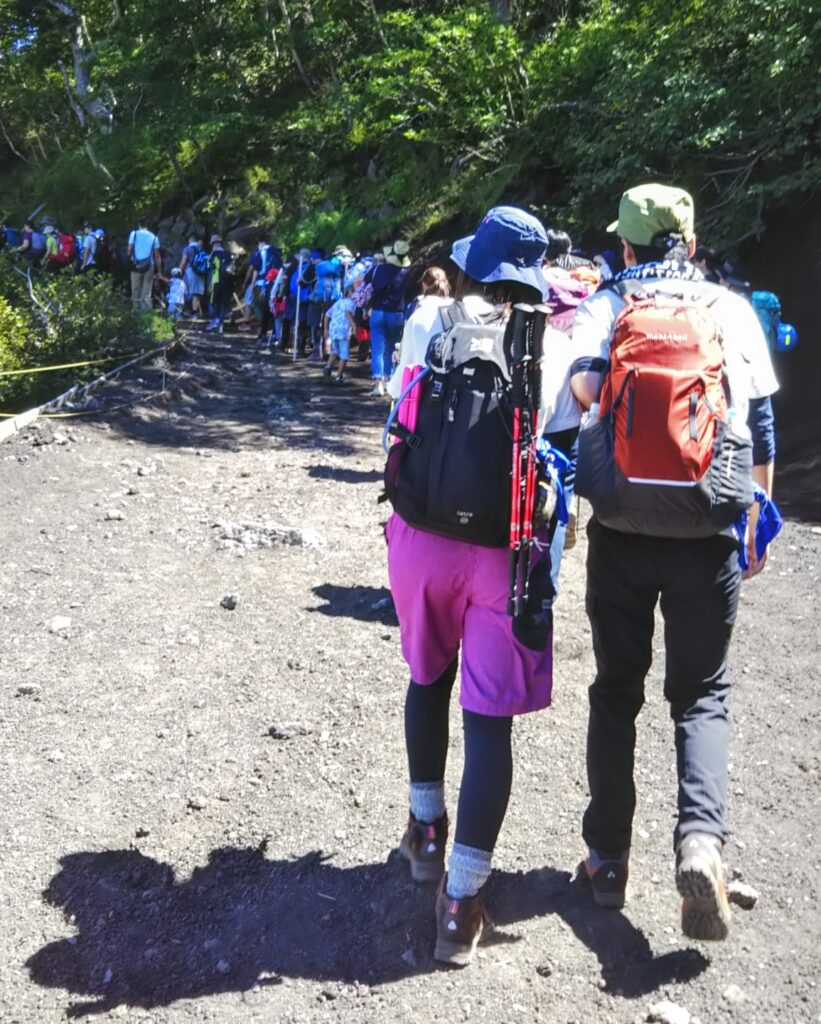
Mt. Fuji now sees over 300,000 climbers annually, many foreign tourists. This has created severe problems:
In response, authorities have implemented:
Cultural implication: The Japanese public increasingly views foreign hikers with ambivalence. Demonstrating cultural sensitivity is not just personal courtesy—it affects future access for all visitors.
Climate change is altering Japan’s mountains rapidly. Glaciers in the North Alps are shrinking, alpine flora is shifting, and typhoons are intensifying. For Japanese communities, this is not merely environmental—it is spiritual loss.
Respectful awareness: Acknowledge that climate change affects not just ecosystems but cultural heritage. Support conservation efforts and minimize your carbon footprint when visiting.
Before the Trail:
At Trailheads and Shrines:
On the Trail:
At Mountain Huts:
Environmental Responsibility:
While this guide focuses on Mt. Fuji and the Alps, note that:
When in doubt, observe and emulate Japanese hikers around you.
Japanese mountain culture embodies yama no kokoro (山の心)—the heart or spirit of the mountain. This is not sentimental. It describes a mindset of humility, awareness, and reciprocity.
Foreign hikers who embrace this mindset report transformative experiences. The mountains of Japan offer not just physical challenge or scenic beauty, but an invitation into a worldview where humans are guests, not conquerors, in the natural world.
Understanding and respecting Japanese cultural norms is the entry point to this deeper experience. The rituals may seem formal, even rigid, at first. But they serve a purpose: they maintain the wa (harmony) that allows millions of people to share fragile mountain environments sustainably.
As a foreign visitor, your respectful participation in these norms is both a courtesy to your hosts and a gift to yourself—an opportunity to see mountains, and your place within them, through new eyes.
Hiking in Japan is an act of cultural participation, not just athletic endeavor. The social codes governing trail behavior, shrine etiquette, and community interaction reflect a centuries-old relationship between people and mountains—a relationship grounded in reverence, reciprocity, and restraint.
For foreign hikers, mastering these codes requires effort. You will make mistakes. The key is to approach with humility and willingness to learn. Japanese mountain communities are generally forgiving of well-intentioned errors from visitors who demonstrate respect.
The reward for this effort is profound. When you bow before a torii gate, purify your hands at a chōzuya, and walk quietly through a sacred landscape, you participate in a living tradition that has shaped Japanese culture for over a millennium. You become, temporarily, part of a story larger than yourself.
This is the gift of Japanese mountains—not conquest, but connection. Not dominance, but dialogue. Not a summit selfie, but a silent moment of gratitude on sacred ground.
May your journeys in Japan’s mountains be safe, respectful, and transformative.
[Summary Box]
Key Takeaways:
Essential Phrases:
Further Reading:
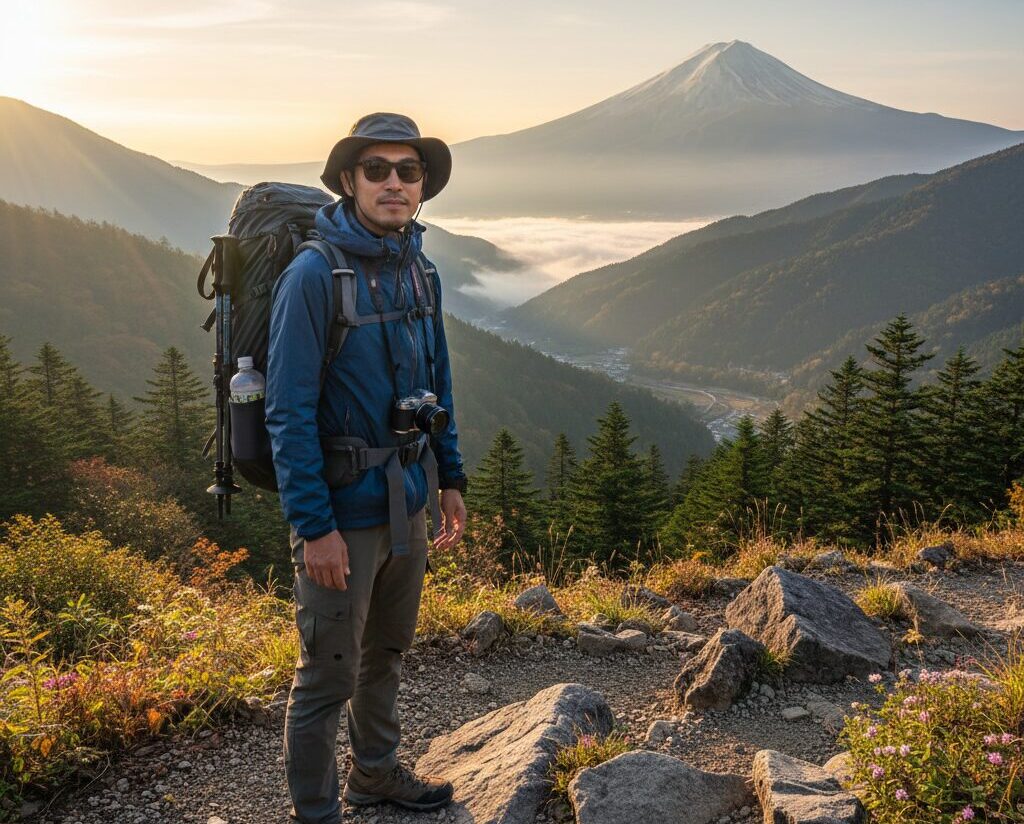
A comprehensive guide to choosing the right equipment for Japan’s humid, variable mountain conditions. Learn about the “three sacred treasures” and where to buy or rent gear.
Read More →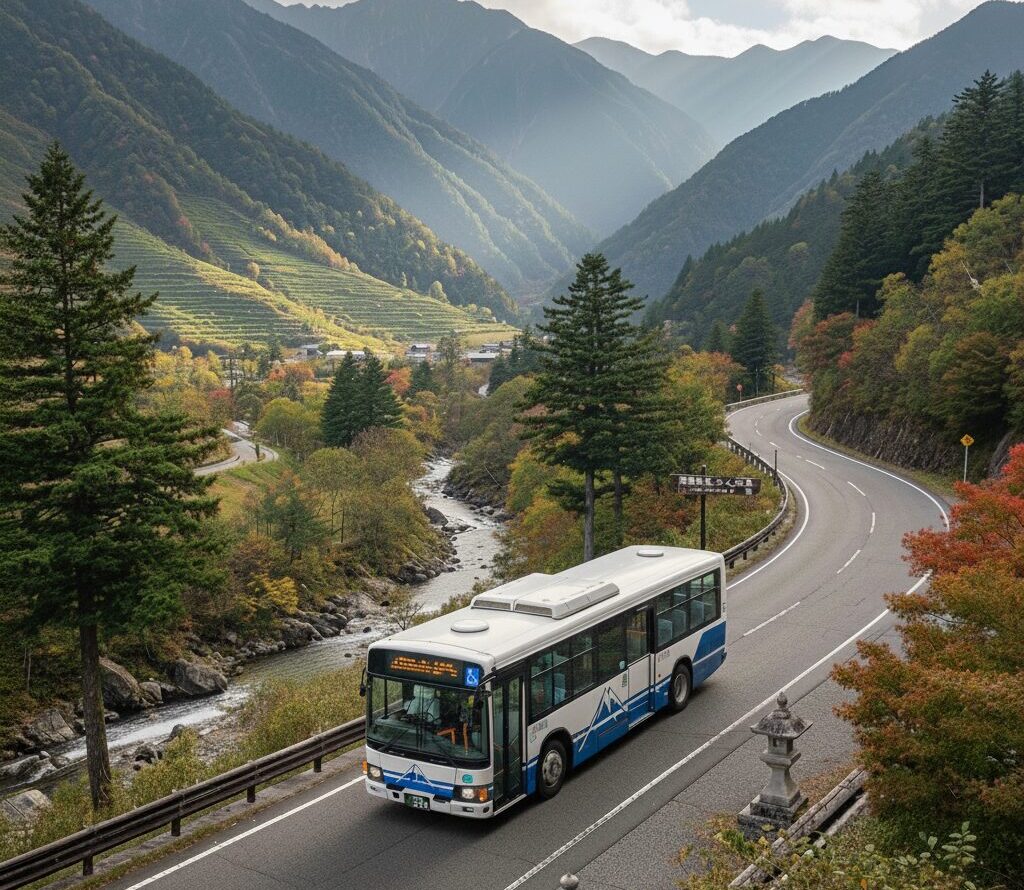
Master Japan’s complex transportation system to reach mountain trailheads efficiently. Complete guide to trains, buses, rental cars, and practical strategies for smooth mountain access.
Read More →
Learn how to choose mountains suited to your fitness level and understand Japan’s unique hiking challenges including high humidity and steep terrain. Perfect for beginners.
Read More →
Comprehensive preparation for international visitors covering mountain hut systems, cultural etiquette, seasonal considerations, and emergency protocols in Japanese mountains.
Read More →
Essential bear safety guide covering preventive behavior, ecology, and proper responses during encounters. Learn why understanding bear behavior matters more than equipment alone.
Read More →※ This article contains cultural guidance based on contemporary Japanese mountain etiquette. Regional variations exist; when in doubt, observe and emulate experienced Japanese hikers.