【Deep Dive Chronicle】Kakkonda River Kitanomata-zawa: A Circuit Through the Celebrated Gorges of Hachimantai
北村 智明
稜線ディープダイブ
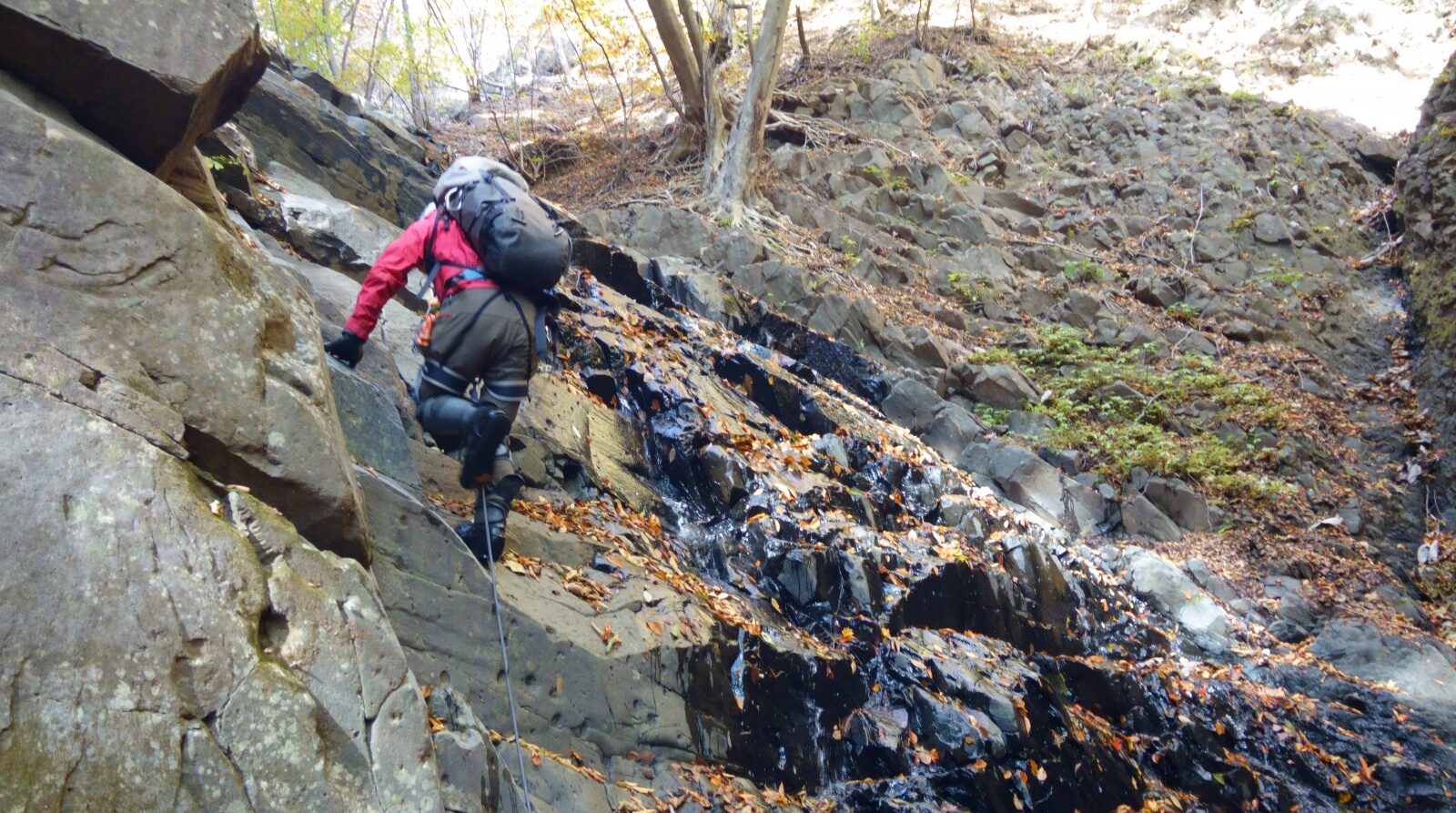
Late autumn in Ura-Myogi, ascending the right fork of Yakyusawa in the Nakakigawa River system. Now liberated from the threat of leeches in November, this valley revealed a beautiful world woven from autumn colors and columnar basalt cliffs. A record of one day’s ascent, climbing as a participant in a training course alongside fellow mountain guides.
I departed Fukushima the previous afternoon. As I headed south on the Kan-Etsu Expressway and entered Gunma Prefecture, the sun was already sinking low. I passed through the town of Shimonita and checked into Hishiya Ryokan at the foot of Mt. Myogi. I went to bed early, preparing for the next morning’s climb.
The following morning, I set out just after 6:00 AM while it was still dim. I drove along the forestry road that follows Nakakigawa River. Even after the pavement ended and turned to gravel, the road continued. I arrived at Fukazawa Bridge, which crosses the confluence with Yakyusawa, almost simultaneously with dawn.
This climb was participation in a stream climbing training course. Seven people in total, including the instructor—all holders of guide certifications. Technical refinement and the desire to explore the unknown valleys of Ura-Myogi brought us to this place.
Yakyusawa Right Fork—located in the Nakakigawa River system of Ura-Myogi, this stream is rated as Grade 1+ for stream climbing (Based on Japanese Alpine Club/Local Standard) and Grade III for climbing (Based on Japanese Alpine Club/Local Standard). Known for its heavy leech population in summer, this unique valley permits ascent only from late autumn through early winter.
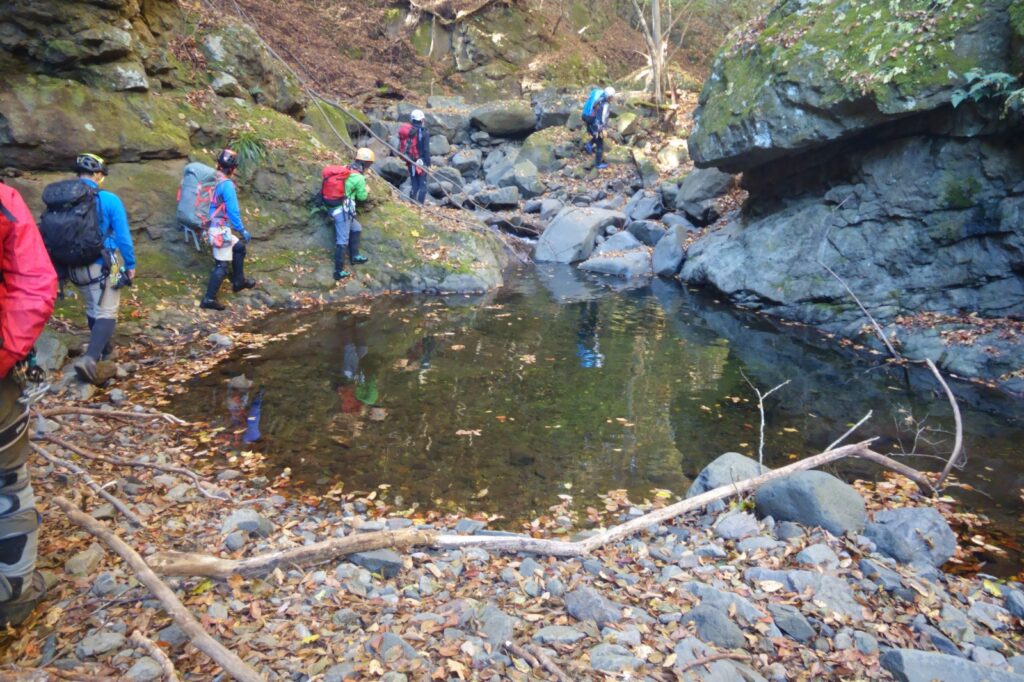
After completing our preparations, we entered the stream from Fukazawa Bridge. The water was not as cold as I had expected. Though it was November, we were still far from the depths of winter. The autumn foliage covering the valley glowed in the morning sun.
My first impression of Yakyusawa Right Fork was of an open valley free of undergrowth. In many streams, even in late autumn, dead grass and shrubs block the way. This stream was different. We could enjoy the scenery woven by rock, water, and autumn colors without obstruction.
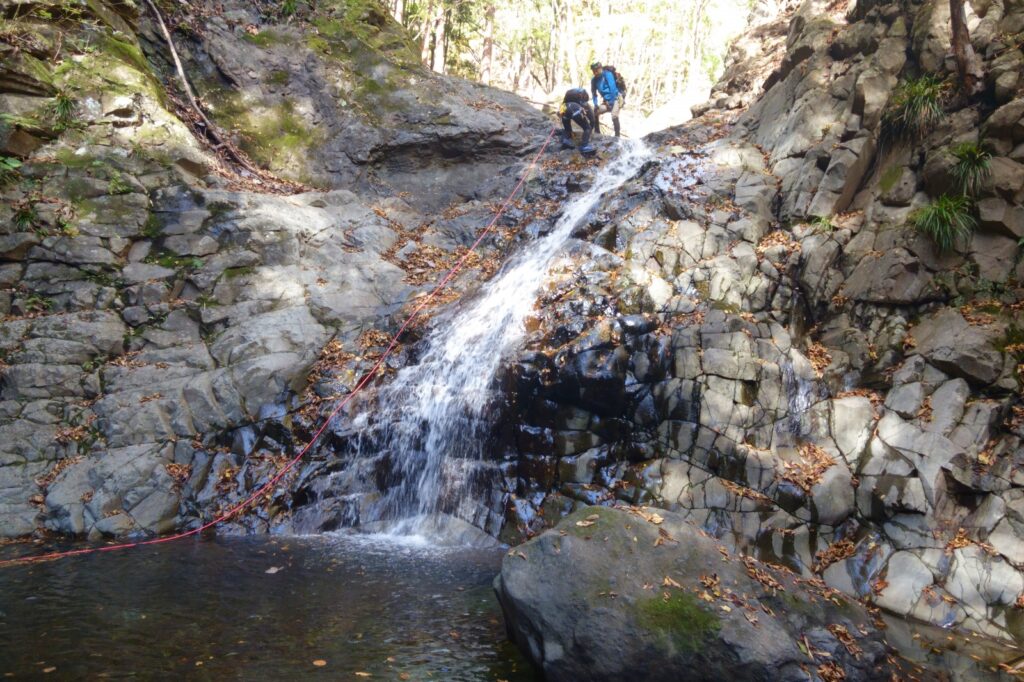
As we gained elevation, the character of the stream gradually changed. After passing through a boulder field (goro), waterfalls began to appear. We passed several small falls, then eventually approached the first crux section of the day: an eight-meter waterfall.
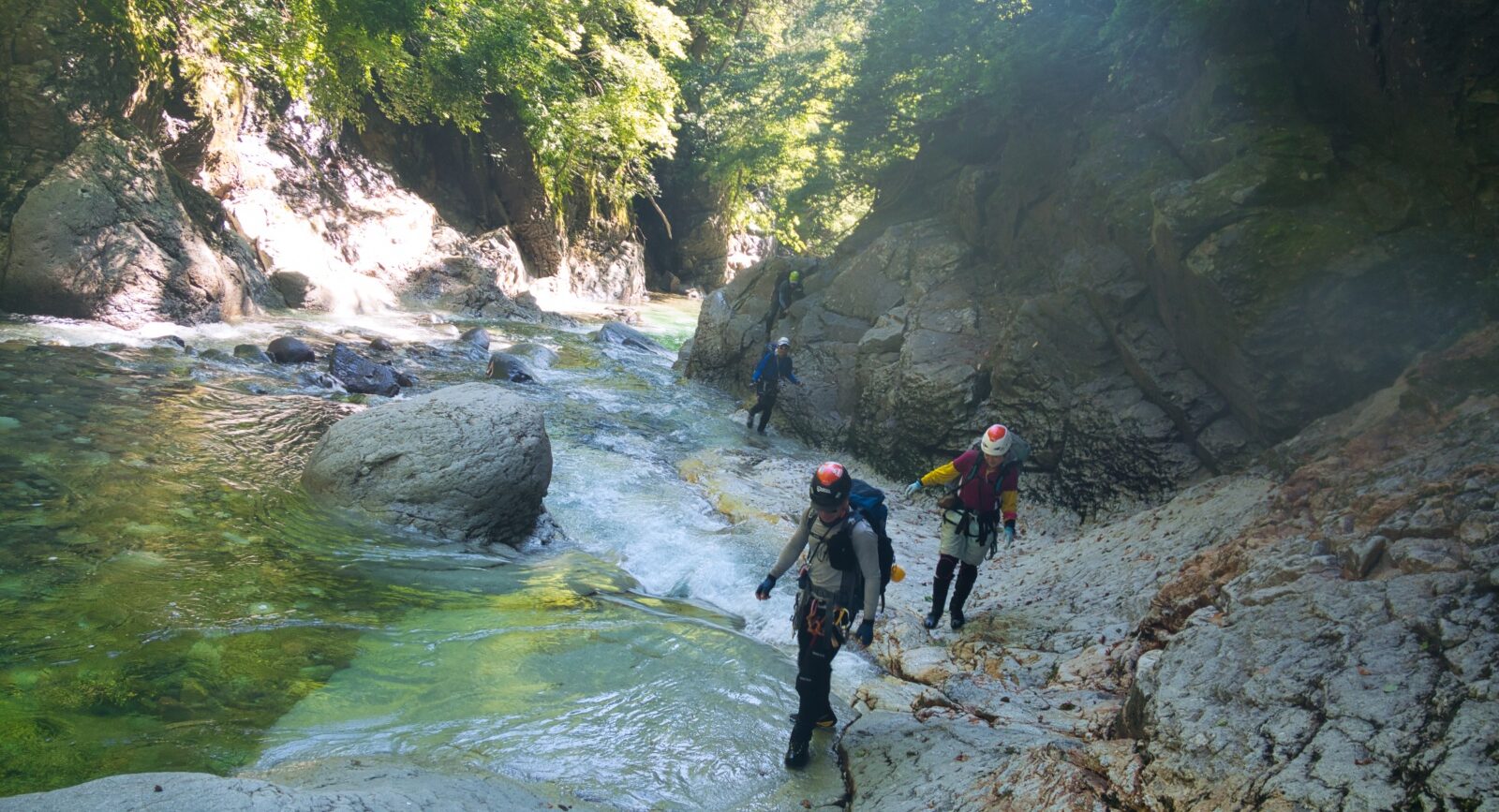
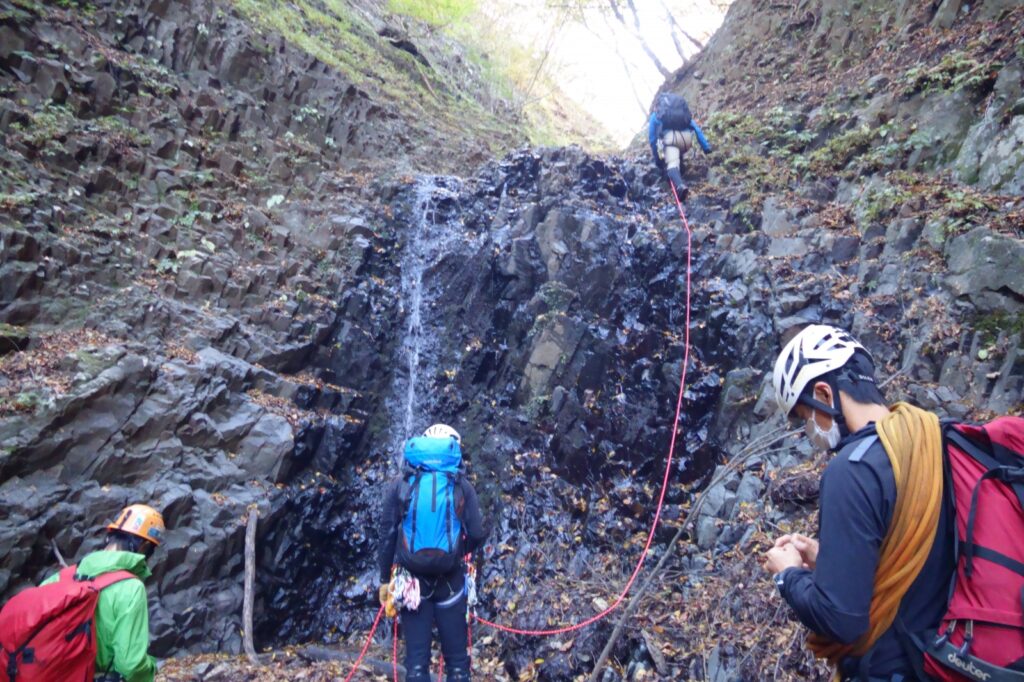
Columnar basalt walls stood vertically before us. The instructor went first, assessing the route. We followed one by one. The holds were plentiful—with reliable three-point contact, it posed no problem. The rock’s texture was good. Though wet, it wasn’t particularly slimy.
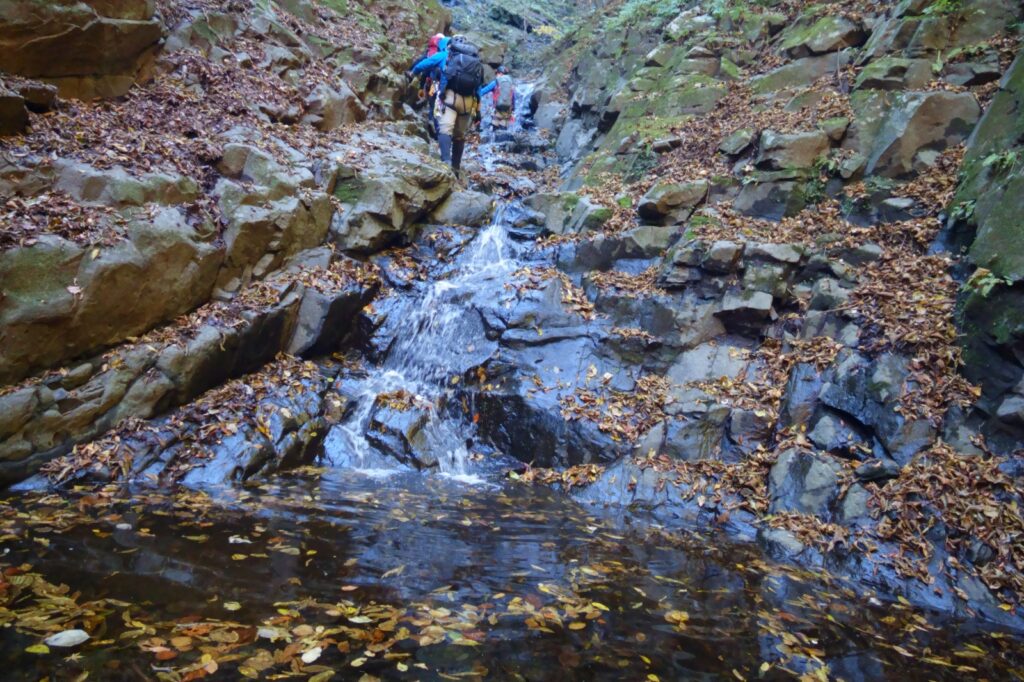
As we climbed higher, a fifteen-meter waterfall came into view. This was the day’s main crux. Columnar basalt pillars stacked in layers, creating a distinctive landscape. With autumn foliage as a backdrop, the gray rock walls stood imposing—a perfect harmony of the ruggedness and beauty characteristic of Ura-Myogi.
Technically, this waterfall wasn’t difficult either. However, the exposure demanded careful climbing. Under the instructor’s guidance, each person climbed at their own pace. Watching my fellow guides move with confidence, I too approached the rock wall.
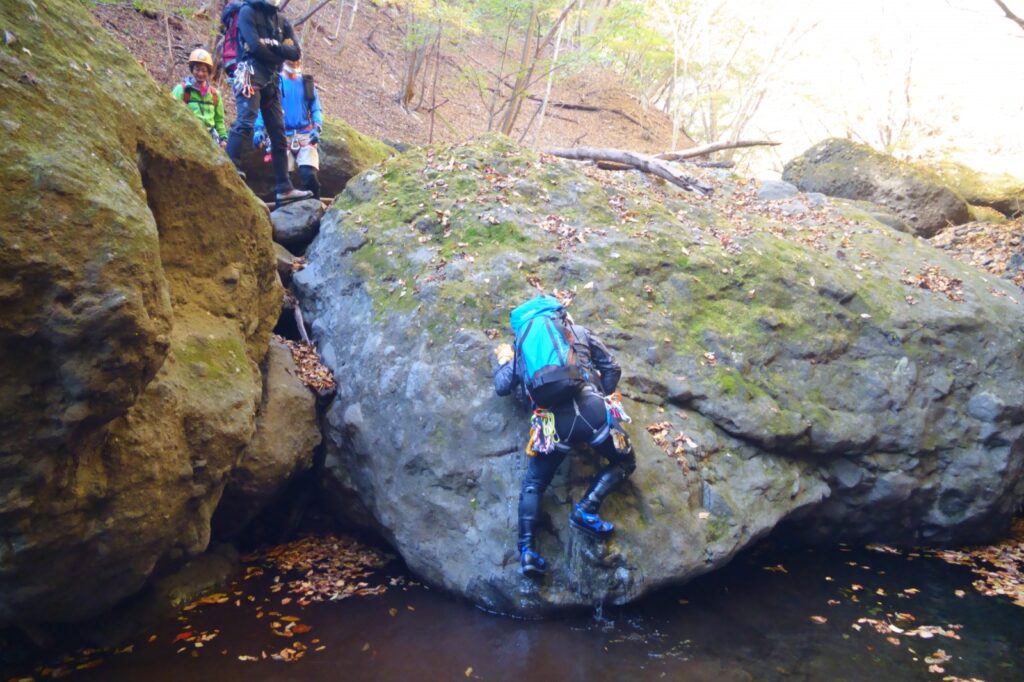
Between climbs, we had time to play on boulder-like rock sections. Though this was a training course, there was no rigidity. While honing our technique, we fully savored the joy of stream climbing. That was the beauty of this training course.
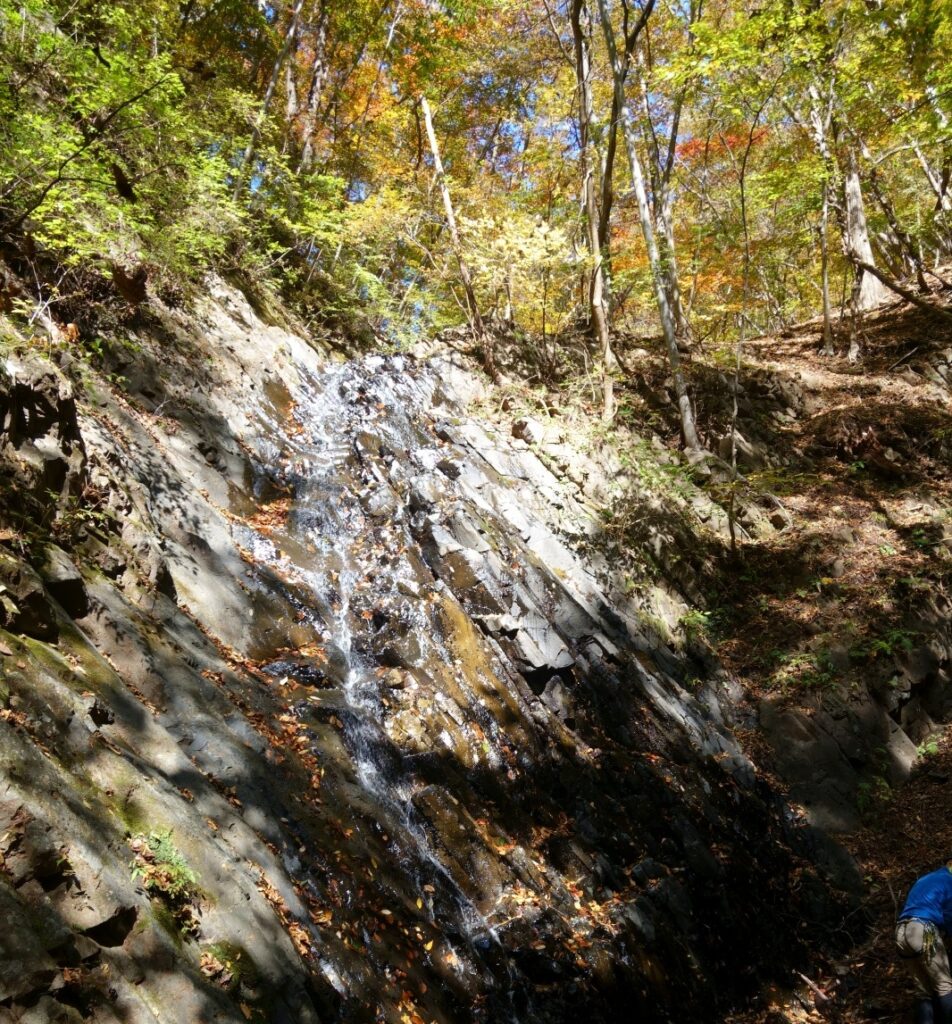
Into the afternoon, we continued our ascent. The stream gradually decreased in gradient, approaching the headwaters. The autumn colors deepened with elevation, transitioning from yellow to orange to red. Because of the undergrowth-free valley, this beauty stood out all the more.
The final approach was relatively easy. Upon reaching the ridgeline, the view opened dramatically. The rugged topography of Ura-Myogi spread before our eyes.
We descended toward the National Lodge. The elevation we had gained on the ascent now fell away. Though fatigue was certainly present, a sense of fulfillment exceeded it. Our footsteps were light despite the weariness.
We arrived at the National Lodge as the sun began to sink. Having completed a long day’s climb, we quietly savored our sense of accomplishment.
Yakyusawa Right Fork, while not particularly difficult technically, is a special valley that can only be entered during the limited period of late autumn. Protected by the natural guardian of leeches, this valley captivates visitors with its autumn colors, columnar basalt walls, and open valley character free of undergrowth.
A day ascending the deep valleys of Ura-Myogi together with fellow guides. Refining technique, appreciating nature. That was the essence of this climb.
[LOG SUMMARY]