【Deep Dive Chronicle】Sukkan-zawa & Sakura-zawa: Ascending the Azure Stream in September
北村 智明
稜線ディープダイブ
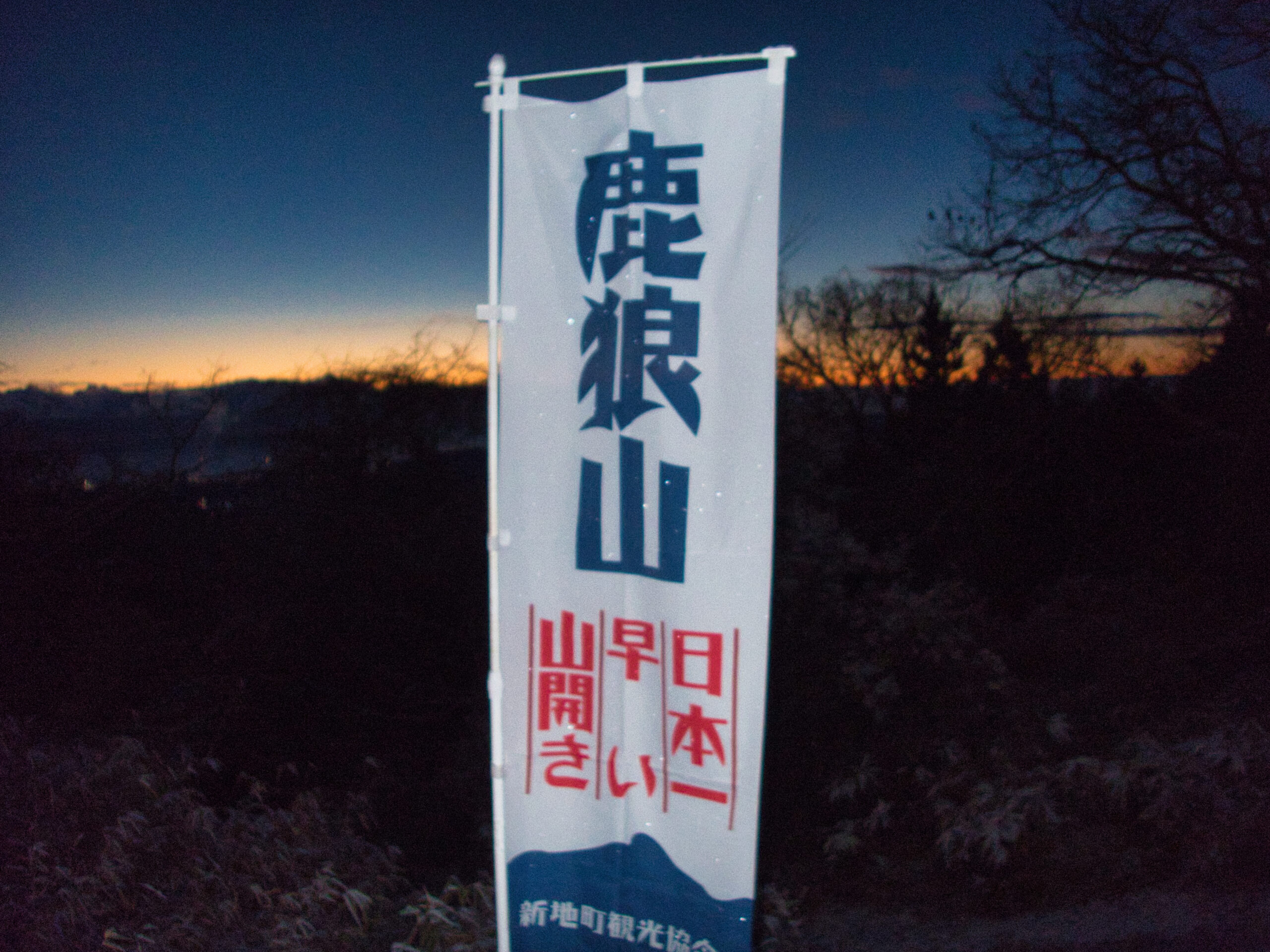
To greet the new year on a mountain. Karou-san, standing on the border of Fukushima and Miyagi Prefectures, offered its first sunrise of the year, and from there a few companions and I carried on to Kamakura-yama and Asagi-yama. It was a day quietly filled with prayer among the hills of Abukuma — a chronicle of New Year’s Day in Reiwa 8, written both as a climber and as someone hoping for a year of safety in the mountains.
I drove north on Route 6 through the darkness. It was just before 5:30 AM, the night not yet fully broken. Beyond the windshield, the black silhouette of the mountain rose faintly into view.
Several years have passed since the start of the Reiwa era. Even the memory of the pandemic that once shook the world has become a distant thing now. But the road to the mountains never changes. Every New Year’s Day, I head for the hills. It is both a prayer and a resolve.
Karou-san sits at 430 meters elevation, straddling the border between Shinchi Town in Fukushima and Marumori Town in Miyagi. It is counted among the Utsukushima Hyakumeizan (the “100 Famous Mountains of Fukushima”), and is known for a rare summit view that takes in both the vast horizon of the Pacific Ocean and the white ridgeline of Zao to the west. With no taller peaks nearby, it has long been loved as a mountain from which one can climb while gazing out at the sea. Its name comes from an old legend of a deity called Tenaga Myojin, who once lived here with a white deer and a white wolf — karou combining the characters for deer (ka) and wolf (rou). Tenaga Myojin was said to reach a long arm out to the Pacific to gather shellfish, and the discarded shells piled up to form the Shinchi Shell Mound, a story still told in the area today. On the Shinchi side, a large-scale New Year’s climbing event draws roughly 2,000 people each year to watch the first sunrise. This time, I joined the smaller “Japan’s Earliest Mountain Opening” event hosted by the Marumori Town Board of Education — a gathering of about 30 people, meeting at 5:00 AM at the Ikiiki Koryu Center Ouchi before setting off from the Osawa Pass trailhead.
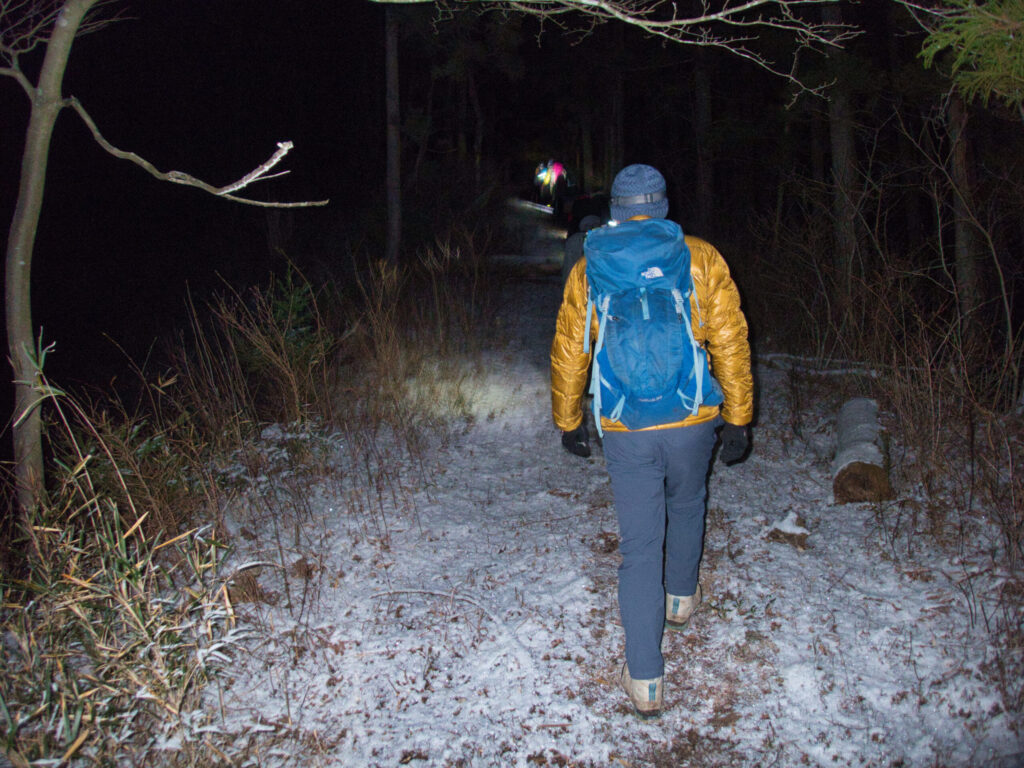
At 5:27 AM, we set off from the Karou-san parking area. Dozens of cars already lined the lot. The Marumori event had capped registration at around 30 people, but many more climbers had also arrived from the Shinchi side, and the trail was already lively. A string of headlamp beams traced the pre-dawn path. In the cold air, the excitement of people heading toward the mountain on New Year’s morning rose almost visibly.
We climbed the Osawa Route, a relatively gentle path, though the ground underfoot was frozen. It wasn’t quite icy enough to warrant light crampons, but I placed each step with care all the same — no one wants to start the new year’s climbing with a clumsy fall. I felt for the grip of my soles against the ice and moved forward carefully.
The cold was about what I’d expect for the season. My breath came out white, and my fingers grew cold even through my gloves. But as my body kept moving, warmth returned from the core outward. The voices drifting from the people around me were full of anticipation for the coming year — “Hope it’s a good one again this year,” “Last year I climbed such-and-such.” Fragments of conversation, caught in the darkness, gave the whole scene a quiet sense of familiarity.
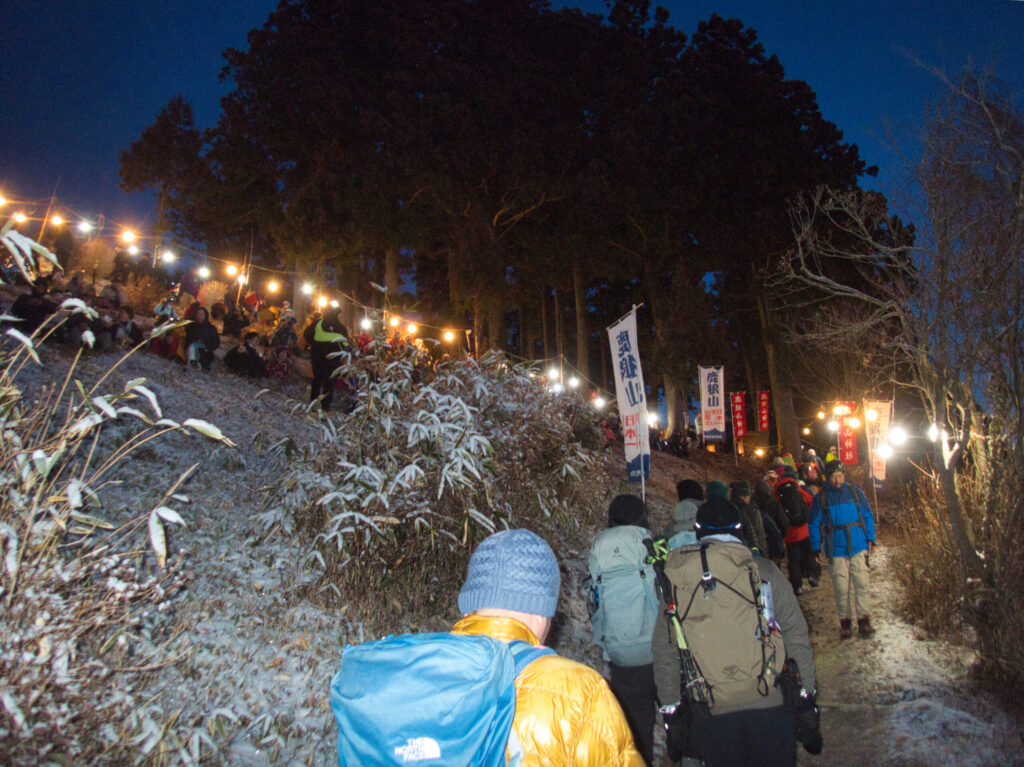
After about 55 minutes of walking, the eastern sky began to lighten faintly. At 6:22 AM, we reached the summit. Many people had already gathered, each waiting for the first sunrise. The small shrine building of Karou Shrine stood quietly nearby — a site that has long served as the spiritual heart of local mountain worship, a faith still carried on today.
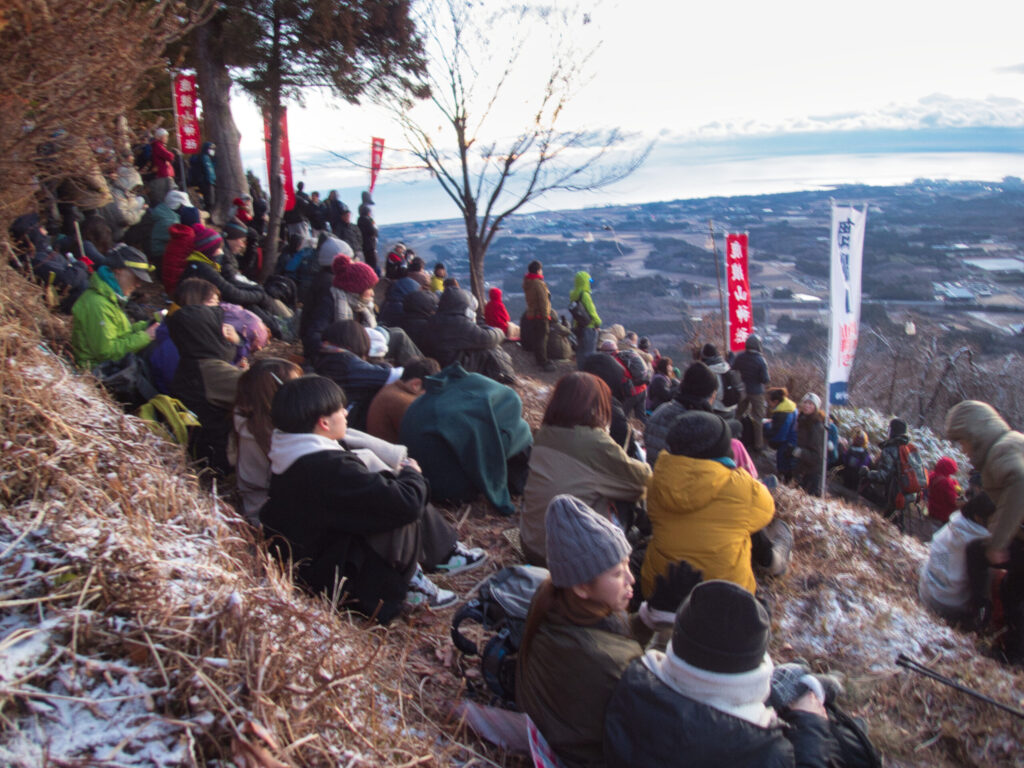
Clouds hung low over the horizon. A flicker of worry crossed my mind — would we miss the sunrise entirely? But there was nothing to do but wait. The weather of the mountains lies beyond anyone’s control.
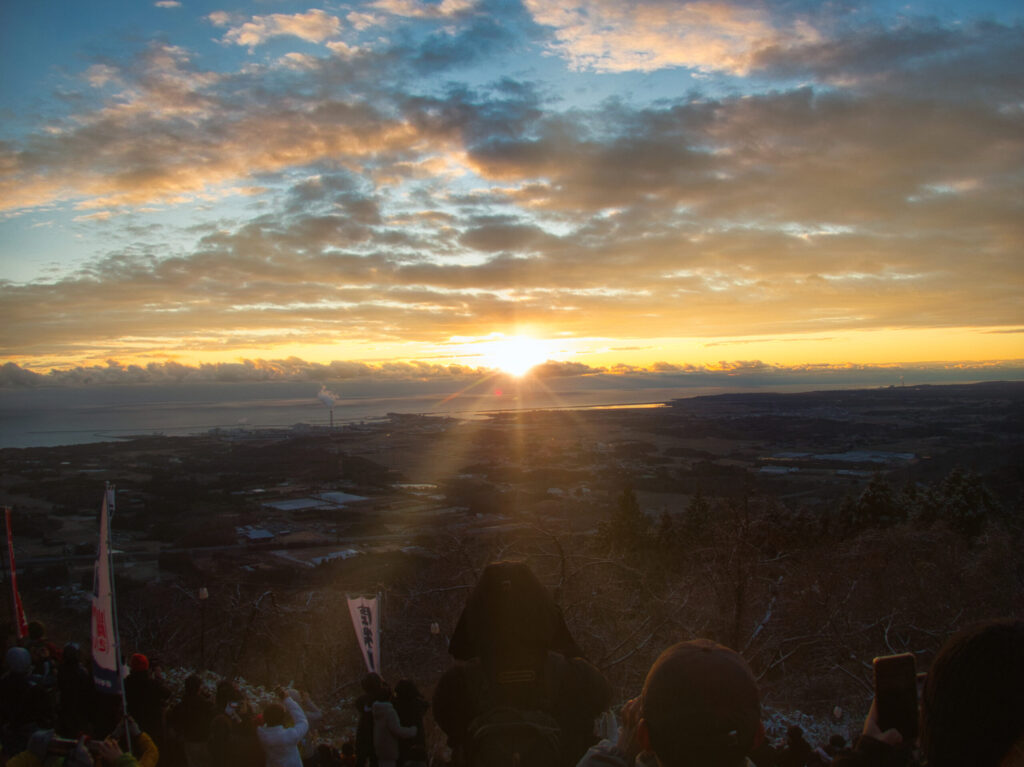
Then, through a gap in the clouds, a thread of vermilion light began to seep through. The sun emerged, breaking the clouds along the horizon, its color spilling out like a sacred flame melting the frozen air. A cheer rose from the crowd. I pressed my hands together and prayed for a safe year in the mountains ahead.
At 7:17 AM, we began our descent. It was a lively one — exchanging New Year’s greetings with climbers passing in the other direction as we slowly lost elevation. “Happy New Year,” “Thank you for another year.” The greetings exchanged on the trail felt warmer than usual.
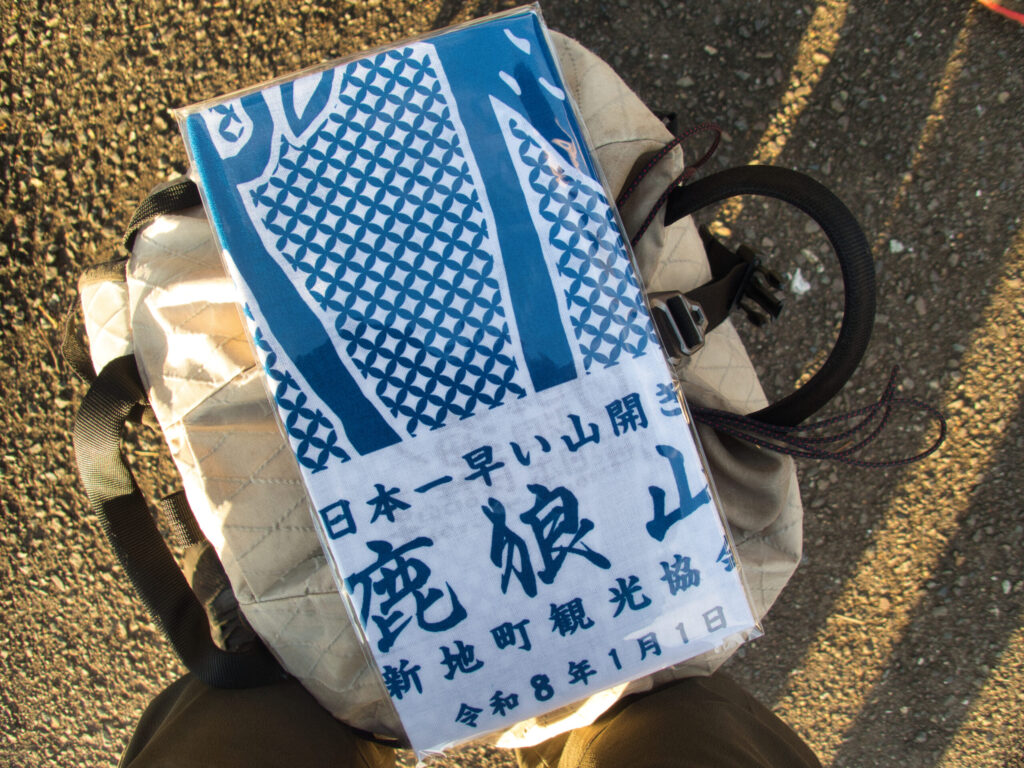
After about 26 minutes, we reached the Karou Onsen trailhead, where a representative from the Shinchi side handed me a commemorative hand towel marking the mountain opening. “Thank you very much,” I said, and he smiled back: “May this be a good year for you too.” That small exchange added a note of warmth to the New Year’s climb.
Continuing down the trail, I returned to the parking area at 8:26 AM. The sun had already climbed high, and a clear winter sky stretched overhead. But the day had only just begun.
Leaving Karou-san behind, a few of us drove on together toward our next destination: Kamakura-yama in Marumori Town. Through the car window, the scenery of low Abukuma hills unfolded, one after another — mountains that, while not especially steep, are deeply rooted in the region’s history and faith.
Kamakura-yama stands 340 meters at the northern edge of the Abukuma Mountains. It has long been a site of devotion to Hayama Shrine, dedicated to a deity of agriculture, and has been cherished by locals as a sacred place to pray for a bountiful harvest. Though low, it climbs steeply; near the summit stands Hayama Shrine itself, and from a rocky outcrop known as “Tengu’s Sumo Ring” (Tengu Zumo Toriba), the whole sweep of the Abukuma range opens up before you. This time we climbed via the Sano Course.
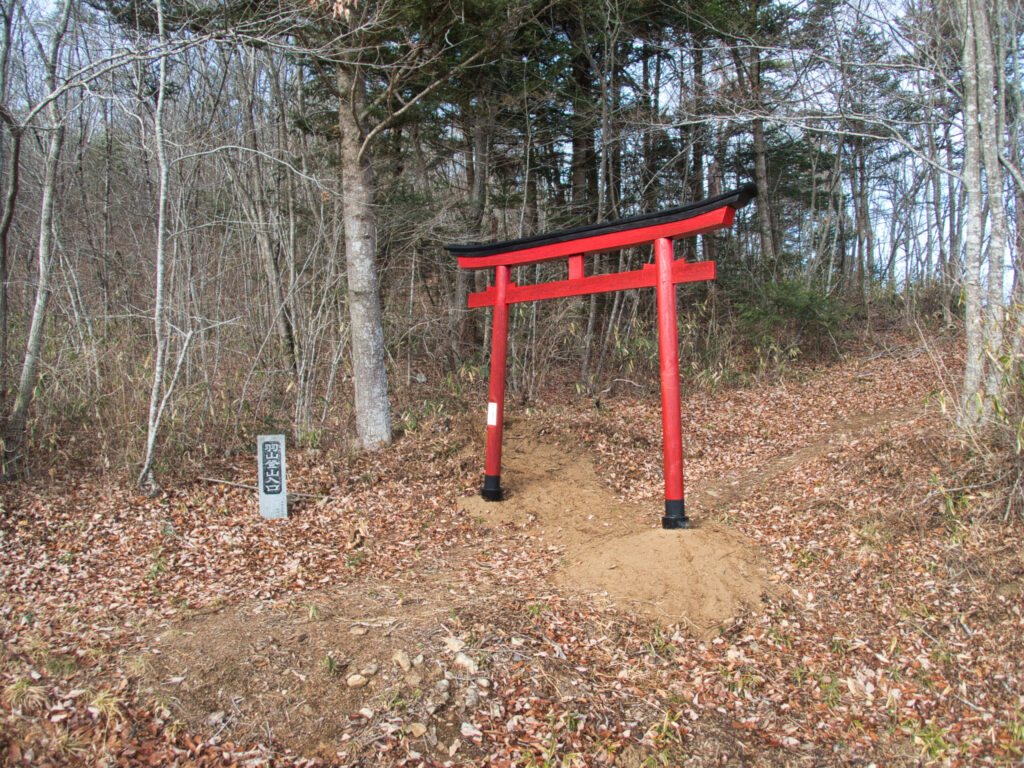
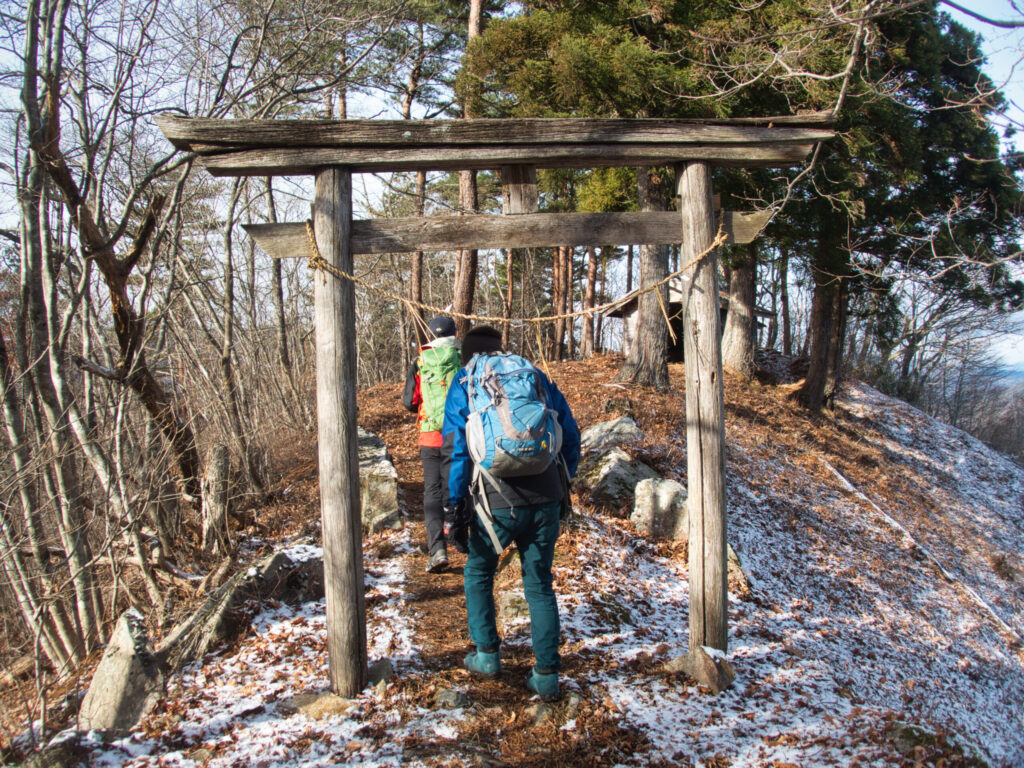
At 9:42 AM, we set off from the trailhead, marked by a stone pillar and a torii gate at the Kamakura-yama entrance. Passing beneath the torii, the cold hit harder than expected. Kamakura-yama is lower than Karou-san, yet the wind here was sharper — a reminder that elevation alone doesn’t determine a mountain’s climate. Perhaps we’d entered a wind corridor. I zipped my soft shell up to the collar.
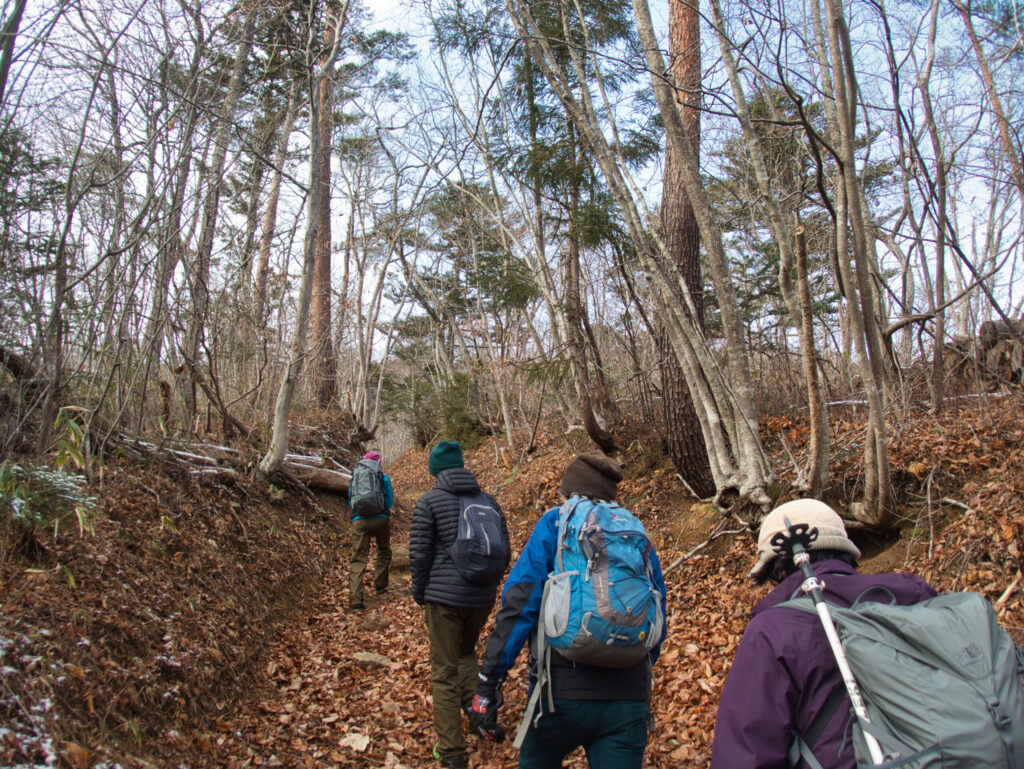
A steep climb continued. Coming right after Karou-san, I could feel the fatigue building in my legs. Still, I kept moving without pause. A New Year’s climb is also a time of dialogue with oneself — treasuring each step, keeping my breathing steady as I climbed.
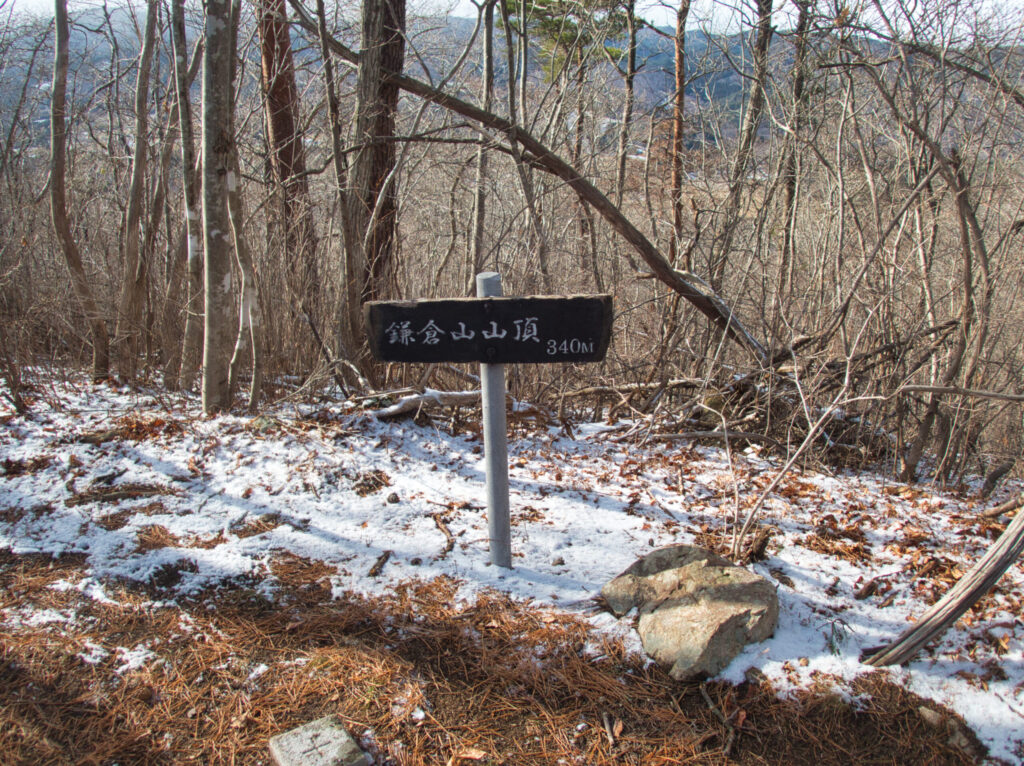
After about 39 minutes, we arrived near the summit at 10:21 AM, greeted by the shrine building of Hayama Shrine. There, S poured us cups of amazake — a sweet, low-alcohol drink made from fermented rice, traditionally enjoyed around New Year’s.
At the first sip, the sweetness of the fermented rice spread through my mouth, sinking all the way into my chilled core. The malted aroma rising through my nose felt distinctly like New Year’s itself. “This is good,” I said, almost without meaning to. We passed the amazake around, talking about where the year’s climbs might take us. “Where do you want to climb this year?” “The Northern Alps, maybe.” “A stream climb would be nice too.” Mountain talk never runs dry.
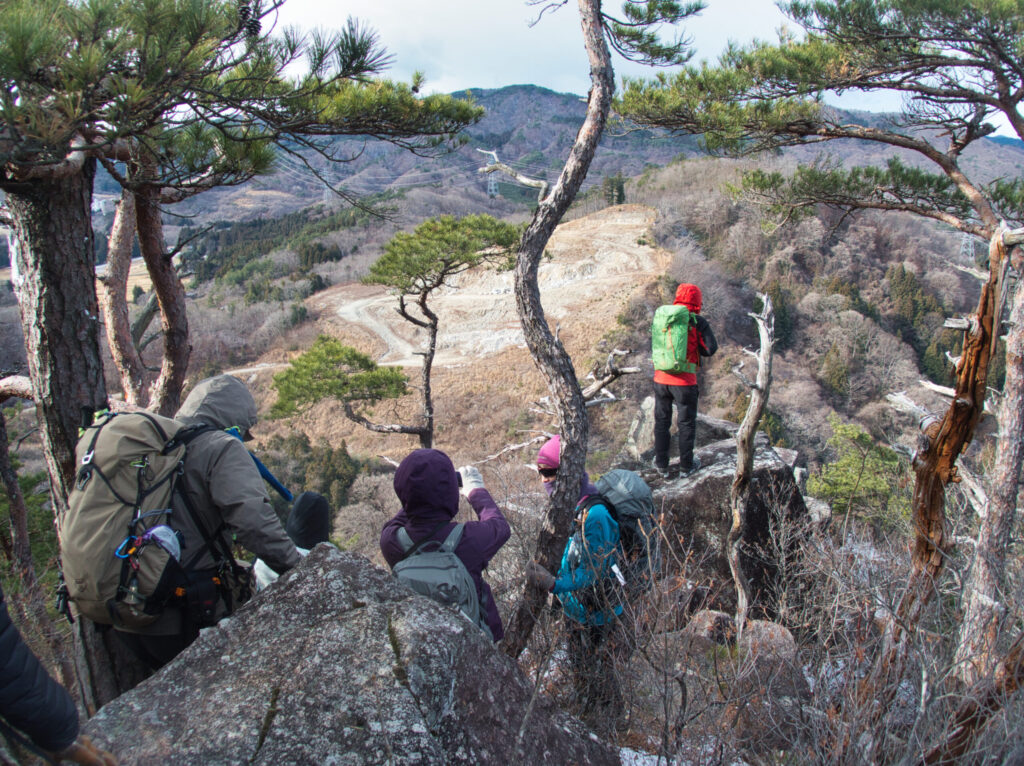
The view from the rock outcrop known as “Tengu’s Sumo Ring” was spectacular — the ridgelines of the Abukuma range stretching out one after another, with the mountains of Zao visible far in the distance. This area is characterized by terrain carved into deep V-shaped valleys, its granite bedrock weathered over time into a complex landscape. The summit itself is hidden beneath the trees, but this rocky viewpoint is where the mountain’s real charm lies.
At 10:56 AM, we began our descent, moving carefully. On steep ground like this, a slip is easy — I placed each foot deliberately, mindful that more accidents happen on the way down than on the way up. Keeping that firmly in mind, we descended without rushing. After about 38 minutes, we were back at the trailhead. It was 11:34 AM — noon was already close.
Our last destination was Asagi-yama, a modest local mountain not far from Kamakura-yama, with Yamatsumi Shrine enshrined at its summit. Yamatsumi-no-kami is a mountain deity from Japanese mythology, long worshipped as an object of mountain faith — and that same devotion still lives on here.
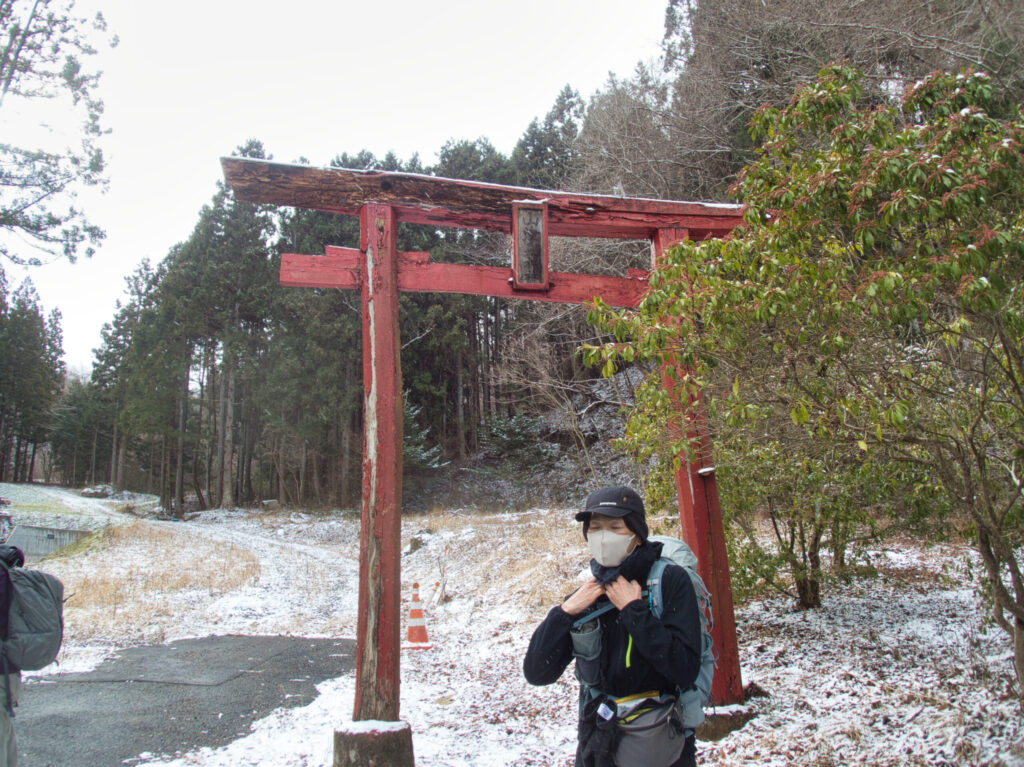
At 11:55 AM, we set off from the trailhead. Having already climbed two mountains, my steps felt heavy, fatigue settling into my thighs. But visiting all three shrines was the goal of the day, and I pushed forward despite the tiredness.
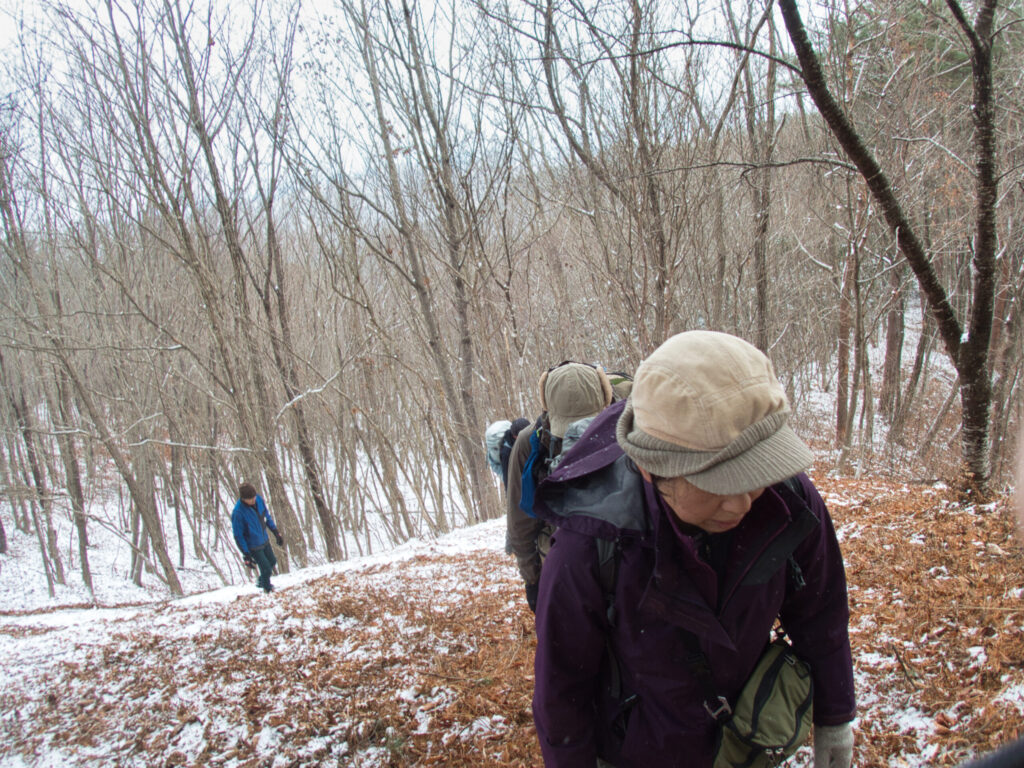
The trail on Asagi-yama was gentle, without the steepness of Kamakura-yama. Yet for that same reason it felt quieter, carrying a sense of reassurance, as if cradled in the mountain’s embrace. We wound our way through the trees, slowly gaining elevation. Only the crunch of fallen leaves underfoot broke the stillness.
The winter trees stood bare, their branches exposed like skeletons — and yet there was a stark beauty in that form. Perhaps due to recent warming trends, there was less snow than usual; I recall this time of year once carrying a bit more snow. The climate is shifting, unmistakably.
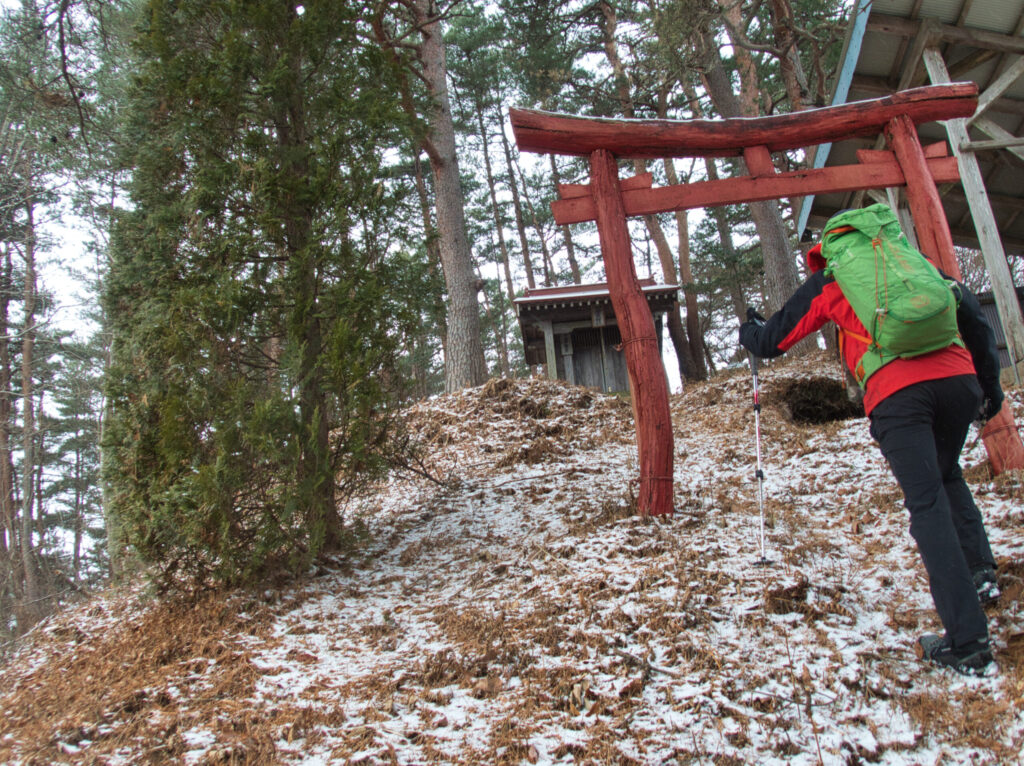
After about 30 minutes, we reached the summit around 12:30 PM, where a small shrine building of Yamatsumi Shrine stood waiting. Here I offered the third and final prayer of the day. Karou Shrine on Karou-san, Hayama Shrine on Kamakura-yama, and now Yamatsumi Shrine on Asagi-yama — each mountain enshrining its own deity, each gathering the faith of the local people over generations. I prayed once more, quietly, for another year of safe climbing.
On the way down, I paused for a moment. Afternoon light filtered through the bare winter trees, catching the fallen leaves and turning them gold, as if weaving a tapestry of brocade. It felt like a fitting close to a New Year’s Day climb — a calm, unhurried moment. At 12:49 PM, we returned to the trailhead.
In the car on the way back, I looked back over the day: the first sunrise from Karou-san, the amazake on Kamakura-yama, the quiet of Asagi-yama. Three mountains, three shrines — Karou, Hayama, and Yamatsumi — each visited with folded hands. It wasn’t simply a hike; it felt more like a ritual for welcoming the new year alongside the mountains themselves.
Through the car window, the winter countryside slid past — harvested rice paddies catching the afternoon light, the Abukuma range stretching into the distance, and beyond it the white peaks of Zao. The day’s fatigue slowly turned into a pleasant drowsiness. But it was the kind of tiredness that comes from a day well spent.
Reiwa 8 — 2026 — has begun. The mountains remain unchanged, as always, ready to welcome us again. Hoping this year would be filled with safe climbing, I made my way home.
LOG SUMMARY
Your Turn Next
Thank you for reading this account of a New Year’s Day among the Abukuma mountains, right through to the end.
As I hope came across in this piece, greeting the first sunrise from a mountain is an experience like no other — and the view from Karou-san, a modest peak with the Pacific spread out below it, is one that stays with you.
“I’d love to hike for the first sunrise, but I’m not confident doing it alone.”
“I want to get to know these local mountains more deeply.”
“I’d like to visit these mountain shrines while enjoying a safe, well-guided hike.”
If any of that sounds familiar, I’d be glad to help you make it happen.
Designing a hike around each guest’s own sense of excitement — and easing whatever hesitation they might feel — is what my private guided tours are all about. I’d love to help you experience that same New Year’s clarity and gratitude toward the mountains that I felt in the Abukuma hills.
Feel free to reach out — think of it as the start of a conversation, nothing more.
▶ See private guide tour details and plans