【Deep Dive Chronicle】Jagadake - New Year's Feast and Winter Descent
北村 智明
稜線ディープダイブ
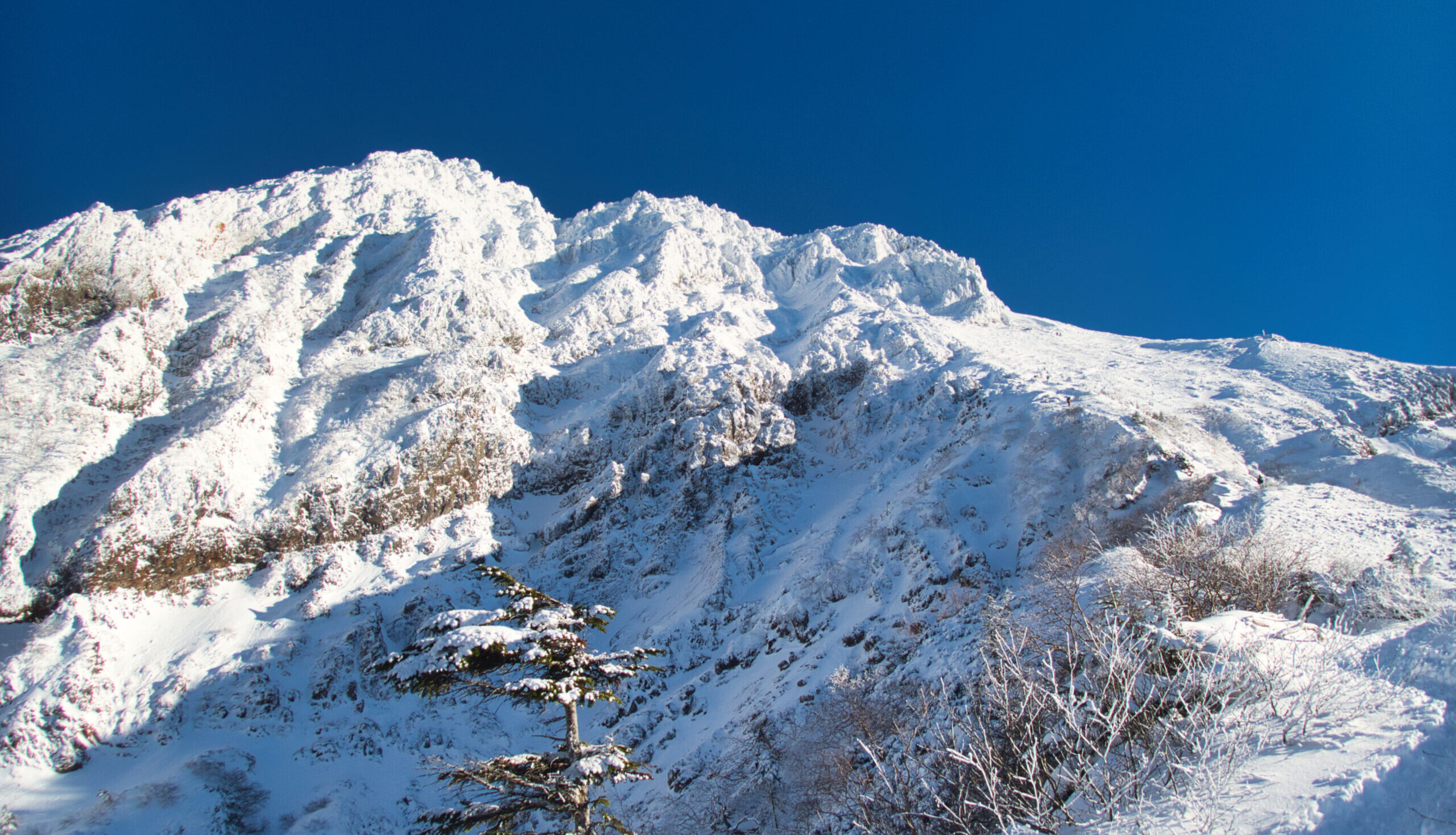
As the year drew to a close in late December, we headed to Akadake in the Yatsugatake range. The South Peak Ridge, the Main Ridge, Minamisawa Ōtaki — battling sleep deprivation, fierce winds, and whiteout conditions, our three days of tent-based climbing with eleven companions were filled with both the trials and the joys that only the depths of winter can bring. This is the record of our annual winter expedition to Yatsugatake in December.
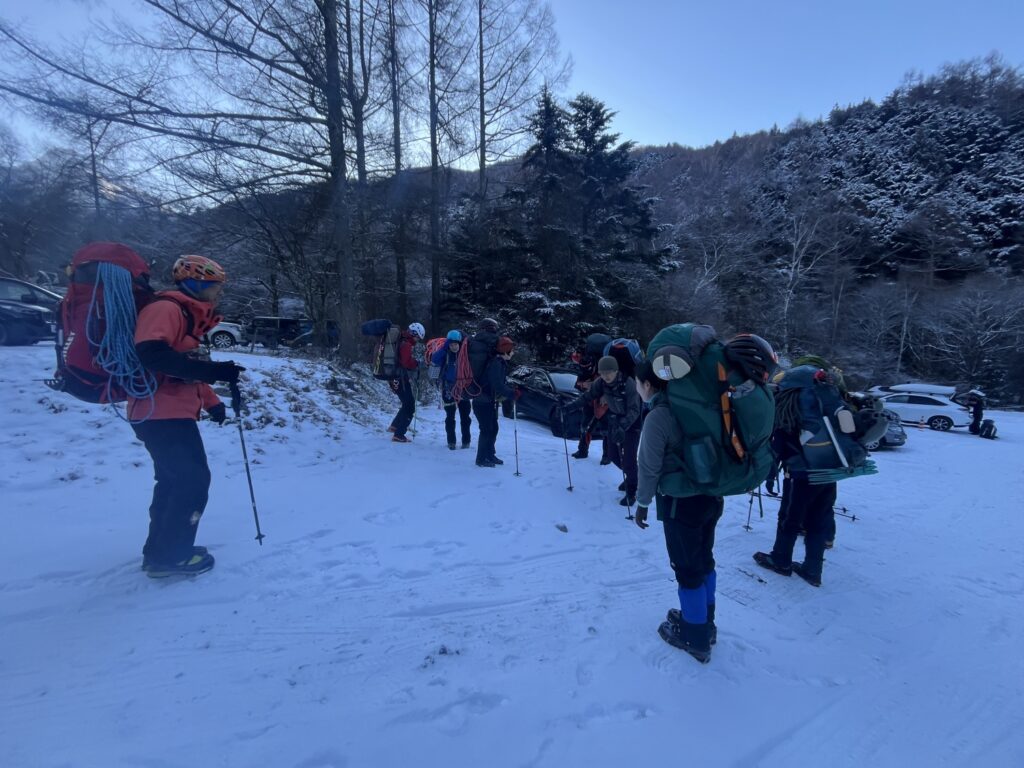
We left Fukushima at 2 AM. The car cut through the stillness of the year’s final days. The night before had been consumed by preparations, and I hadn’t slept a wink. Fatigue had already settled deep in my body, like sediment at the bottom of a still pool.
We arrived at the Yamanoko-mura parking area in Minotoguchi a little after 9 AM. But here an unexpected problem arose — the car couldn’t climb the forest road. Snow and ice had left the surface treacherous, and we had no choice but to inch forward carefully. By the time we finally reached Minoto, we were running a little behind schedule.
Standing at 2,899 meters, Akadake is the highest peak in the Yatsugatake range, its reddish-brown flanks colored by iron oxide. Chosen by Fukada Kyūya as one of the Nihon Hyakumeizan (100 Famous Mountains of Japan), it reigns as the master peak of the southern Yatsugatake — a rock-ridged mountain known in winter for its frozen waterfalls and variation routes.
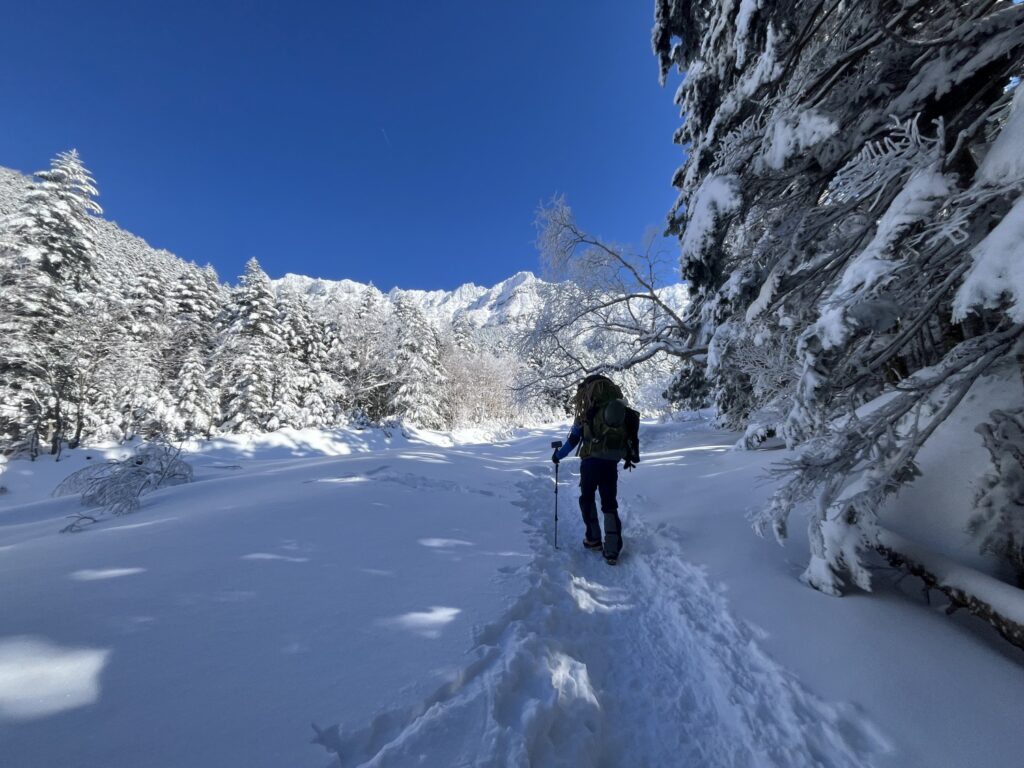
All eleven of us had been looking forward to this now-annual December expedition. The plan called for three days, splitting into parties to climb the South Peak Ridge, the Amida Hokuryō (Amida-dake North Ridge), the Akadake Main Ridge, and Sekison-ryō (Sekison Ridge). We shouldered our heavy camping gear and pushed on through the forested trail.
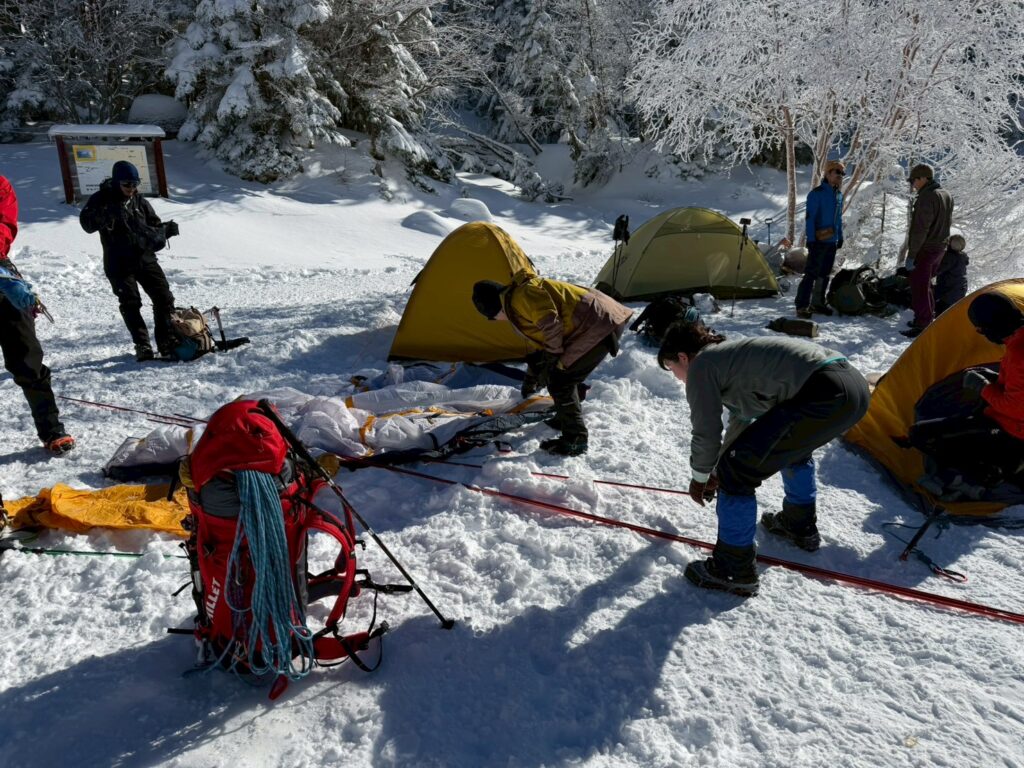
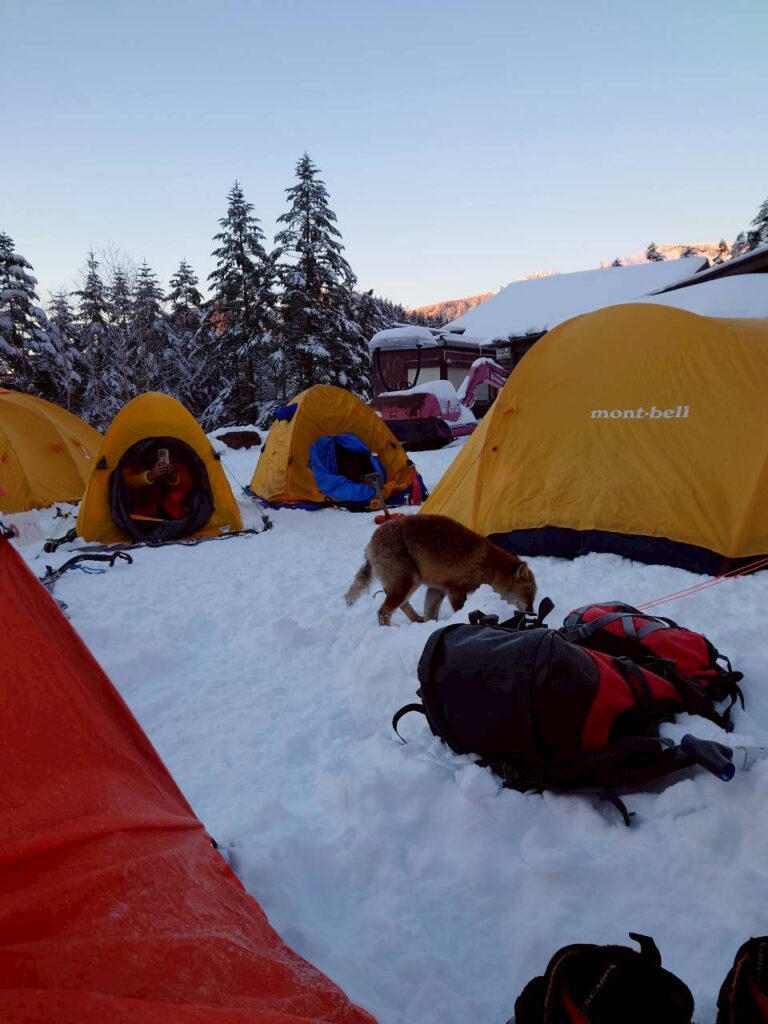
About an hour and a half from Minoto, we reached the Gyōja-goya campsite around 1:30 PM. We pitched our tents and settled in. A fox wandered leisurely around the camp — evidently accustomed to people, it showed no concern at our presence. Around winter mountain huts, encounters like this aren’t uncommon.
The South Peak Ridge is one of the variation routes alongside the Akadake Main Ridge — a lesser-known line that rises directly to the summit marker of Akadake’s south peak. It’s smaller in scale than the Main Ridge, but with few fixed anchors, it offers the appeal of climbing in one’s own style.
A little after 2 PM, we left Gyōja-goya heading for the Akadake–Amida-dake junction. Leaving the main trail, we made for the base of the South Peak Ridge. But my body wouldn’t move the way I wanted. Having gone without sleep, it was now approaching its limit. My steps grew heavy, and I was aware that my judgment was dulling.
There was real unease. If I pushed into the crux in this state, I risked making a fatal mistake. Caution demanded I assess my condition once more. I had abandoned the South Peak Ridge once before for the same reason — that memory came back to me now.
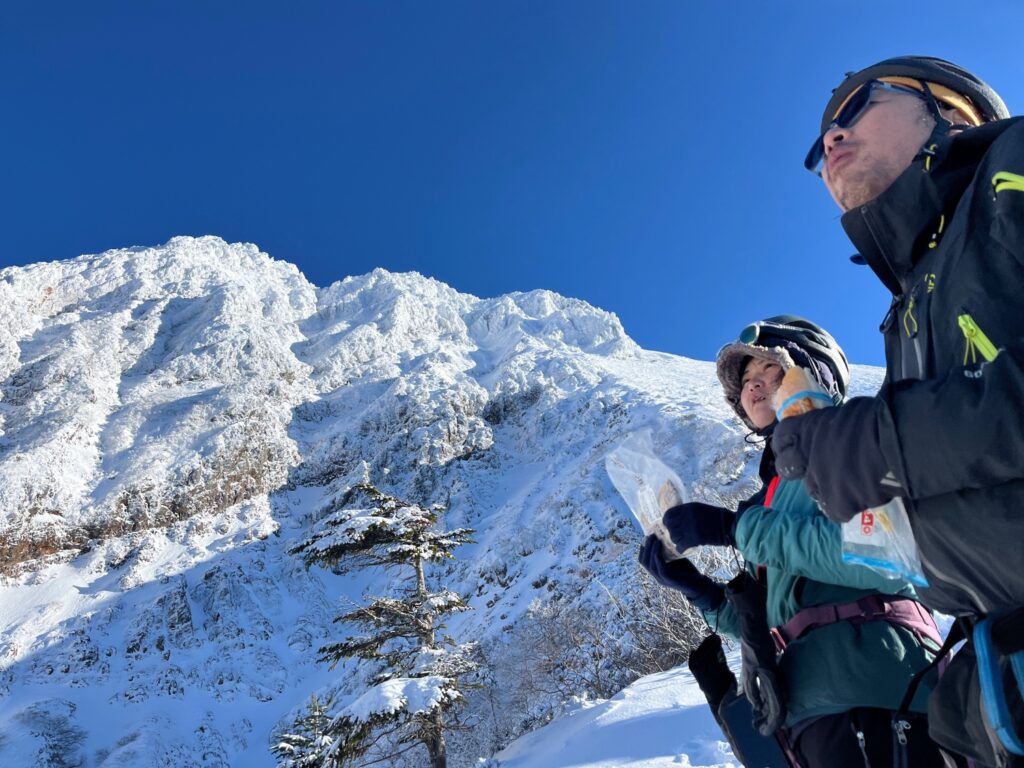
A little after 3 PM, we decided to retreat. After discussion, everyone supported the decision. There was disappointment — but a decision that puts safety first is never wrong. One must never overestimate one’s own skill.
We turned back to Gyōja-goya. Back at the tent, we prepared dinner. But sleep would not come easily that night either. An ache in my shoulder gripped my body, making it hard even to turn over. Tomorrow was the Main Ridge. I was far from in top form, but having come this far, turning back wasn’t an option. The valley floor grew rapidly colder. The stars spread overhead, and the silence of winter Yatsugatake enveloped us.
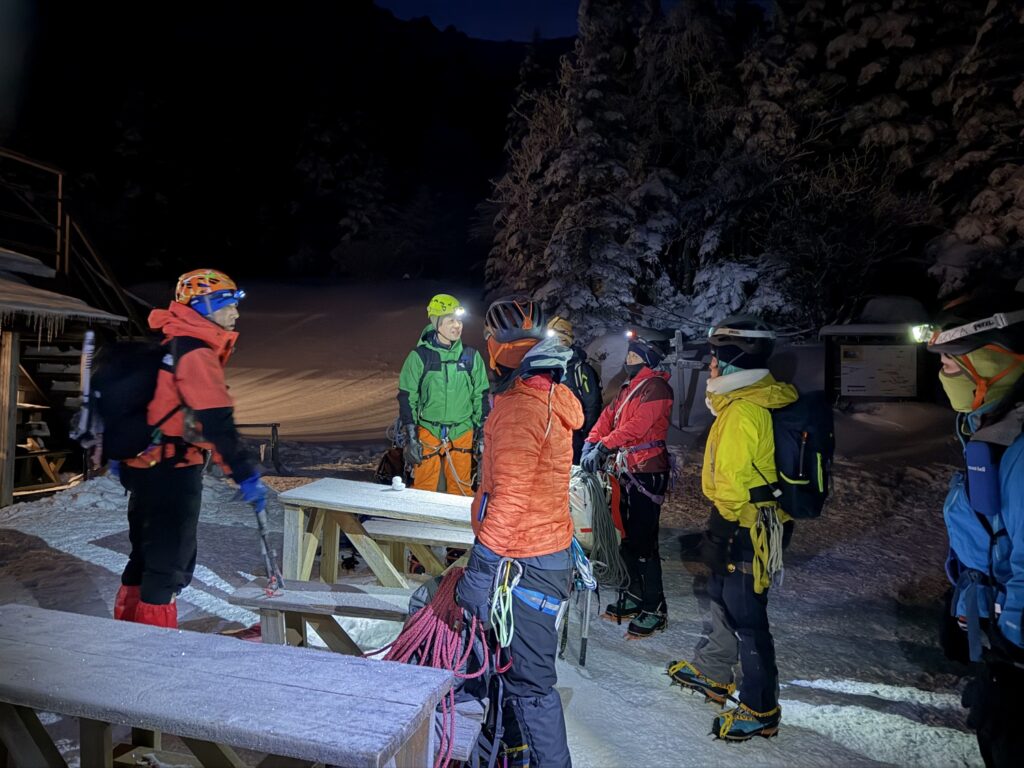
The next morning, we left Gyōja-goya a little after 6 AM. The sky was clear — a blue that hinted at the famed “Yatsugatake blue” spread overhead, and with renewed spirit we set off for the Akadake Main Ridge. Among Yatsugatake’s variation routes, the Main Ridge is considered an entry-level line, though its crux demands genuine climbing technique. The route is graded Class 1, but depending on snow conditions, the crux pitch can require skills equivalent to Grade III–IV (Based on Japanese Alpine Club/Local Standard).
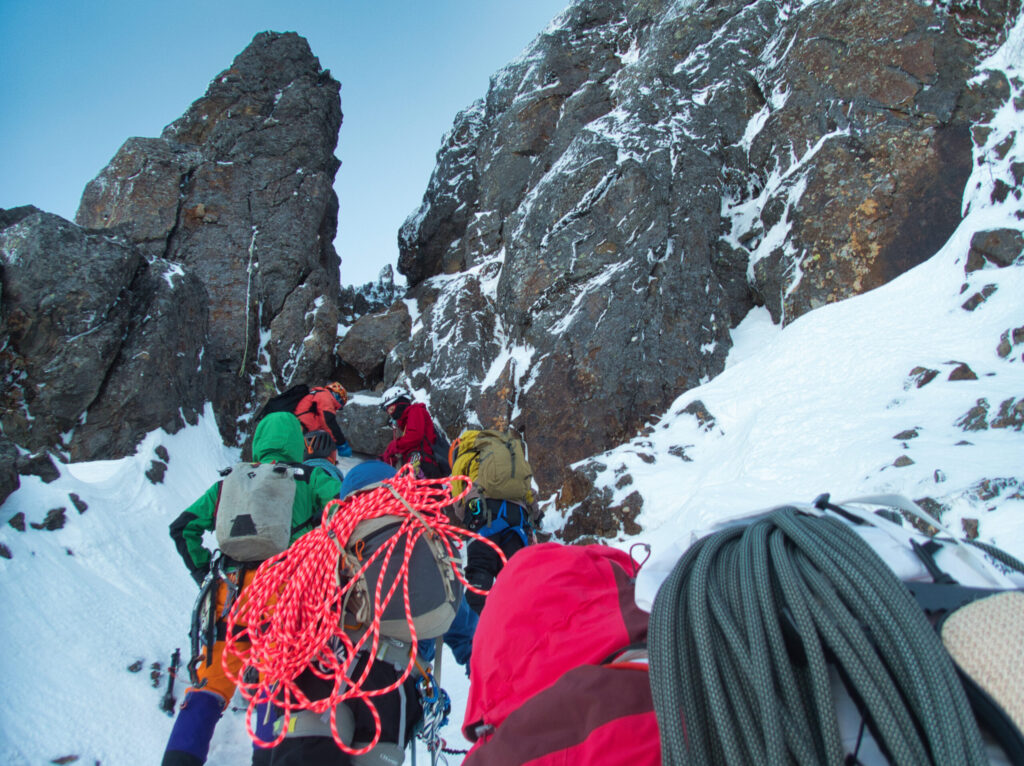
We reached the Akadake–Amida-dake junction at 7:17 AM. From there we headed for the start of the Main Ridge — the chockstone. We tightened our harnesses, strapped on crampons, and checked our double ropes and quickdraws.
However, my chronic pain hadn’t let up. Judging that leading the crux would be difficult, I entrusted it to my trusted partner S. We assessed each other’s condition and divided our roles accordingly.
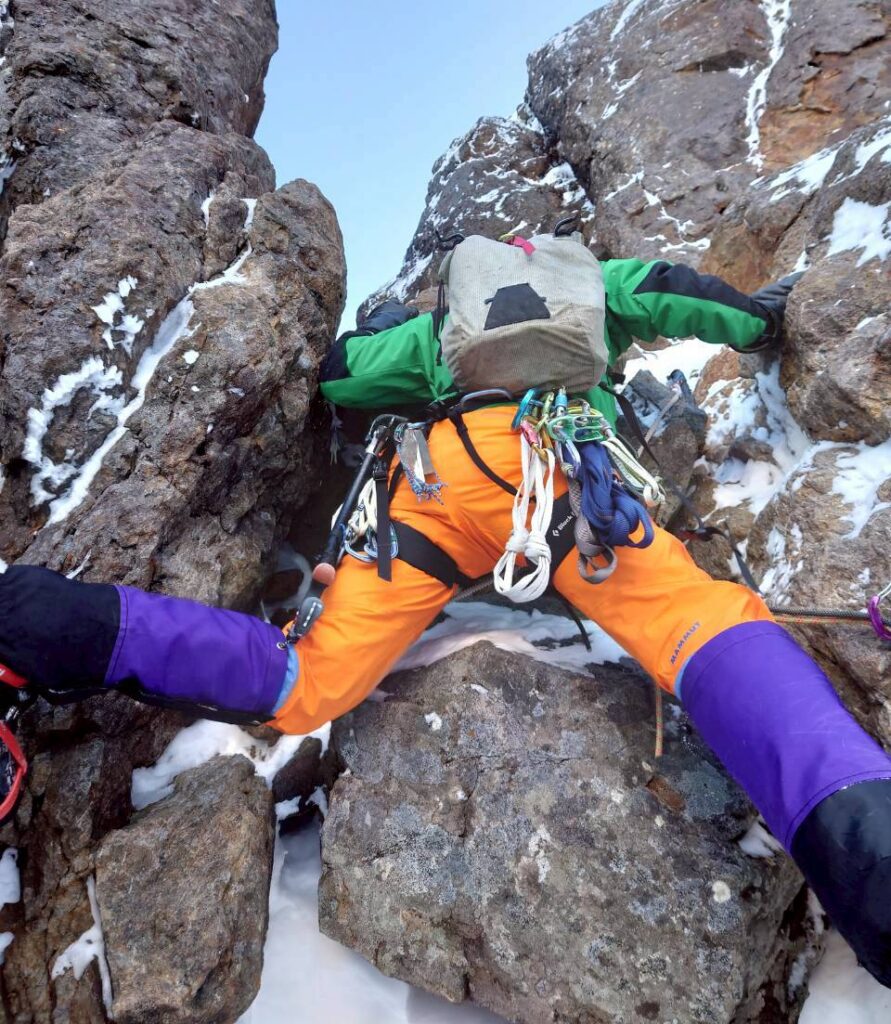
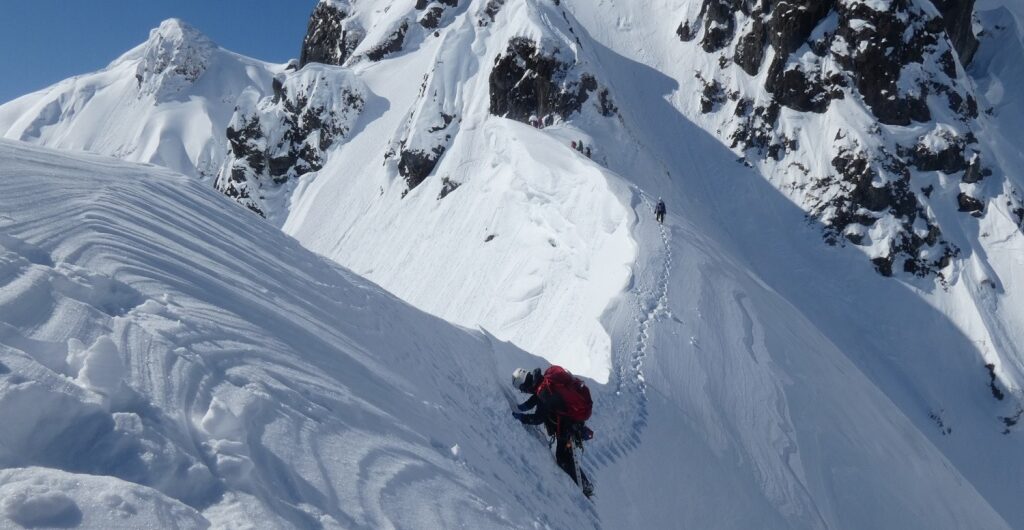
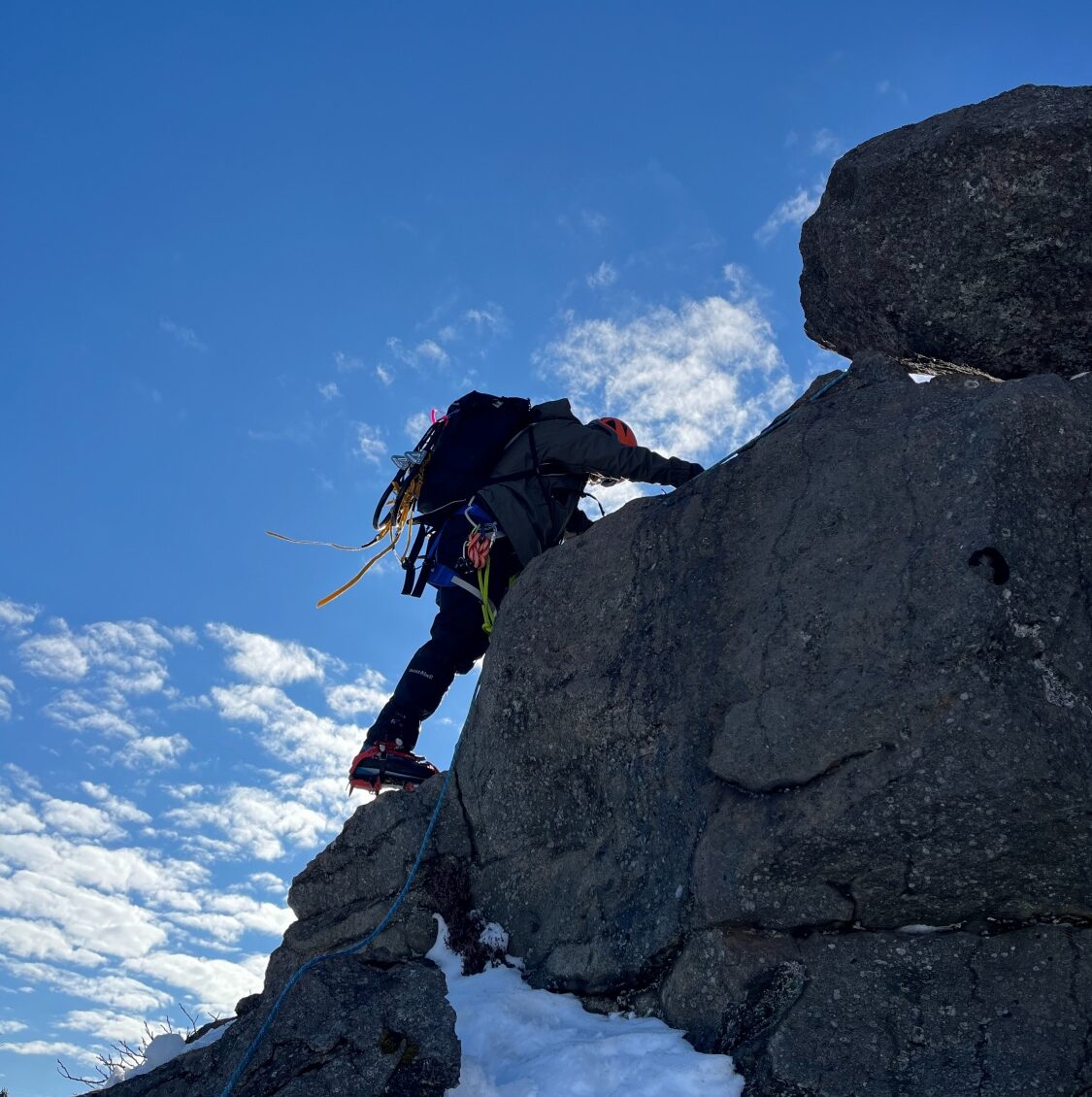
The crux chockstone loomed ahead — a mixed wall where rock, snow, and ice intertwined in complex layers. This was where the real climbing began. We latched onto the rock and started up. The weather held, but the wind was fierce, and once we reached the ridge, it grew even stronger.
We climbed carefully through the mixed terrain of rock, snow, and ice. Driving our ice axes into snow and ice, checking our footing, we gained height move by move, choosing each hold with care. It was a battle against the cold — my hands went numb, sensation fading. Still, there was no stopping.
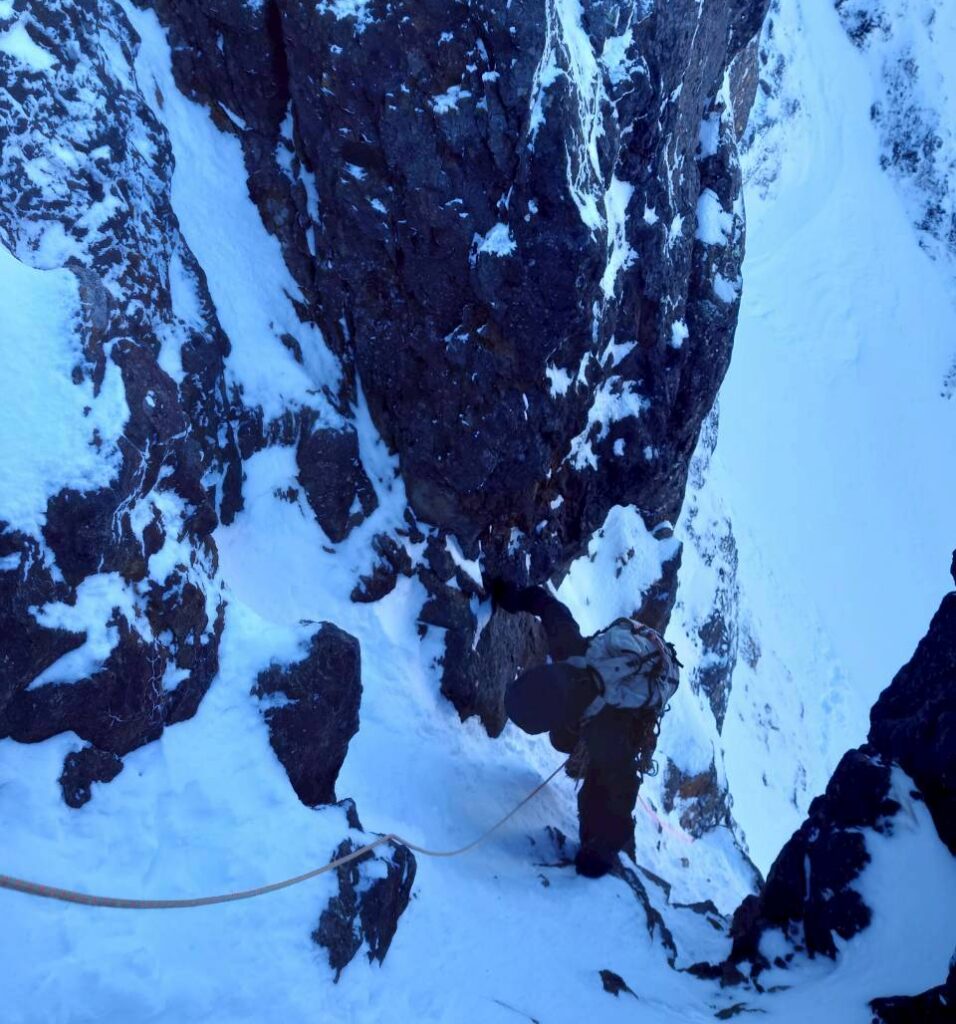
It took time for all eight of us to get through — the three headed for Sekison-ryō were on a separate route. Repeating the cycle of belaying and climbing, we finally cleared the upper rock wall. A little after 1:30 PM, Akadake Chōjō Sansō (Akadake Summit Mountain Hut) came into view. And a little after 1:40 PM, we stood on the summit of Akadake.
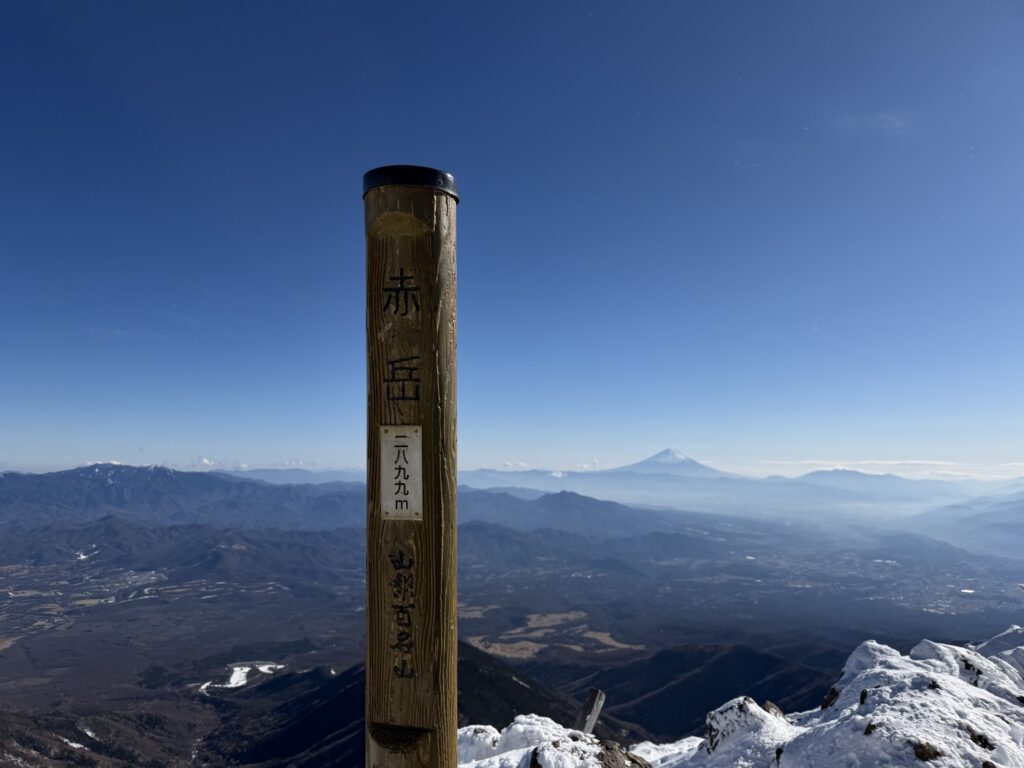
The view below was overwhelming. Mt. Fuji stood majestic against the blue sky, its form — snow-covered down to the foothills — impeccably graceful. The peaks of the South, Central, and North Alps stretched in succession, an overwhelming panorama as if every famous mountain of central Honshu lay within our grasp.
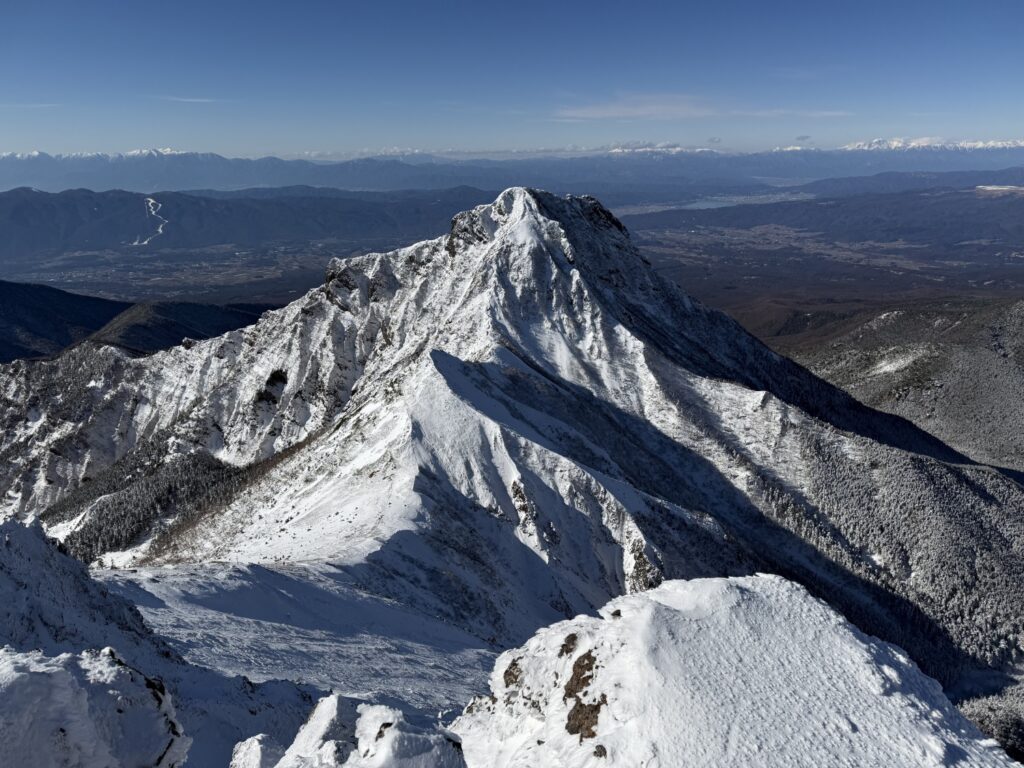
The wind showed no mercy — the wind chill must have been below minus twenty degrees Celsius (roughly -4°F). Fatigue lingered, but faced with this view, it was momentarily forgotten. We shared our time on the summit with our companions.
We began our descent. Strangely, as we started down Bunzaburō-one (Bunzaburō Ridge), the wind began to ease. The fierce gusts of the climb felt like a lie now, replaced by calm air — I could almost feel warmth. Perhaps this is what they mean by the mountain’s fickle moods.
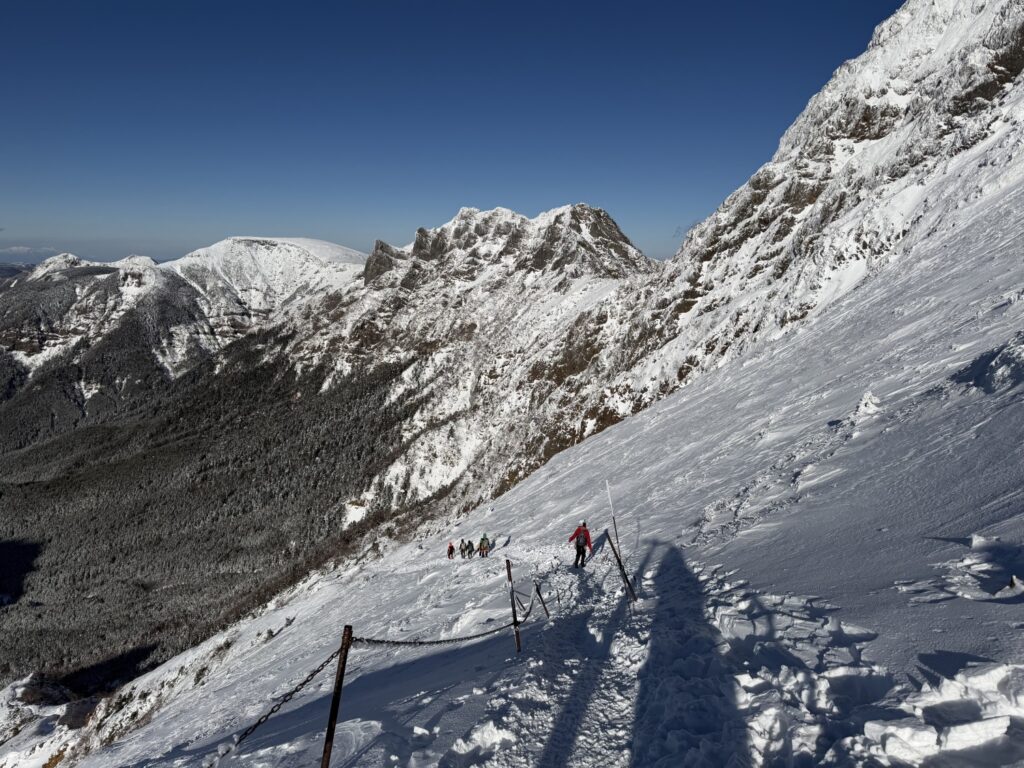
A little after 2 PM, we returned to the crux and descended carefully. A little after 2:30 PM, we passed the Akadake–Amida-dake junction and returned to Gyōja-goya.
Back in the tent, the tension finally eased. Today’s climb had been demanding but deeply rewarding. Fatigue remained, but a sense of fulfillment filled my body.
In the evening, we shared drinks with our companions — a December year-end gathering. Each party recounted the day’s climb, laughter echoing through the valley. But the party bound for Sekison-ryō had yet to return. As time passed, our unease grew.
Around 7 PM, a small light flickered in the darkness — headlamps. The three from the Sekison-ryō party appeared at the Gyōja-goya campsite. At last, we could confirm everyone was safe, and a sigh of relief escaped me. When we asked why they were late, they explained the crux had taken longer than expected. In the winter mountains, things rarely go exactly to plan. What mattered most was that everyone had returned safely.
The night deepened. The stars spread overhead, and the silence of winter Yatsugatake enveloped us once more. Tomorrow was the final day — weather permitting, we’d aim for Minamisawa Ōtaki.
On the final day, the weather had completely changed. The night before, fierce winds had shaken the tent violently, waking me again and again. We left Gyōja-goya a little after 7 AM, but the wind was raging, snow was blowing, and visibility was poor. The original plan had called for another variation route, but that was out of the question in this weather.
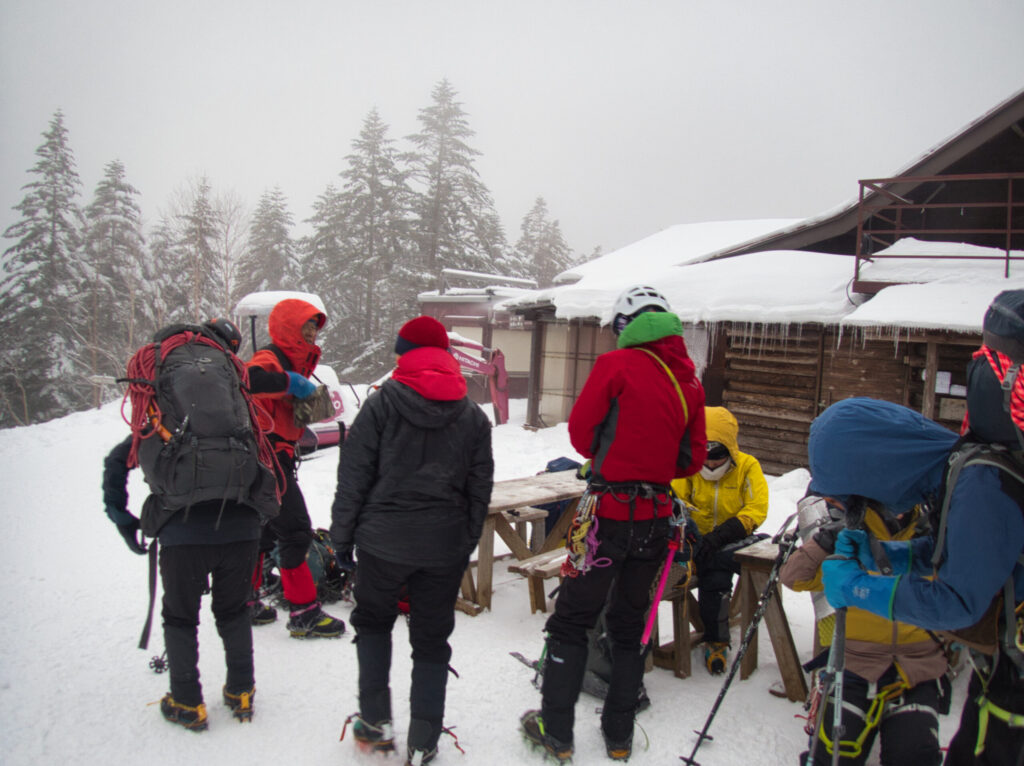
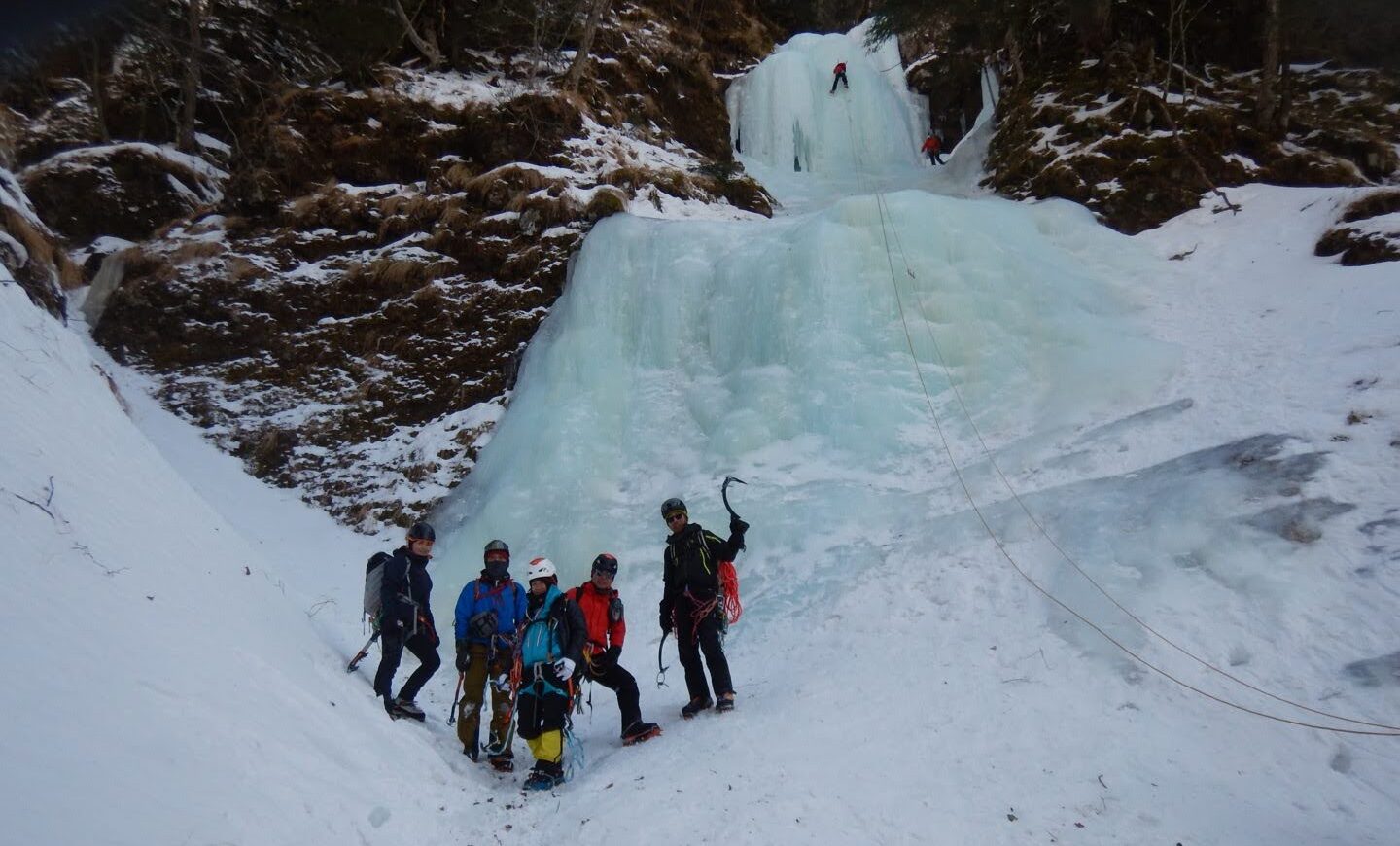
We changed our plan and switched to ice climbing in the Minamisawa valley. Minamisawa Ōtaki stands 40 to 50 meters tall, with a near-vertical face — widely regarded as the gateway route for vertical ice climbing in Yatsugatake. This time, though, we hadn’t brought full ice climbing gear like ice screws, so we decided instead to enjoy the smaller fall, Minamisawa Kotaki, which we could rig with a top-rope.
A little after 8 AM, we passed the Naka-no-Gyōja-goya-ato site and headed into the Minamisawa valley. A little after 8:30 AM, we reached Minamisawa Kotaki first — a roughly 10-meter vertical ice fall. The wind had calmed and visibility was good. We put on our crampons and rigged the top-rope.
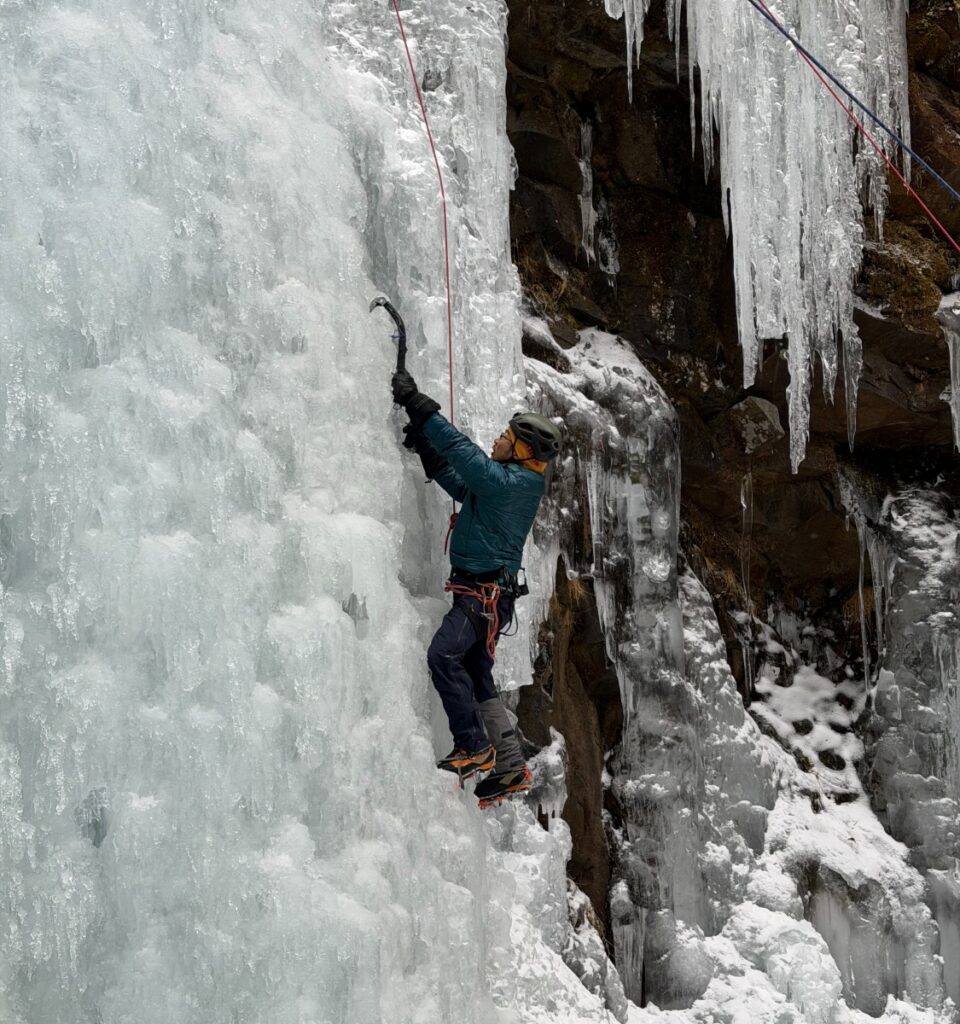
The feel of the axe biting into ice traveled up through my hands. The crampons at my feet caught the ice, and I climbed carefully upward. But the ache in my shoulder returned, and I climbed bit by bit, taking rests along the way. The wind was calm, but the battle against pain continued. I focused and managed to top out, then lowered off. My companions took their turns climbing after me.
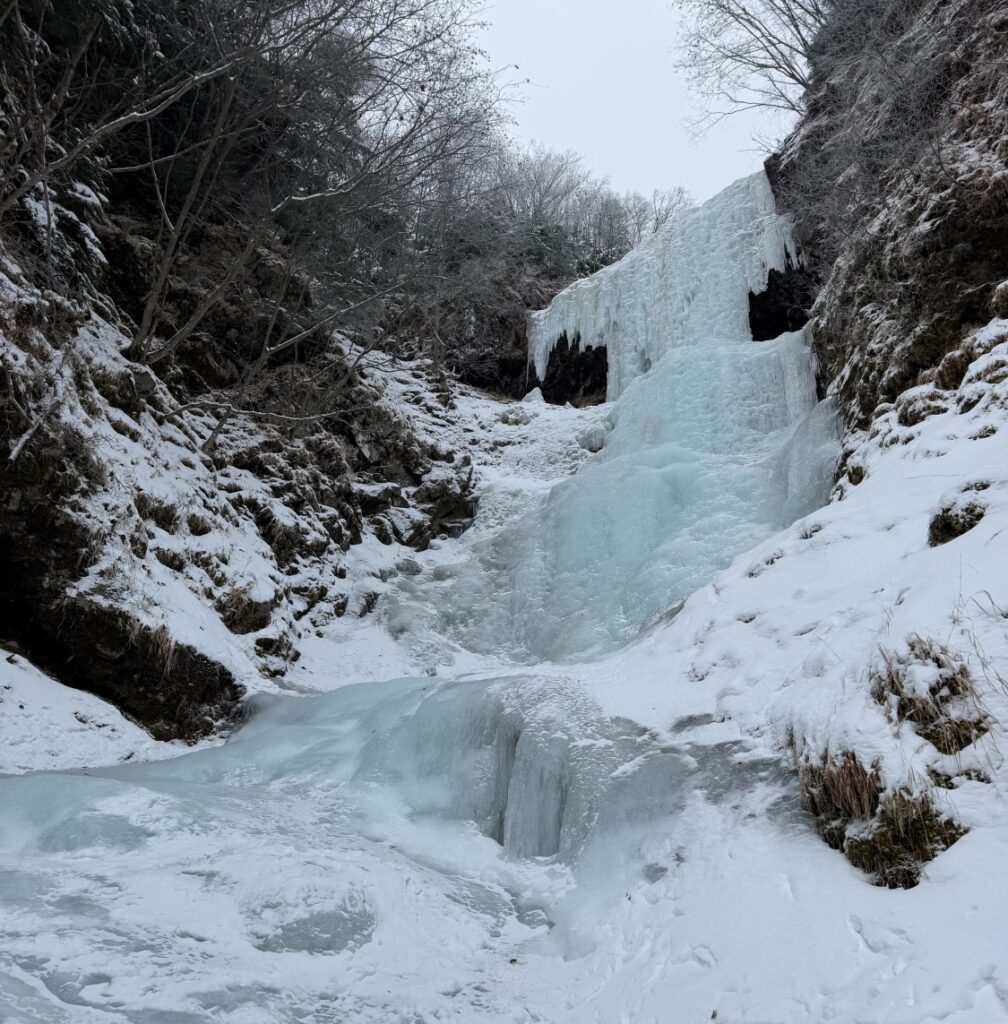
Before 9 AM, we extended our walk to Minamisawa Ōtaki. Looking up, a massive column of ice stretched toward the sky, its presence overwhelming. But without full climbing gear, we gave up on the attempt — this time it was for viewing only. We returned to Minamisawa Kotaki and, until a little after 11 AM, took turns enjoying the ice fall.
The wind stayed calm, though my chronic pain didn’t let up. Even so, in the time we had, we made the most of Minamisawa Kotaki.
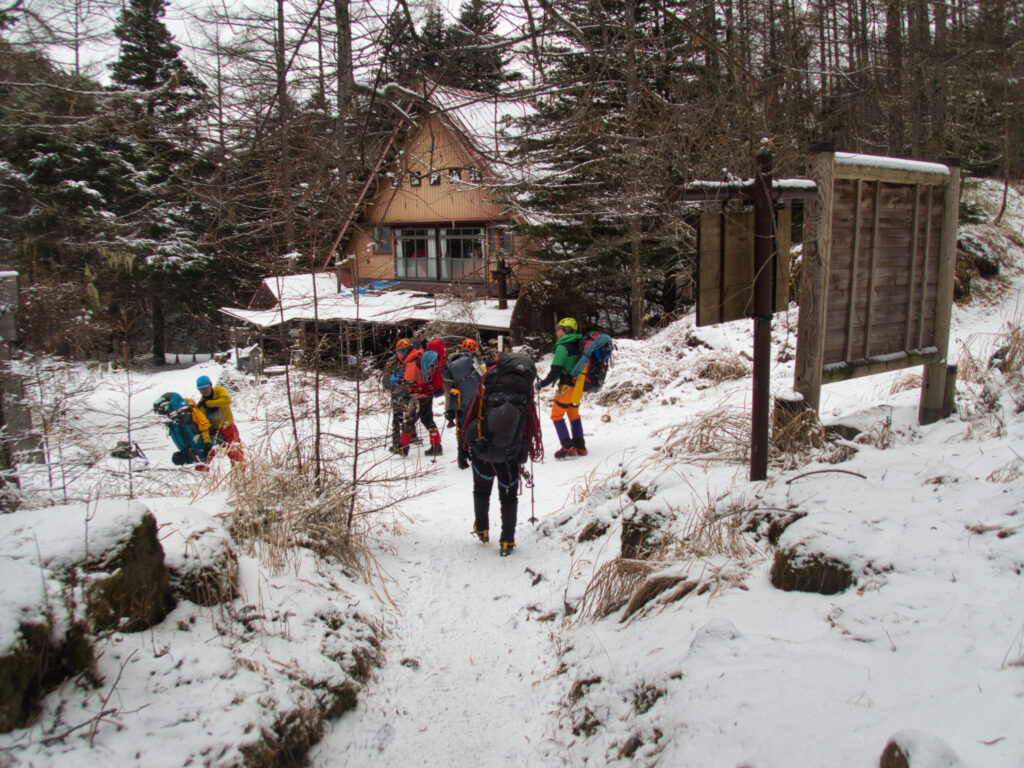
A little after noon, we began our descent. Passing through the Naka-no-Gyōja-goya-ato site, then Minoto-sansō and Akadake-sansō, we made our way down to Yamanoko-mura. Everyone descended safely.
After the descent, we washed off the day’s sweat at Momi-no-yu, warming ourselves through to the core. Afterward, we ate at Tenhō in Chino City and shopped at Tsuruya. This transition from the mountains back to the lowlands is, in its own way, part of the journey too.
Looking back on the three days: the retreat from the South Peak Ridge, the success on the Main Ridge, the safe return of the Sekison-ryō party, and ice climbing in the teeth of the wind. The depths of winter Yatsugatake taught us a great deal.
It was a trip marked by sleep deprivation and chronic pain, but I was glad we were able to make the call to turn back rather than push beyond our limits. Retreat is not failure — it’s a stepping stone toward what comes next. The mountain isn’t going anywhere. We’ll return again next year. This December expedition, shared with eleven companions, was demanding, but deeply fulfilling.
LOG SUMMARY