【Deep Dive Chronicle】Kakkonda River Kitanomata-zawa: A Circuit Through the Celebrated Gorges of Hachimantai
北村 智明
稜線ディープダイブ


Late June brought us to Mt. Tashiro in Minamiaizu. As a guide leading fourteen clients on a day hike, we arrived during the peak season when cotton grass transforms the summit wetland into a sea of white. Following wooden boardwalks through a garden of alpine flowers, this was a summer mountain journey like no other.
We departed Fukushima at 5:00 AM. Mountains visible through the car windows were still wrapped in morning mist. Two days earlier, western Japan had announced the end of the rainy season. Tohoku was also experiencing weather that heralded summer’s arrival. The journey south to Minamiaizu was long, but thinking of Mt. Tashiro’s wetland ahead, the distance felt insignificant.
Mt. Tashiro. Standing at 1,926 meters on the border between Fukushima and Tochigi prefectures, this mountain is known for the vast alpine wetland at its summit. Selected for Sumie Tanaka’s “One Hundred Flowers of Famous Mountains,” the wetland blooms from late June through July with alpine plants including cotton grass (Watasuge), Iwakagami, and Chinguruma. Its Oze-like landscape has earned it the nickname “Paradise Above the Clouds.”
Today was a working day as a guide. I was leading fourteen clients and one tour coordinator. We arrived at the Sarukura trailhead around 9:30 AM.
Blue sky stretched overhead. Perfect weather for the wetland. After checking our gear, we began walking from Sarukura trailhead at 9:36 AM.
The climb through the forest belt was moderately steep. While monitoring the pace of all fourteen members, I established a slow, steady rhythm. The fresh beech forest was pleasant, but the late June sun was strong, sending sweat down my forehead. As we gained elevation, I heard voices expressing fatigue.
Past the water source, one client reached their limit. I checked their expression and assessed the situation. There was no point in pushing beyond safe limits. When I suggested turning back here, they nodded in agreement. It was the right decision. The mountain would always be there.
We continued ascending with the remaining thirteen members. After passing the “1km to summit” marker, the forest gradually thinned. Anticipation grew. Ahead, that wetland awaited.
We reached Kotashiro at 11:32 AM. From there, wooden boardwalks began. The scene that spread before us exceeded all imagination.
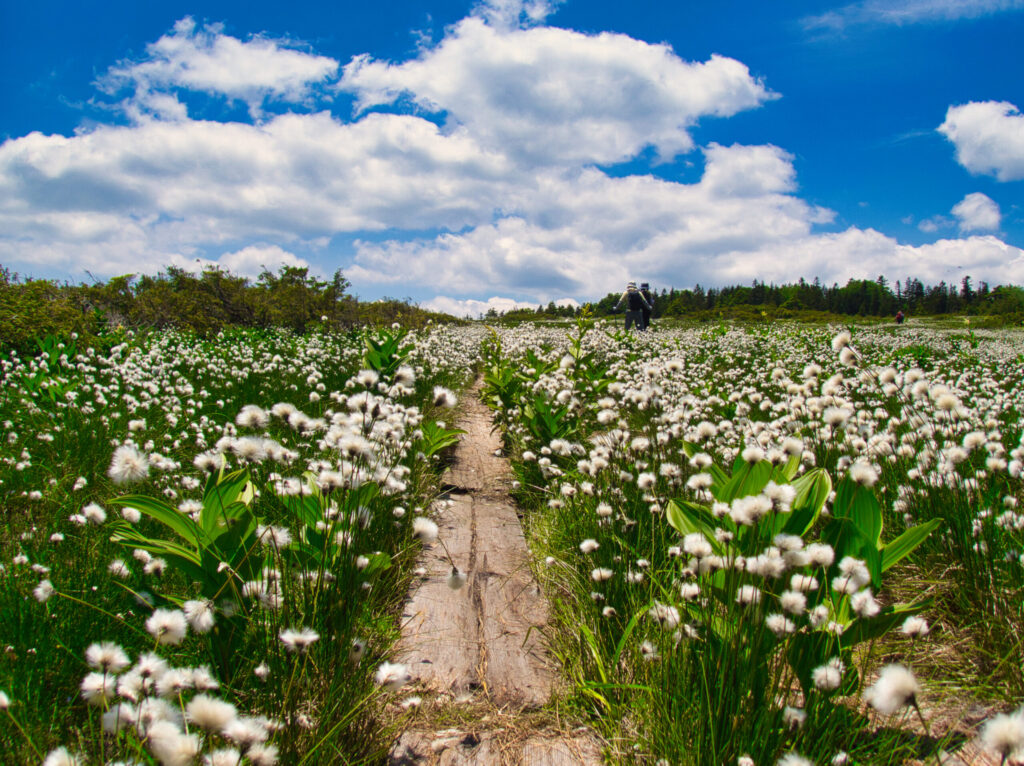
Cotton grass. As far as the eye could see, white tufts swayed in the wind. Like a snowfield, the entire wetland was dyed white. The boardwalk extended as a single line through this white sea.
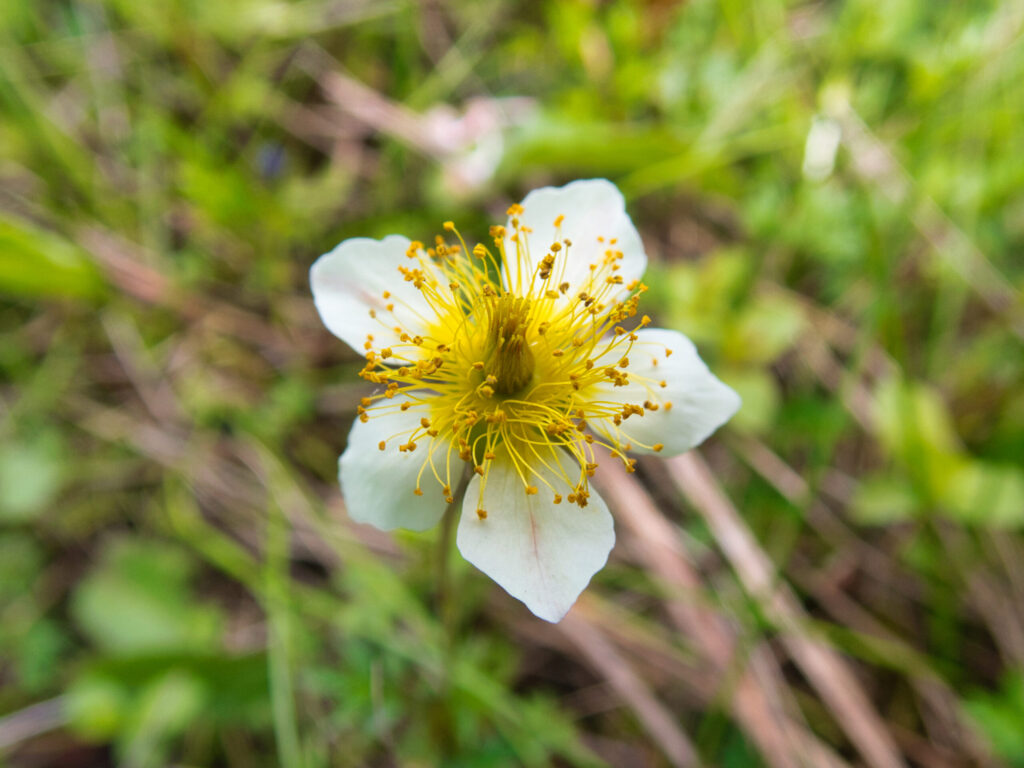
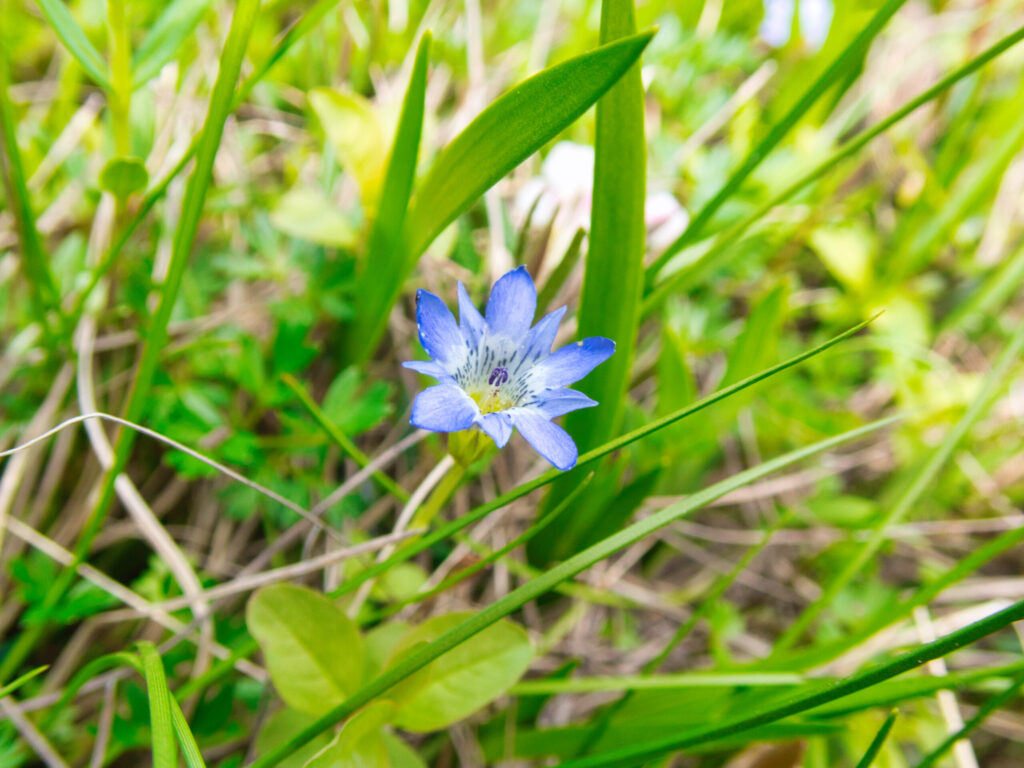
With each step forward, new flowers caught my eye. Pink Iwakagami bloomed delicately, white Chinguruma flowers spread their yellow stamens. At our feet, blue Tateyama gentian flowers peeked out.
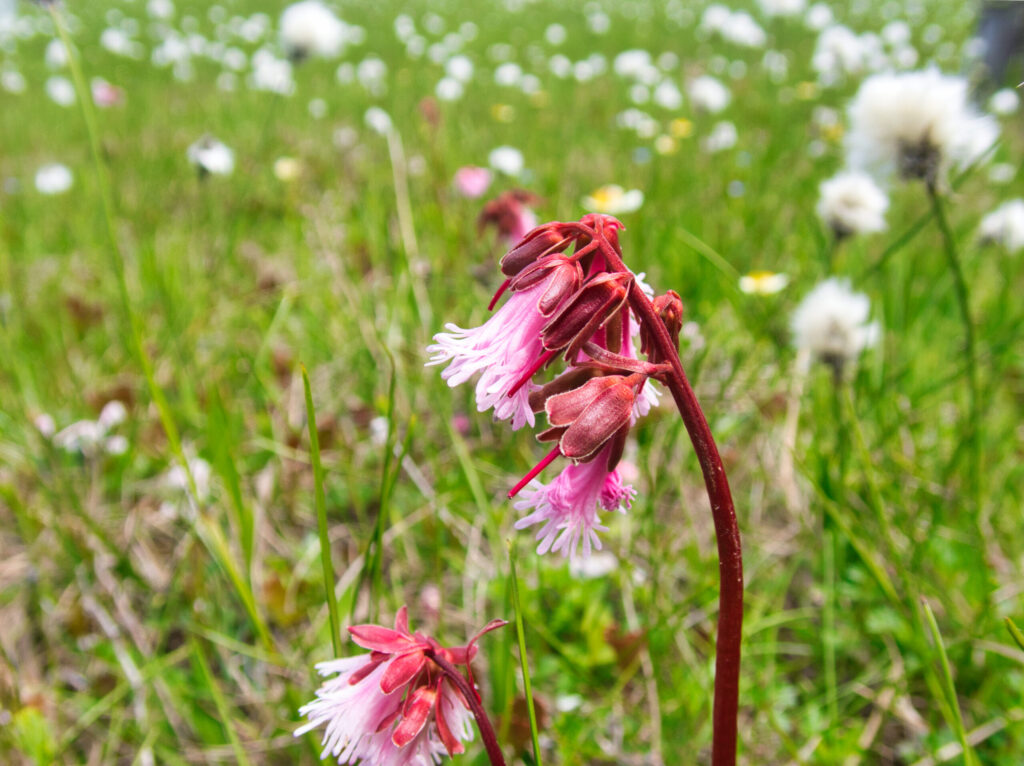
“Paradise Above the Clouds.” Those words were no exaggeration—I felt it now. The clients’ expressions brightened. Fatigue vanished as everyone gazed at the wetland’s beauty.
Following the boardwalk, we headed toward the Tashiro-yama emergency shelter. Wind swept across the wetland beyond the tree line, making it feel chilly. Adding a layer, we took lunch around the shelter.
This emergency shelter is also called Kobo Daishi Hall. Until the Meiji period, Tashiro-yama was supposedly forbidden territory, considered a mountain where demons dwelled. Later, however, it became a sacred mountain where Kobo Daishi was enshrined, and today it welcomes many climbers as a famous flower mountain. Times change.
The previous day, I had heard news of Shigeo Nagashima’s passing. The man called “Mr. Baseball” and symbol of the Giants had died at eighty-nine. An era had ended, I thought briefly. Yet before me, nature’s unchanging cycle continued. Eating while gazing at the sea of cotton grass was exceptional. In the distance, mountains bearing remnant snow stood out against the blue sky. The refreshing cool air was delightful, making the heat of the ascent feel like a lie.
At 1:09 PM, we stood atop Mt. Tashiro. Elevation: 1,926 meters. Yet the wetland spreading below made a far greater impression than the summit marker.
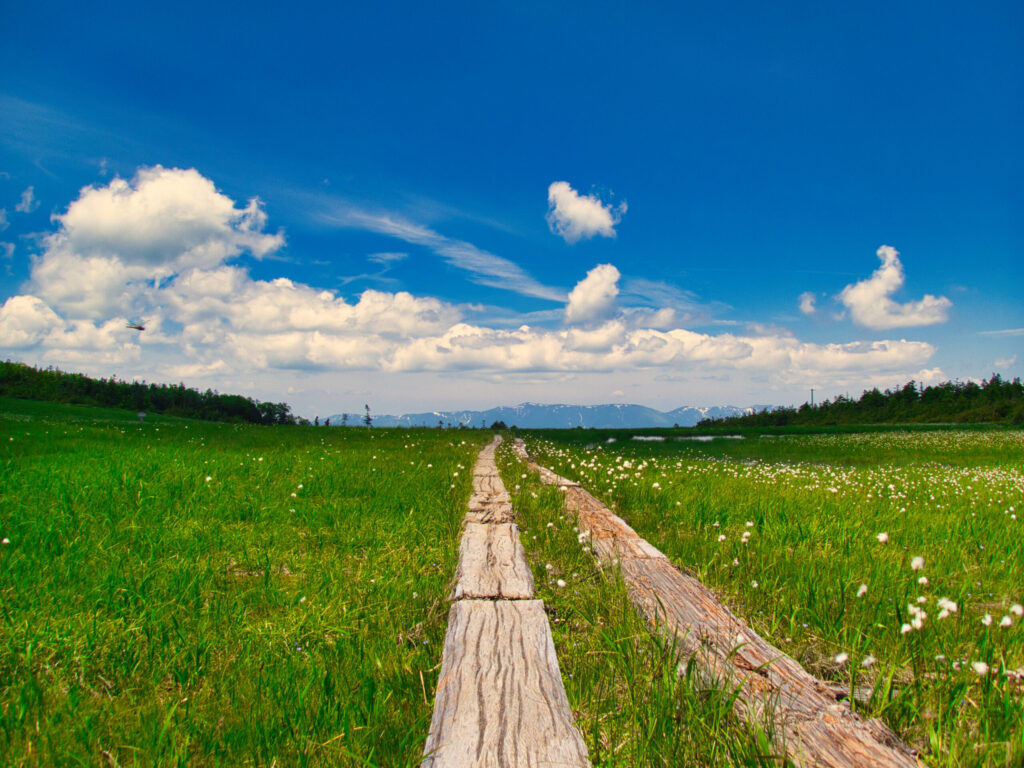
Boardwalks branched through the wetland like garden pathways. White cotton grass, pink Iwakagami, blue Tateyama gentian, white Chinguruma. Colorful flowers adorned the green wetland.
The wonder that such a beautiful wetland exists at this summit. I felt renewed reverence for nature’s abundant workings.
We began descending just after 1:00 PM. Retracing our route, we entered the forest belt from Kotashiro and carefully lost elevation. Bodies fatigued from ascending grew more exhausted on descent. Checking each person’s condition, I maintained a slow pace.
Taking a final rest at the water source, we returned to Sarukura trailhead at 2:22 PM. Everyone descended safely. That was what mattered most.
On the return journey, we stopped at the communal bath in Yunohana Onsen. This ancient hot spring supposedly has about seven hundred years of history dating to the Kamakura period. The communal bath “Koboyu” takes its name from being built at a site enshrining Kobo Daishi, connected to Mt. Tashiro’s mountain opening. The Kobo Daishi Hall on the mountain and this bath are linked. Though mixed bathing exists, we used the gender-separated facilities. Hot springs after washing off mountain sweat are exceptional. Warmth soaked into tired bodies.
The white sea of cotton grass. Blissful time following boardwalks. The wetland adorned with colorful flowers. Mt. Tashiro’s “Paradise Above the Clouds” lived up to its name in beauty. A day of enjoying early summer in Minamiaizu.
LOG SUMMARY
[Postscript: To Your Personal “Paradise Above the Clouds” – One Hundred Flowers of Famous Mountains]
Thank you for reading this Tashiro-yama chronicle to the end!
The summit wetland where cotton grass spreads like a white sea truly deserves the name “Paradise Above the Clouds.” That blissful time walking the maintained boardwalks is exceptional.
“I want to visit the mountain during peak cotton grass season like in the article!”
“I’m not confident about my stamina, but I’d love to walk that beautiful wetland”
“I’m worried about health management during climbing, or what might happen in an emergency…”
My private guide tours cherish both your desire to “see!” and your need to “feel secure.”
As with today’s group, I provide professional guidance with responsibility for “individual health management for each client” and “leisurely pacing that allows appreciation of flowers and nature” – things difficult in large group tours.
Would you like to spend an unforgettable early summer day with me in Minamiaizu’s hidden famous peaks or flower mountains you wish to visit?
First, in a casual conversation style, please tell me about the “flower mountains you want to visit.” Feel free to contact me!