【Deep Dive Chronicle】Usuigawa Honryu Right Fork: A Bright Stream and the Historic Trail
北村 智明
稜線ディープダイブ
The Iide Mountains — a spine of jagged peaks stretching along the border of Echigo and Dewa provinces. In mid-September, we set our sights on Naranokisawa-Kamosawa, a gorge hidden deep within their folds. What began as a three-day circuit through abandoned trails became a test of endurance, camaraderie, and the humbling authority of the mountains. This is the record of those who love the sound of rushing water, and who dare to walk where paths no longer exist.
目次
We departed Miyagi Prefecture on the evening of September 13th — myself along with S, M, and O — heading for Oku-Tainai Hütte in Niigata Prefecture. Our destination: Naranokisawa-Kamosawa in the Iide Mountains, a full-scale gorge of granite set deep within peaks that straddle the old boundaries of Echigo and Dewa.
Most parties who climb this stream descend via the trail from Mt. Nioji-dake. We chose differently. Our circuit would follow the abandoned trail over Kuroishi-yama and Nariba Peak — a route preserved only in old records, with descent times heavily dependent on the state of decay. We estimated five hours of Yabukogi (bushwhacking) from the stream head to the trailhead. How generous that estimate would prove to be.
We spent the night in the parking lot of Oku-Tainai Hütte. Anticipation for the days ahead mixed with a faint unease. The surrounding wilderness was silent save for the chorus of insects. I looked up at the stars and quietly surrendered to sleep.
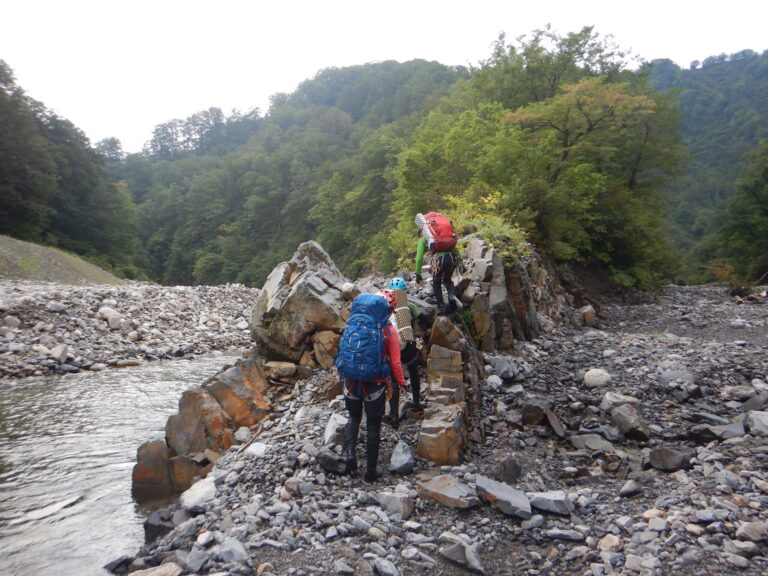
The next morning, we set off just after 6:00 AM. We walked the dimly lit forest road and arrived at the Tainai River, where the water ran calm enough to ford without issue. After crossing, we began ascending the ridge of Agemaino-Katchi — an oddly evocative name for a steep, relentless climb through dense forest.
September heat still clung stubbornly to the air. Partway up the ridge, something felt wrong. Sweat poured in sheets; nausea crept up from my stomach. Heat exhaustion. I told my companions, and we stopped in the shade. Water, rest, cooling down. I felt the pull of urgency, but knew that pushing through now would compromise everything that followed. We rested long and carefully.
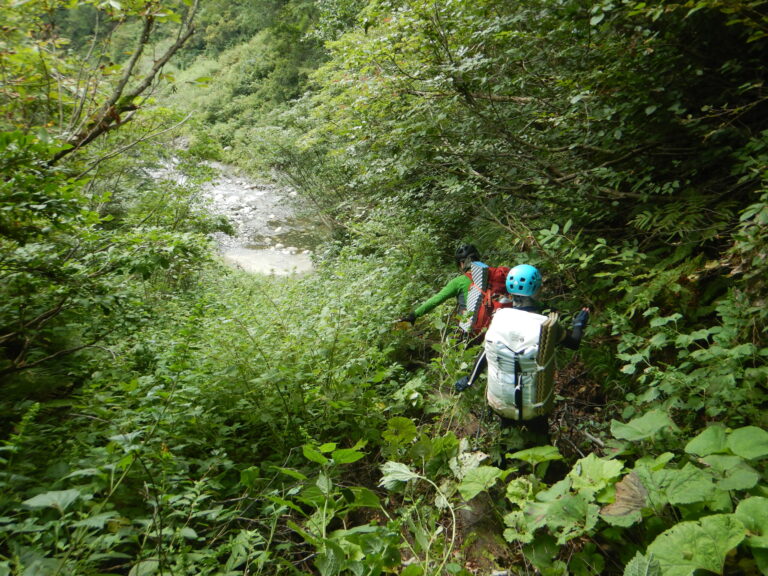
Eventually my body came back to me, and we pressed on. Two hours of climbing, then a descent along the streambed, and at 8:40 AM we finally caught sight of Naranokisawa below us.
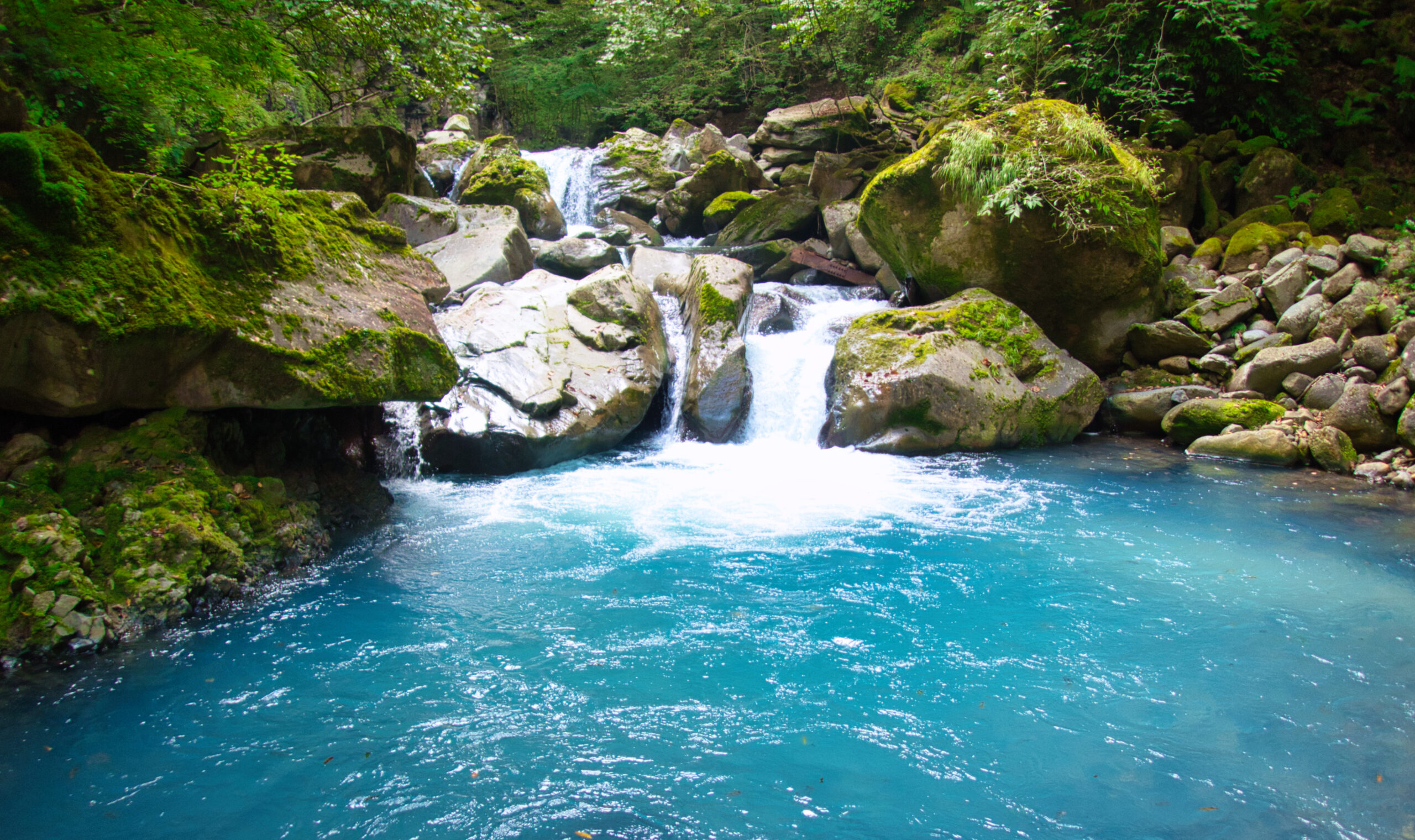
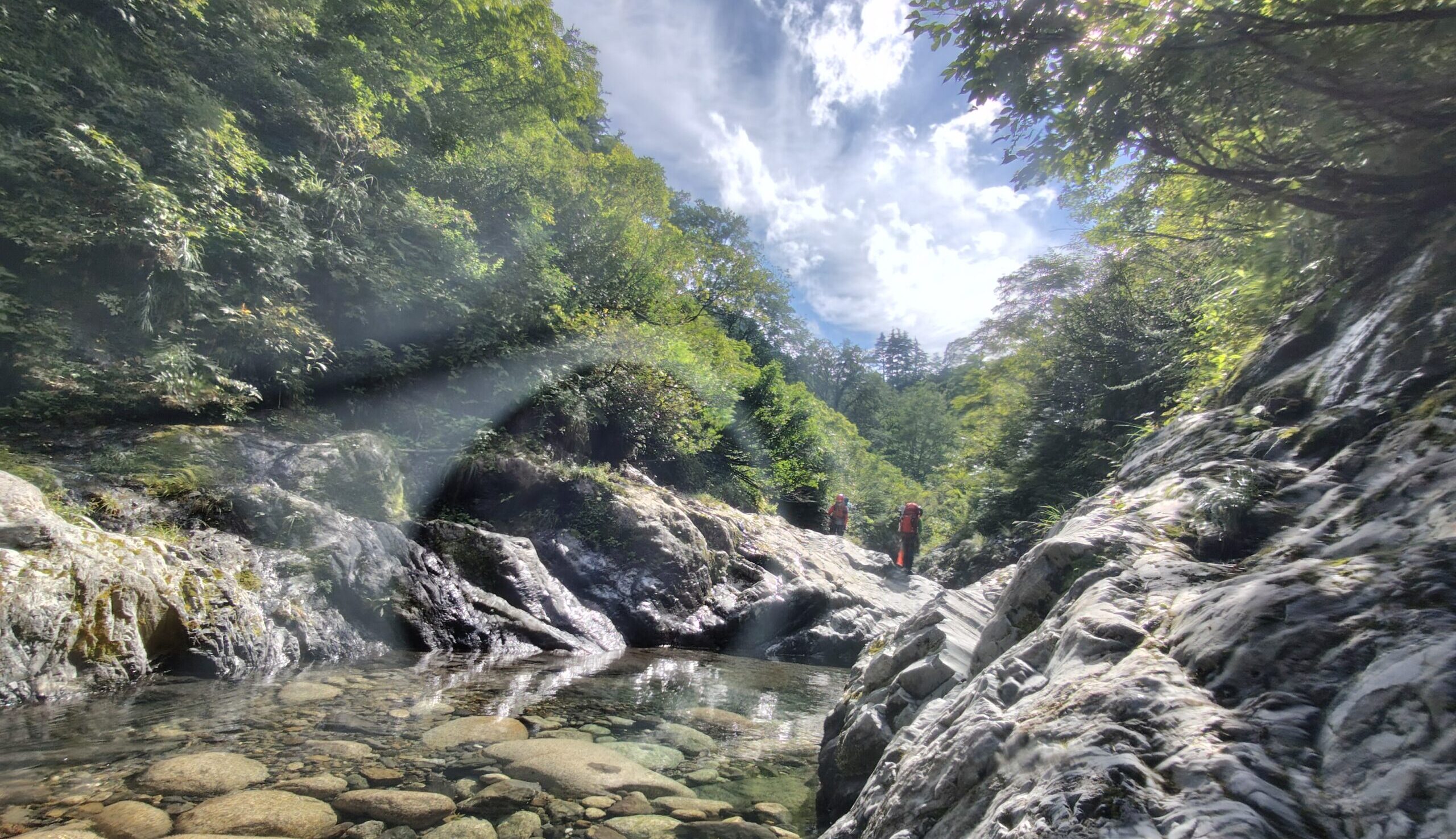
The moment we stepped off the ridge and onto the canyon floor, the beauty stopped us cold. Clear water slid over granite, the valley wrapped in deep green and still air. The sound of water filled the world. No great waterfalls requiring major bypasses — Maki (bypass) around an obstacle — just a succession of climbable small falls, long Gorge (gōrju) sections, and the pleasure of Hetsuri (traversing along the wall). An ideal stream for Sawanobori (Japanese stream climbing).
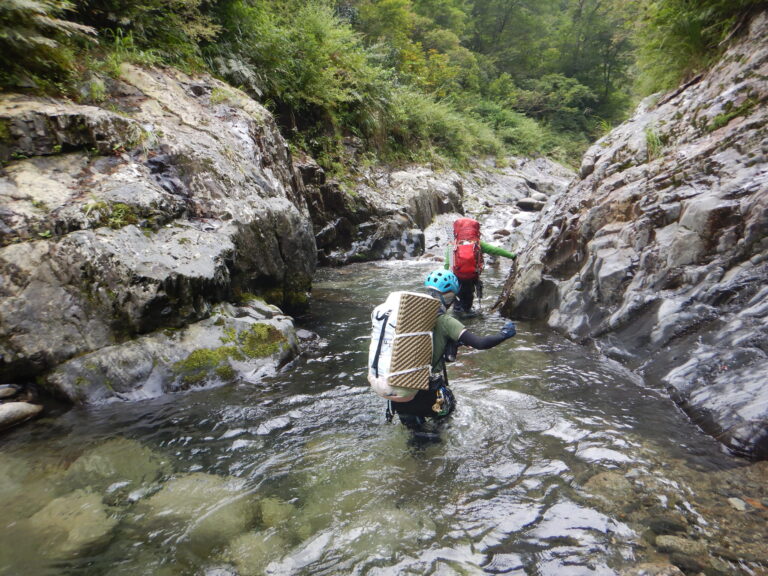
At 10:00 AM, we entered the stream proper. The real ascent had begun.
O took out his tenkara rod and began casting for iwana (Japanese char), while I worked the water with a lure. The fish showed little interest in my offerings, though O’s tenkara proved far more persuasive. Those iwana would later become the centerpiece of our camp meal.
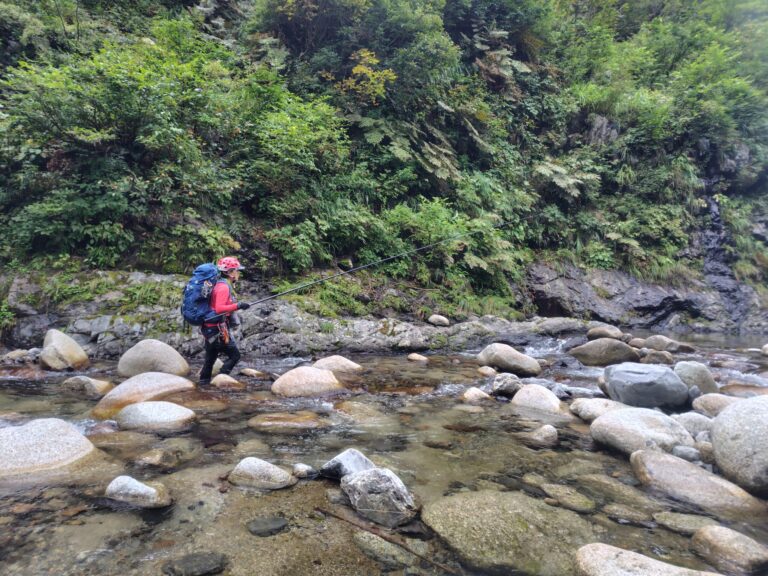
Granite is unforgiving when wet. We moved deliberately, reading each surface for hidden slime before committing weight. Two-meter, three-meter falls appeared one after another — some climbable straight up via Chokuto (direct ascent), others requiring stemming up the side walls. S and M picked their lines with care as we slowly gained elevation.
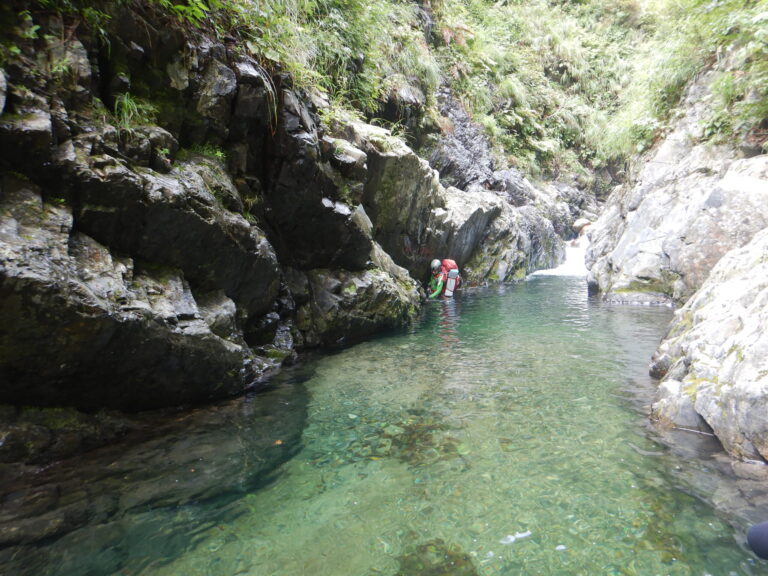
We entered the gorge proper. The canyon walls closed in; water poured through the narrow passage with focused force. Some sections we traversed along the walls by hetsuri; others required wading hip-deep through Toro (slow-moving pools). The cold water was welcome. This variety — this constant reading and responding — is the essence of sawanobori.
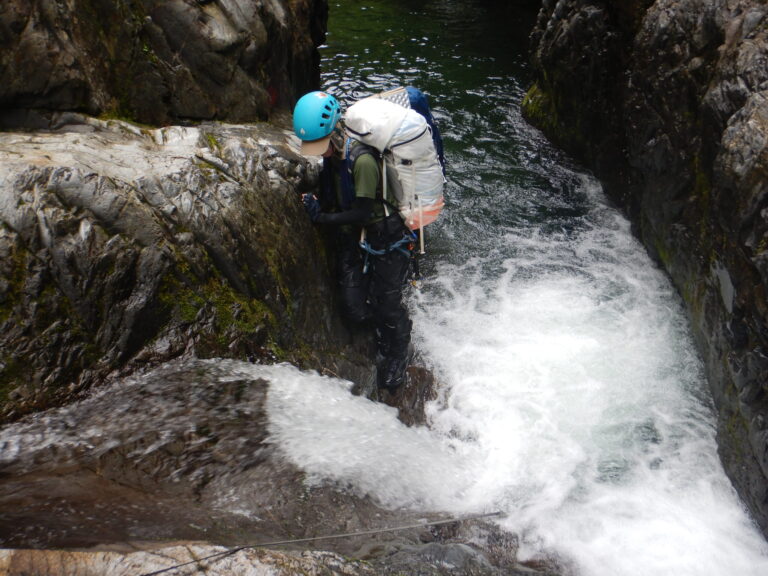
Just after 2:00 PM, we reached the Futamata (confluence) with Kamosawa. Beyond it, the gorge and small falls continued unbroken. The streamscape remained beautiful, holding our attention. Somewhere around 590 meters elevation we found a suitable flat area and decided to make camp.
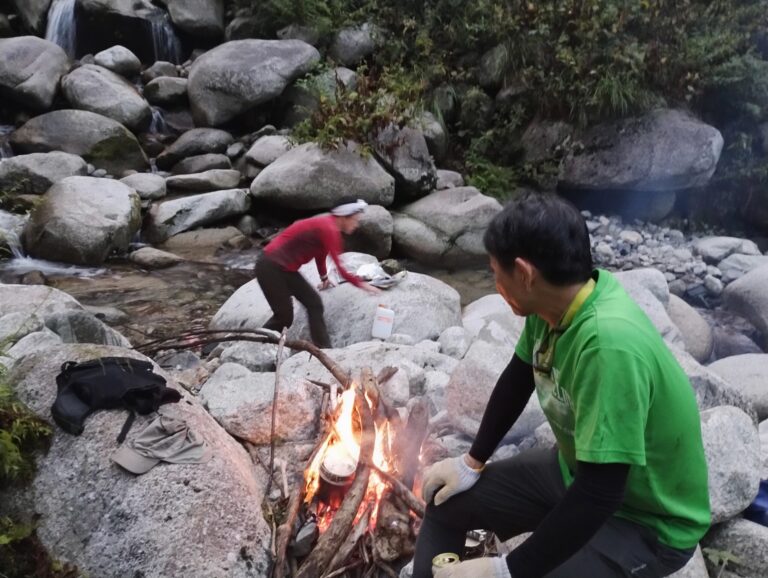
Around the fire, we turned the iwana O had caught into Iwana no Namero (minced Japanese char mixed with miso and green onion, shaped into a paste) and sashimi — thin-sliced raw fillets laid over vinegared rice cooked in the fire. A privilege reserved for those who stand in mountain streams. The rich, clean flavor of fresh iwana seeped into tired bodies. The four of us talked mountain talk until the flames burned low. The only torment was the mosquitoes — an unrelenting assault that kept the ears ringing long into the night.
I woke in the dark to the sound of rain. Water had pooled on the silver mat beneath the tarp. The rain only intensified. By morning, the clear stream we had ascended the day before had turned a murky, swollen brown. The uncertainty was real. But we had already passed through most of the gorge. We decided to continue, watching the flow carefully.
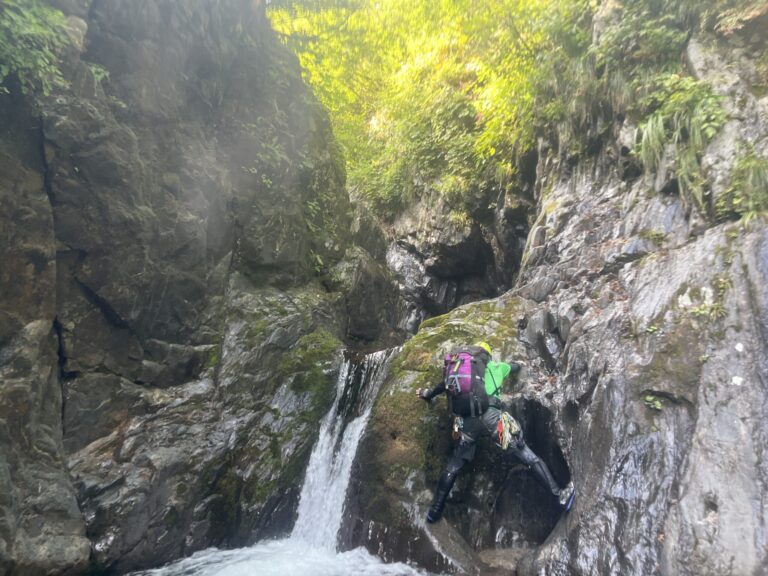
We departed at 6:20 AM into the second day’s grey light. The water roared. Each footstep demanded full attention, full commitment. The stream climbing itself remained engaging — small falls still offered interest — but the rain worsened, and eventually it came in curtains. Thunder rolled down the valley walls.
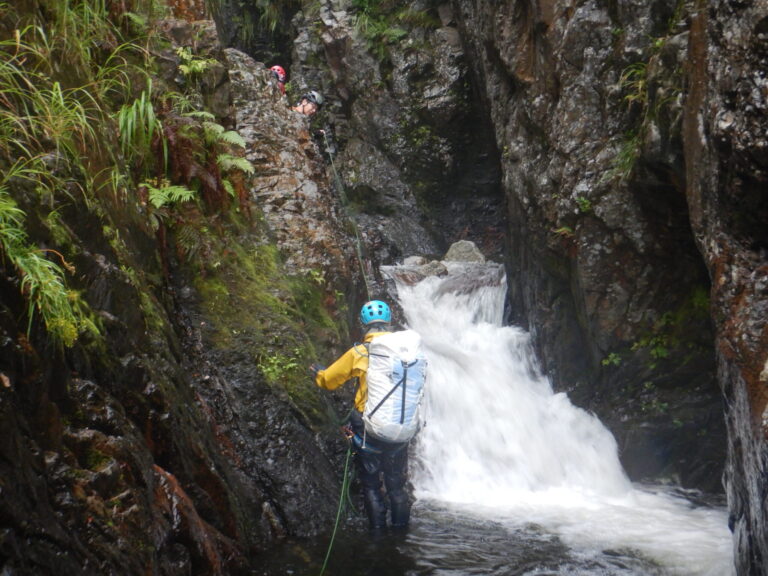
Around noon, we left the stream and pushed up to the ridge. To this point, we were on schedule. Standing at the 1,320-meter ridgeline, we felt a brief, quiet sense of accomplishment. We could not know that this was only the beginning of our ordeal.
The yabukogi that followed refused to move. The ridge was broad and featureless — no way to identify where the abandoned trail had once been. Even where we could find it, dense brush and bamboo grass rose to face height, demanding many times the effort for each meter gained. Branches struck our faces; footing was treacherous. We pushed through in silence. Forward progress became a matter of faith rather than sensation.
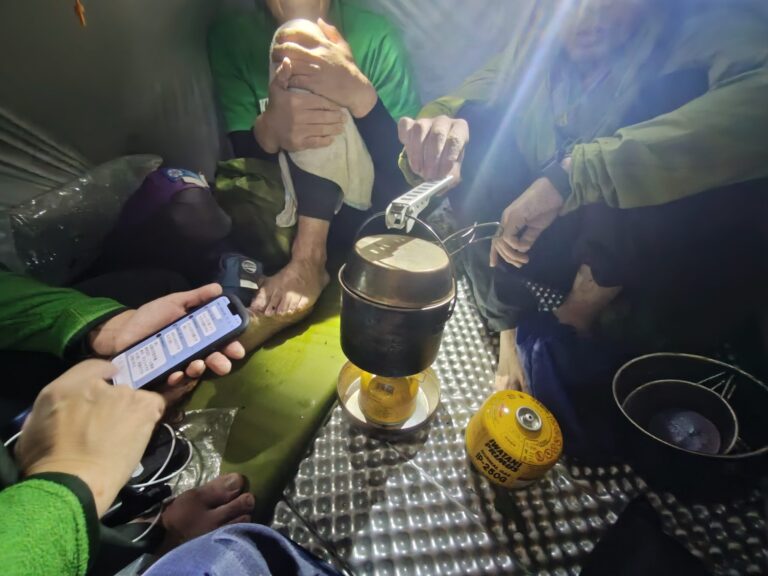
As the light faded, darkness pressed in. At 6:30 PM, at 1,040 meters elevation, we made the call to bivouac. Four people in a two-person tent. Cramped, yes — but sharing body heat offered a warmth no Zelt (tarp shelter) can replicate. Outside, the rain continued. We lay in silence and shared it.
On the morning of the third day, the rain had stopped. But before us stretched the same deep brush. We started moving again at 6:19 AM.
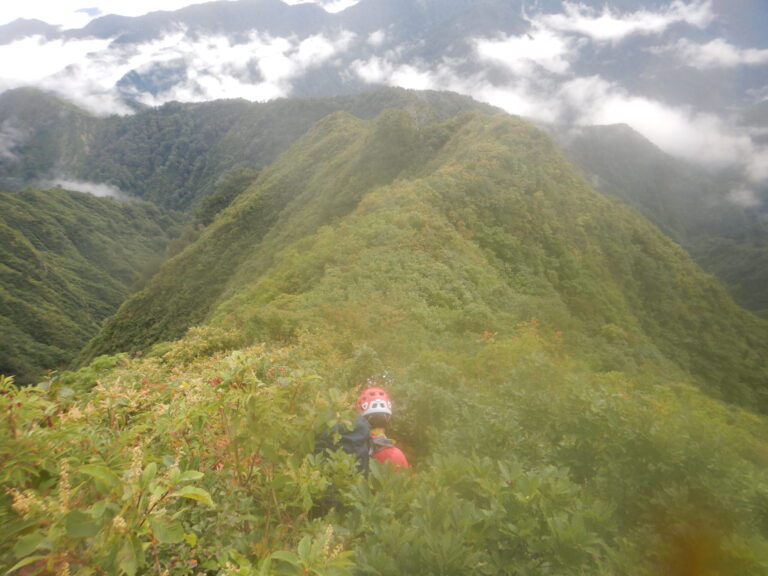
The broad ridge continued to confuse. We lost the trail repeatedly, forcing our way through the undergrowth, advancing at a pace that barely registered. An hour of effort, a glance back — perhaps a few hundred meters gained. Old tape tied to a tree here and there quietly testified that this had once been a trail. We held onto that evidence and kept moving.
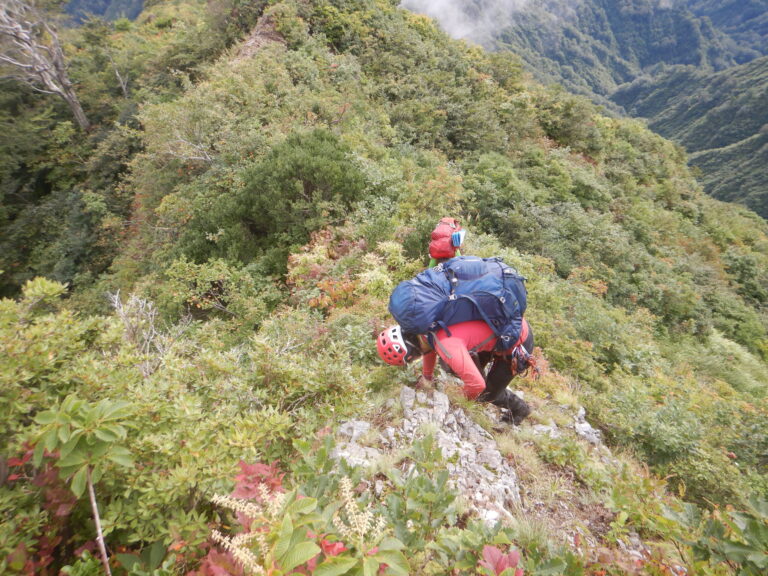
A helicopter passed low overhead more than once. We noted it uneasily. But by now we faced a more pressing concern than navigation: we were running out of food and water. One day beyond our planned timeline, our supplies had not been packed for this contingency. We divided emergency alpha-rice (freeze-dried rice rations) and calorie bars, sharing a hydration bladder among the four of us. Thirst and hunger worked steadily at our reserves of strength.
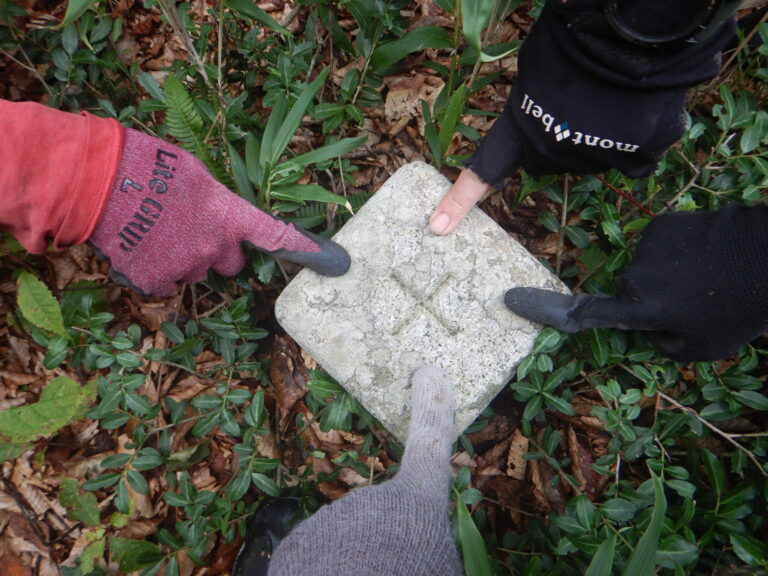
At 8:10 AM, we reached Kuroishi-yama. From here the trace of the old trail became more readable — still brushy, still demanding — but the path forward grew clearer. At 12:35 PM, we crossed Nariba Peak. The descent was finally in sight.
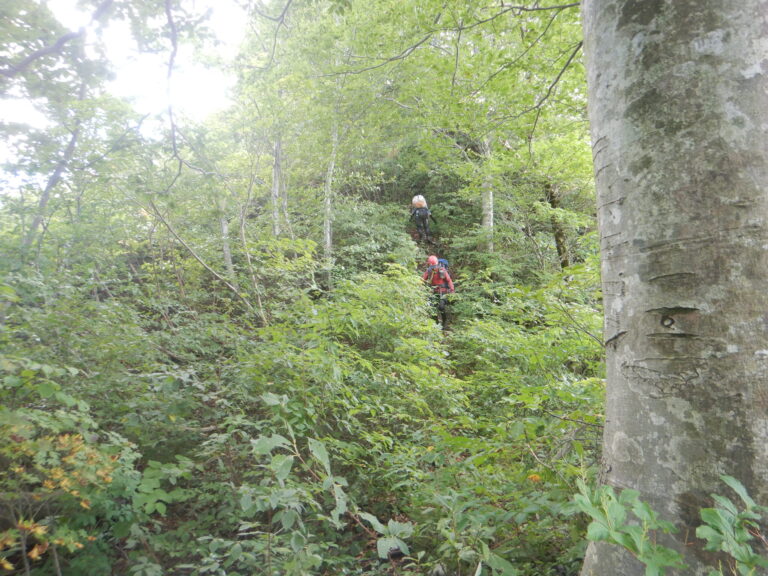
Just after 3:00 PM, we reached Oku-Tainai Hütte. Exhausted, deeply so. But the relief of descent lasted only a moment before the next surprise arrived.
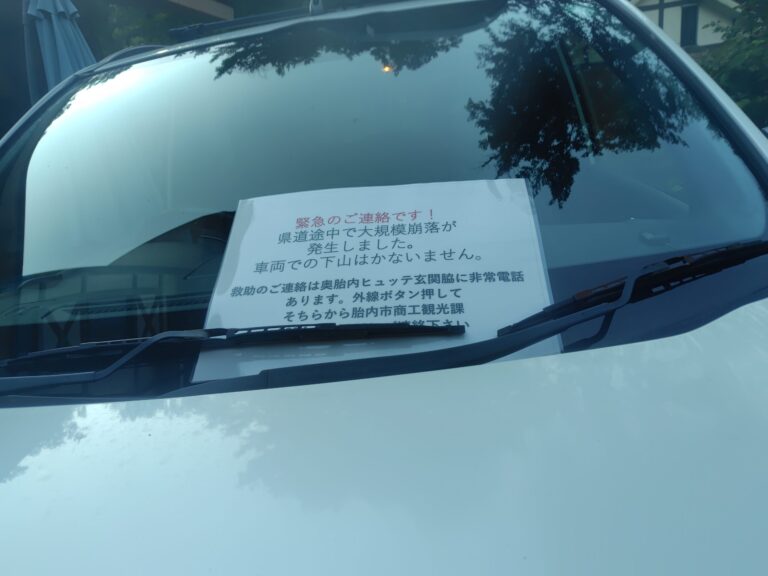
The hütte was closed. No signs of life. On the windshield of our car, a placard: “Massive landslide. Area isolated. Vehicle descent impossible.” That explained the empty hütte.
We used an emergency phone to contact Tainai City. A rescue helicopter would be dispatched. We later learned that police had already traced the car’s license plate to its owner and contacted my family. We had caused significant worry to those who cared about us.
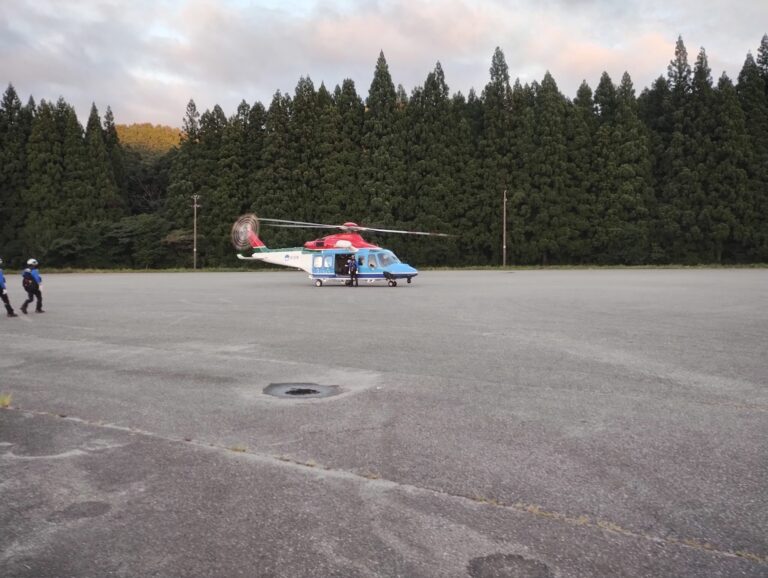
We gathered our gear and moved to the designated point. The rescue helicopter came in with a roar, lifting slowly from the earth. Through the window, Oku-Tainai Hütte shrank away below us — and our car, left behind, grew small and then invisible.
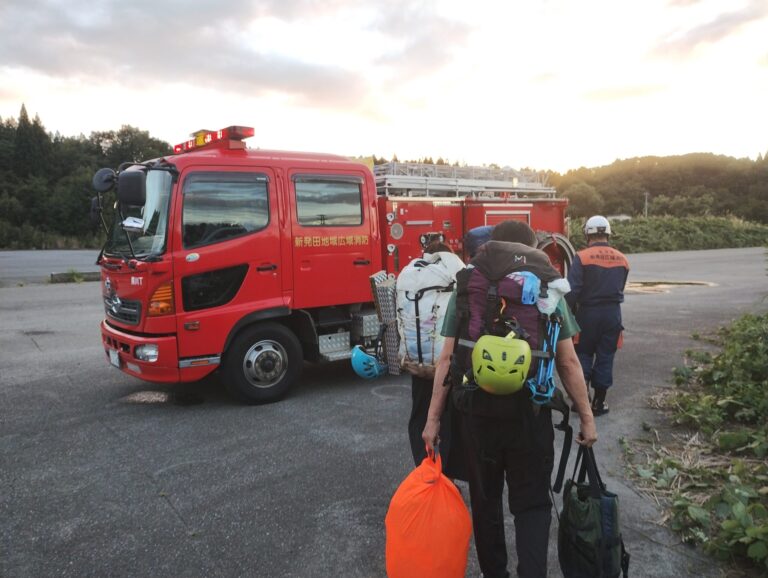
That night we could not return home. We stayed at Royal Tainai Park Hotel. A wide bed, a clean room, the ability to sleep fully stretched out. After a night of four adults in a two-person tent, this was something close to paradise. A hot shower. Clean sheets. The profound, renewed appreciation for what ordinary comfort means.
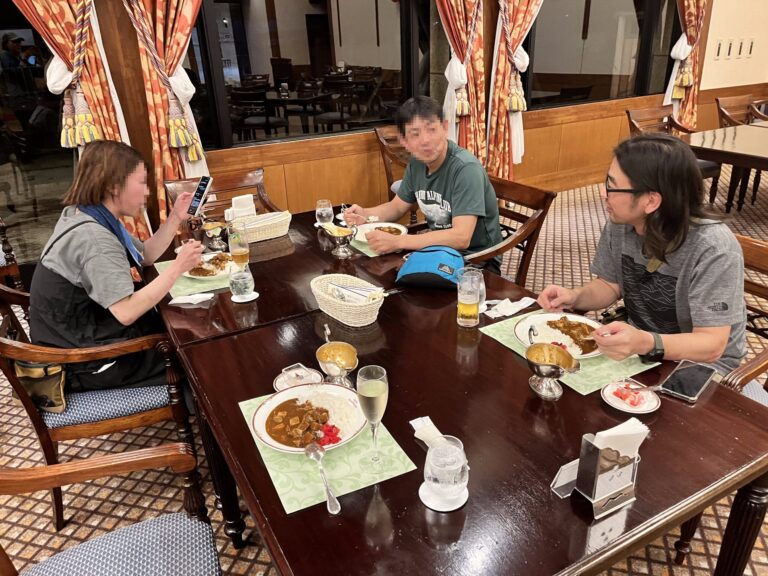
The following morning’s lavish breakfast buffet temporarily erased the memory of dividing meager rations. Warm food, abundant variety, the simple freedom to eat one’s fill. The four of us worked through plate after plate without speaking much.
We took the train from Nakajo Station to Shibata, then rented a car for the journey home. Our own vehicle would remain stranded at the trailhead for approximately one month.
There were forces beyond our control. But there were also failures of planning, execution, and communication that we must own. Our time estimate for the abandoned trail section was far too optimistic. Our food and water margins were insufficient. We caused real concern to people who mattered.
And yet: we never encountered a genuinely dangerous situation. No injuries. Everyone came off the mountain. That outcome, I believe, was the product of teamwork — four people with different strengths and weaknesses, trusting each other and holding each other up through difficulty.
The deep valleys of Iide, and three unexpected nights of wandering. This experience will become a quiet compass point I return to each time I set out for the mountains — something singular, unrepeatable, and mine.
[LOG SUMMARY]