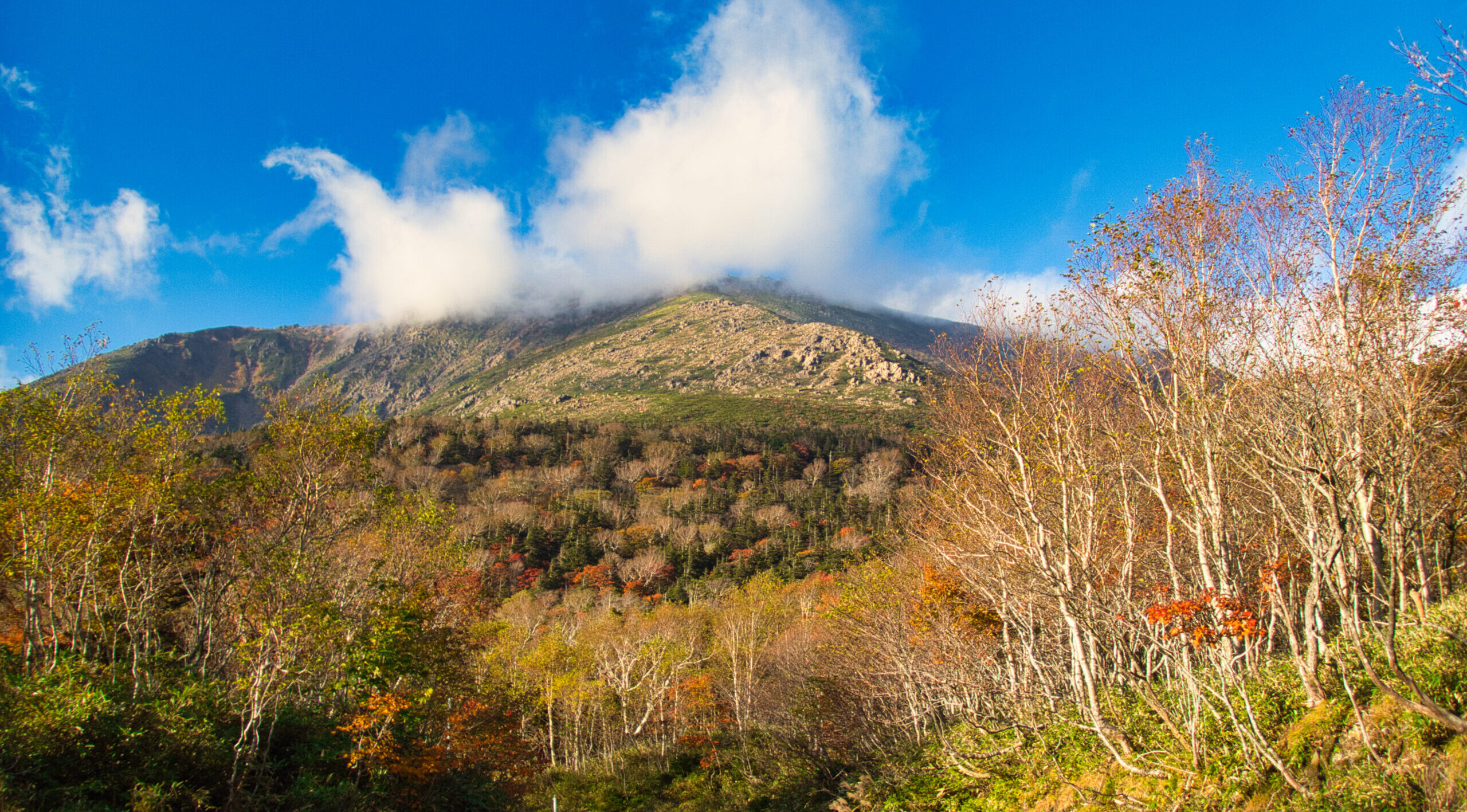
【Deep Dive Chronicle】Mt. Hayachine: Serpentine Peak and Autumn Sky
北村 智明
稜線ディープダイブ

Mid-summer, heading to Mt. Yakushi-dake in the Northern Alps. The equipment I had carried up for the Akagi-zawa gorge never saw the light of day due to unexpected illness. Changing my plan, I reached the summit shrouded in fog. These two days and one night taught me the humility that mountains demand and were filled with the tenderness of alpine flowers.
目次
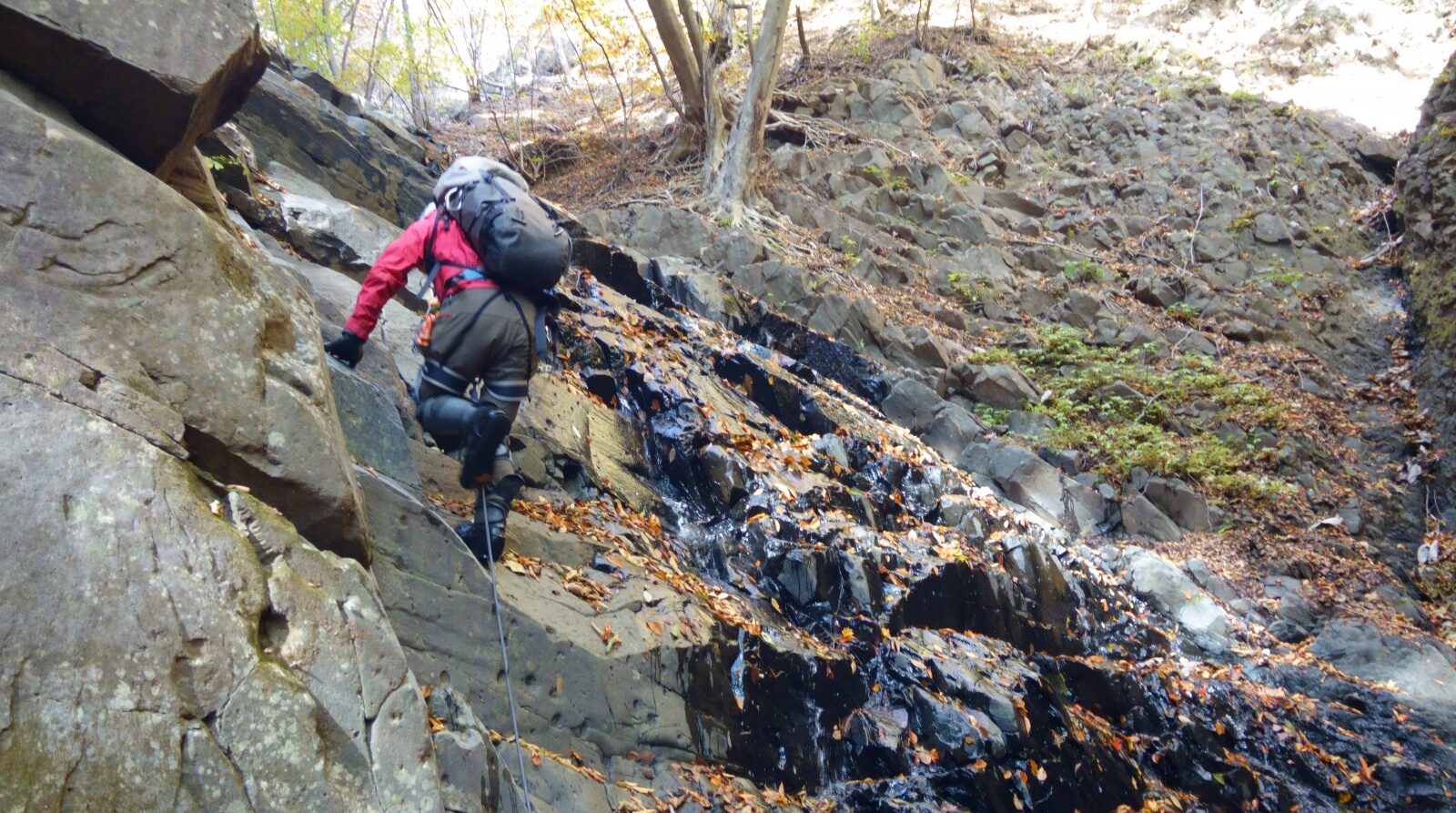
Departing Fukushima, I headed for Toyama. The night before, I had checked my equipment repeatedly. My backpack was packed with a full set of Japanese stream climbing (Sawanobori) gear: harness, rope, carabiners and other hardware. Tools for ascending the Akagi-zawa gorge. Located at the headwaters of the Kurobe River, this stream is renowned as one of the finest gorges in the Northern Alps, captivating stream climbers with its granite slabs and crystal-clear flow.
The day before, I had seen news of the fortieth anniversary memorial service held at Osutaka Ridge for the Japan Airlines jumbo jet crash. Forty years since that day when 520 lives were lost. What does safety in the mountains mean? It made me think once again.
I arrived at the Oritate trailhead at 9:00 AM. Clear skies. The temperature was already high, and inside the forested zone it was humid. The stream climbing gear and tent camping equipment weighed heavily on my shoulders as the monotonous ascent continued. Sweat poured down like a waterfall. But it wasn’t unpleasant. Anticipation for the journey ahead lightened my body.
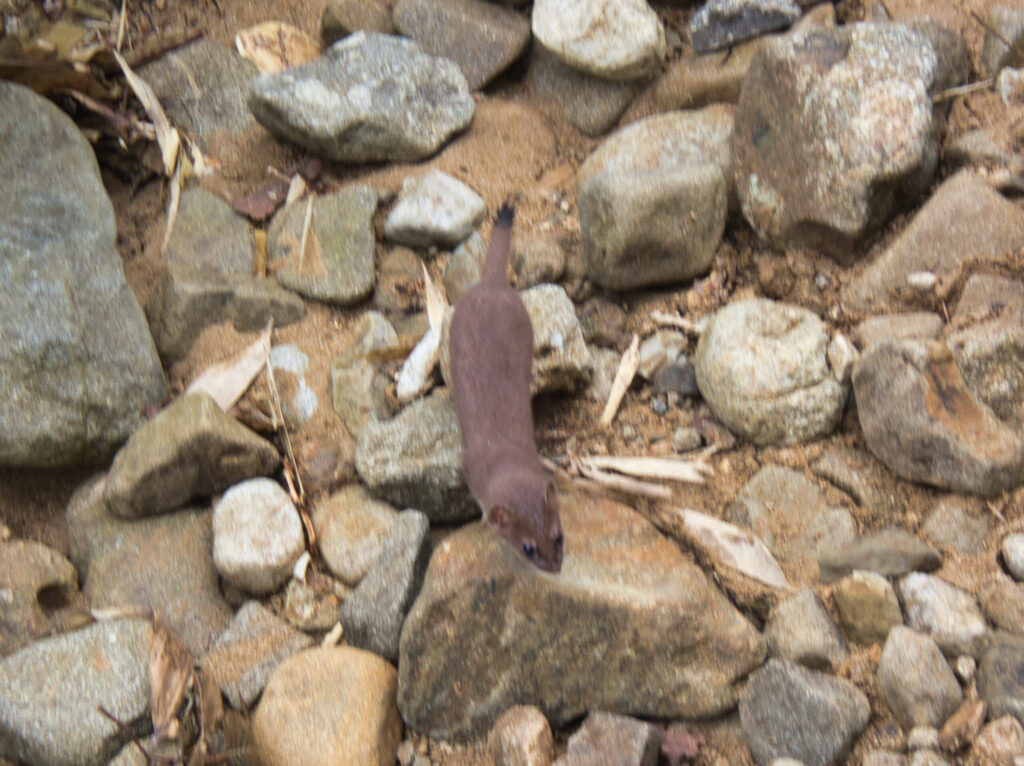
At that moment, something moved at my feet. An Okojo (Ermine). Its brown fur with a black-tipped tail. It looked up at me. It showed no sign of fear—rather, its gaze was full of curiosity. I hadn’t expected an ermine to be so friendly toward humans. We gazed at each other for a while. An encounter with a small life is a gift the mountains offer.
Emerging from the forest, the view opened up. The moment I saw Taro-daira Hut, my heart raced. Beyond the ridgeline stretched mountains and blue sky. This sense of liberation is the true essence of the Northern Alps.
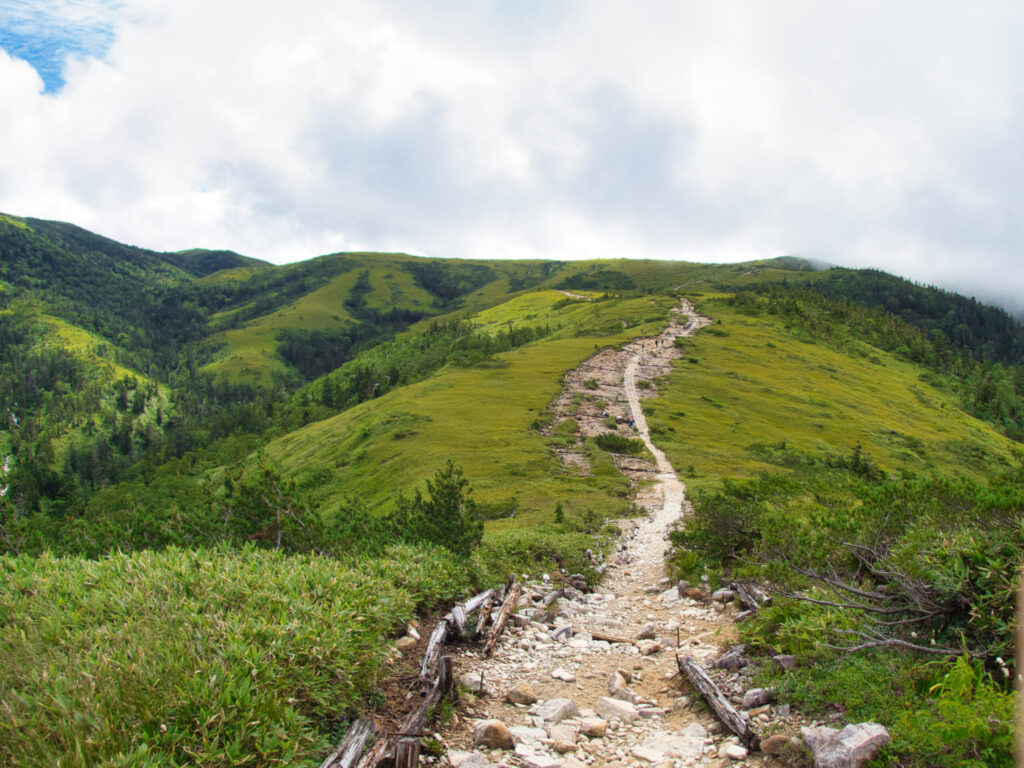
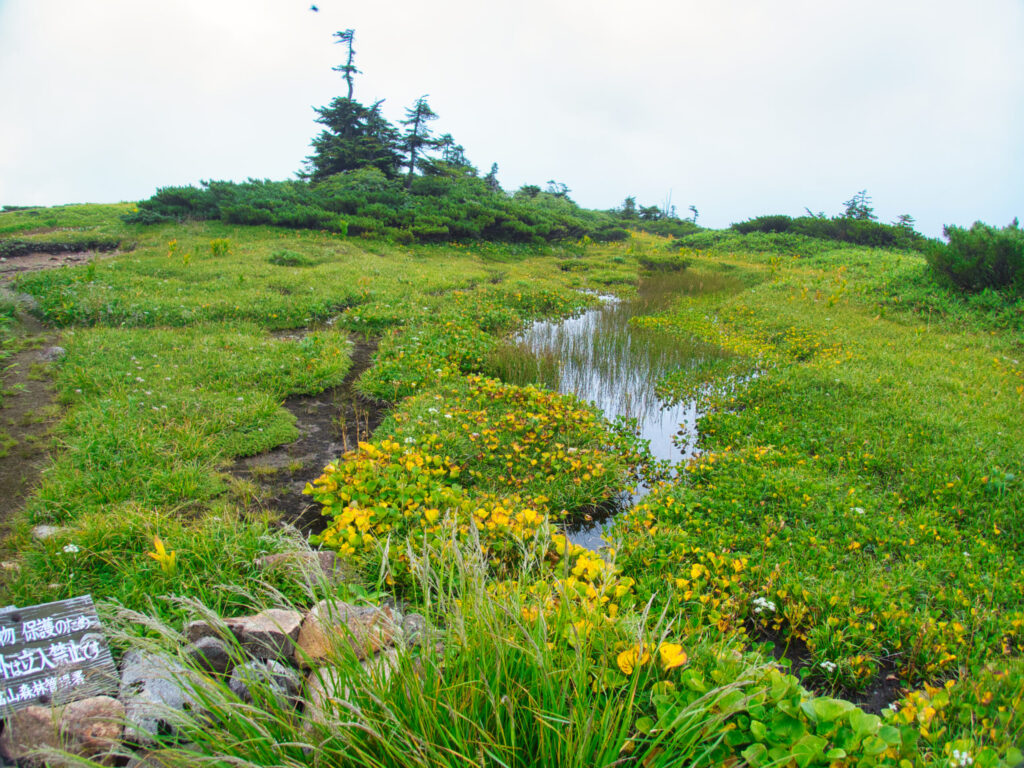
From Taro-daira to Yakushi-daira. Boardwalks continued. I passed through wetlands blooming with alpine plants. White flowers, yellow flowers, purple flowers. Yakushi-daira in mid-summer was a paradise of flowers.
At 2:00 PM, I arrived at the campsite at Yakushi-daira. I pitched my tent and prepared dinner. Tomorrow would be Akagi-zawa. With that thought, I fell asleep.
I woke at 3:00 AM. There was a dull pain in my abdomen. At first it was just a slight discomfort, but it gradually intensified. Cold sweat ran down my back.
I was unwell. I didn’t know the cause. Food poisoning? Accumulated fatigue? In any case, I couldn’t proceed to Akagi-zawa in this condition. Stream climbing that enters deep valleys is dangerous without being in perfect health. I was anxious. But if I pushed myself here, the consequences could be irreversible.
I lay in my tent for about two hours. The abdominal pain didn’t subside, but it wasn’t so severe that I couldn’t move. I would change my plan. Give up on Akagi-zawa and make a round trip to the summit of Yakushi-dake. That was my decision.
The equipment I had carried up for Akagi-zawa remained unused in my pack. It was disappointing. But more than that, what came to mind were the faces of my climbing friends who had wanted to go to Akagi-zawa. I couldn’t go ahead of them alone. Was this an unwritten rule among mountain companions—the prohibition against sneaking ahead? With such thoughts, I headed toward Mt. Yakushi-dake.
I departed Yakushi-daira at 5:34 AM. Via Yakushi-dake Mountain Hut to the abandoned shelter site. From there to the summit, a rock ridge continued. Fog began to rise. Visibility was poor. I moved carefully.
At 7:21 AM, I reached the summit of Mt. Yakushi-dake. Elevation 2,926 meters. A famous peak numbered among Japan’s 100 Famous Mountains. However, the summit was wrapped in thick fog. For just a moment, the mist seemed about to break, but ultimately no view was obtained.
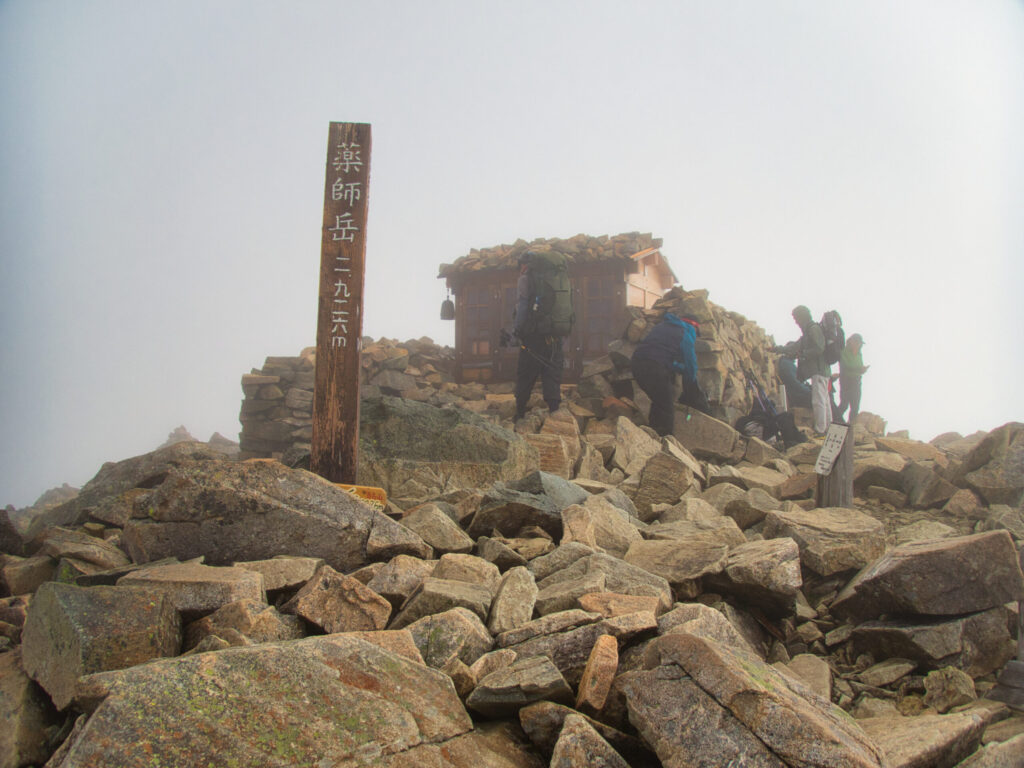
Still, it was good. Mountains don’t always meet our expectations. The silence within the fog is also one of the expressions mountains show. I stood there and took a deep breath.
As I began descending toward Yakushi-dake Mountain Hut, a Raicho (Rock Ptarmigan) appeared on the trail. Its summer plumage of brown. It walked calmly at a distance of two or three meters. It paid me no mind. I even felt a sense of divinity. Following the Okojo, now a Raicho. The masters of the Northern Alps were showing themselves one after another. Though this was a trip where I had changed my plan due to illness, perhaps the mountain was caring for me in a different way.
For the descent, I chose the route from Taro-daira to Oritate. Past Yakushi-daira, to Yakushi Pass. A short break at Taro-daira Hut. From there, the path to Oritate continued through wetlands and forest again.
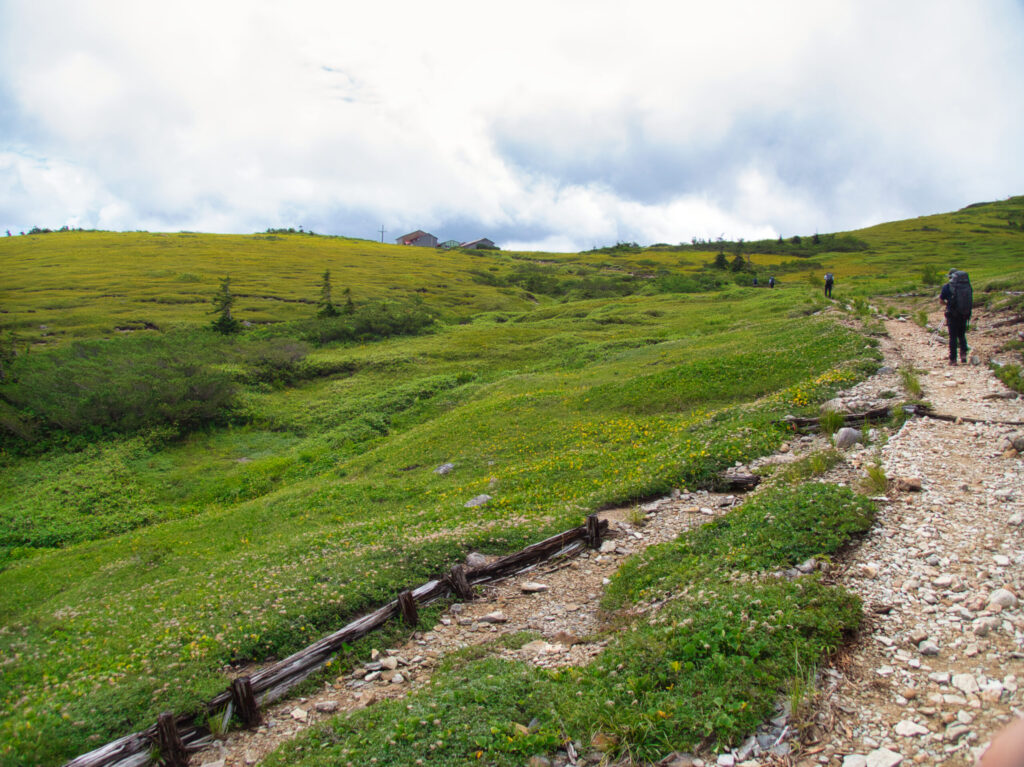
Looking back, I could see the form of Mt. Yakushi-dake. The summit remained wrapped in fog. Normally, from the summit one can view the cirque on the eastern face, a remnant from the ice age. I had wanted to confirm with my own eyes the full scale of that deeply carved glacial valley. But mountains choose their timing. This time, I had to be satisfied with imagining that sight.
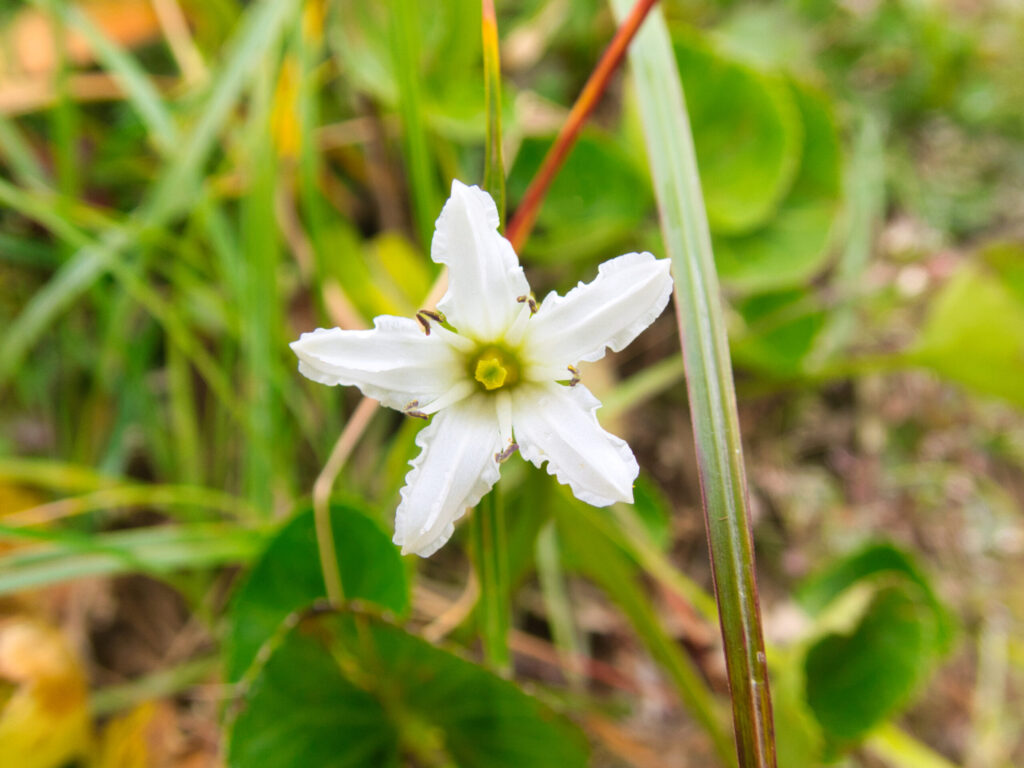
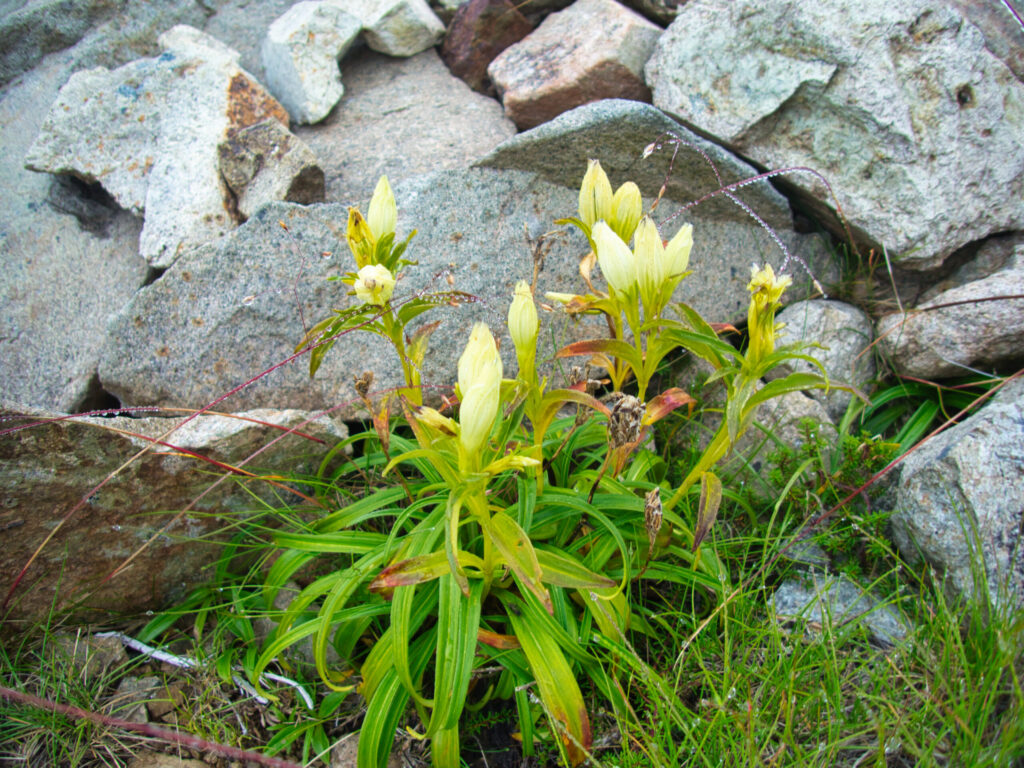
The flowers spreading on both sides of the boardwalk comforted me. Hakusan Ichige (Narcissus-flowered Anemone) with its pure white petals giving a modest impression, Miyama Kinpouge (Japanese Alpine Buttercup) shining golden, and the delicate purple of Hakusan Furo (Geranium yesoense). The wetland flowers sparkled in the mid-summer sunlight.
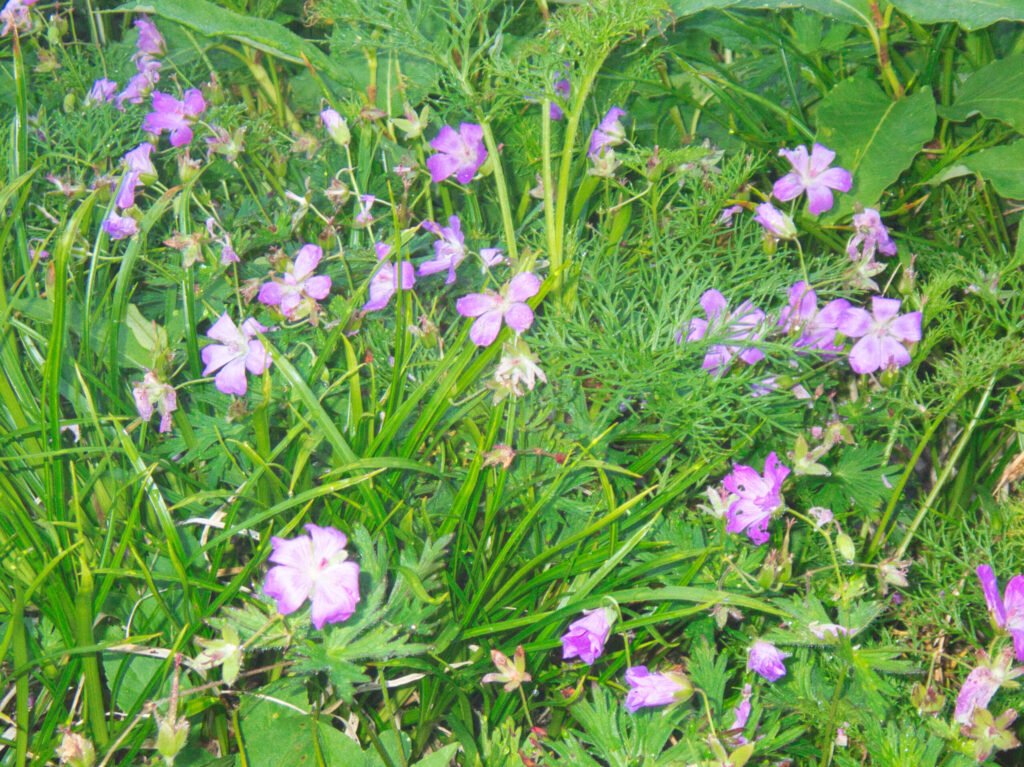
This was a trip where I had to change my plan. I couldn’t ascend the Akagi-zawa gorge. I couldn’t see the full view of the cirque from the summit either. But walking through these flower meadows, the encounters with the Okojo and Raicho, standing on the foggy summit—these were sufficient rewards for me.
I rested at Gokoiwa Bench, then entered the forest zone. The long descent continued. My knees began to shake. Fatigue was accumulating. But I proceeded step by careful step.
At 1:01 PM, I arrived at Oritate.
I washed off the sweat at Family Onsen Hiraki-no-Yu in Kamiichi Town. The mountain fatigue dissolved into the hot water. Moving to Toyama City, I had dinner at Sushi Kuine. Fresh Toyama sushi rewarded me for two days in the mountains.
Mountains don’t always go according to our wishes. Changing the plan due to illness. While disappointing, it was also a lesson the mountain taught me. Not to push oneself. To have the courage to turn back. To prioritize safety above all.
The Akagi-zawa gorge will be for another time. Next time in perfect health, and together with companions.
The flowers of Yakushi-daira and foggy Mt. Yakushi-dake. Two days that concluded a mid-summer solo journey.
LOG SUMMARY