【Deep Dive Chronicle】Sampokura-yama — Into the Futakuchi Gorge in Autumn
北村 智明
稜線ディープダイブ
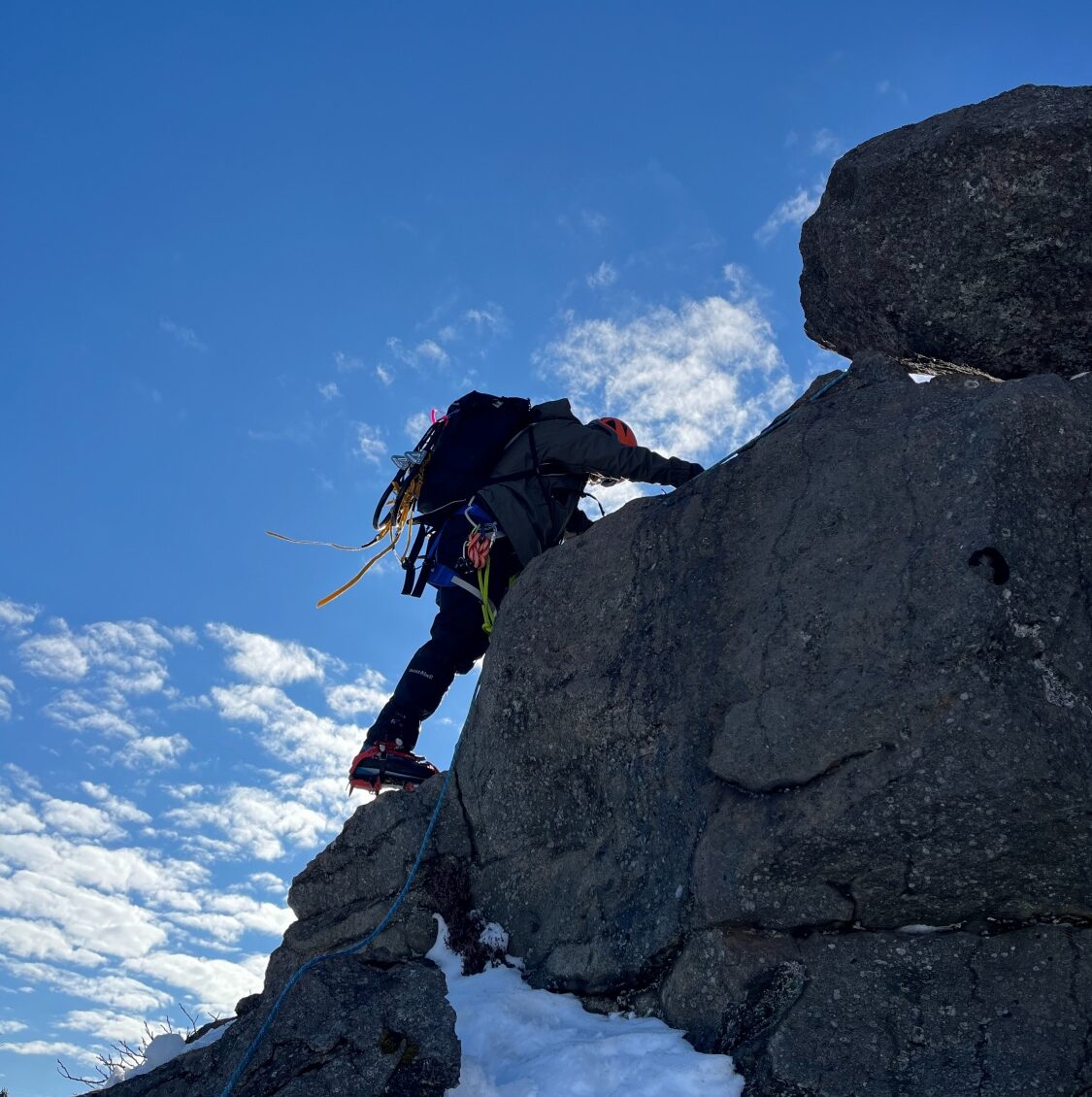
In the depths of December, we set our sights on the Zao Range — specifically Goshiki Dome, a rocky summit at 1,570 meters. What followed was a day spent wrestling with poor snow conditions brought on by an unusually warm winter: a fall into the icy waters of the Nigorikawa, snowballs clinging stubbornly to our crampons, and the tension of climbing a granite rock ridge. This is one climber’s account of a winter day on Zao, shared with companions.
Six of us gathered at Togatta Onsen before dawn. A Tohoku winter morning bites with cold; our breath froze white in the air, and the streetlights diffused their glow like mist. The night before, news had broken that the twin pandas in Tokyo’s Ueno would be returned to China — the first time in half a century that Japan would be without pandas. It felt like a small reminder of how the world keeps shifting beneath us. We checked our gear in silence and prepared for Zao.
We drove. As the car climbed the dark mountain road, the sky gradually paled. A forest of snow monsters (juhyō) — ice-crusted trees unique to this range — emerged in the half-light. No matter how many times I’ve visited this area, this scenery never fails to capture me.
We parked at Mountain Field Miyagi Zao Sumikawa a little past 7:30 AM. The sky had brightened fully, opening into blue, and the wind was calm. We finished our preparations, and just after 8 AM, picked up our snowshoes (wakan) and trekking poles. We expected to be breaking trail through deep snow on the approach, so we packed our crampons and harnesses away, planning to gear up at the crux. Today was a private climb among friends.
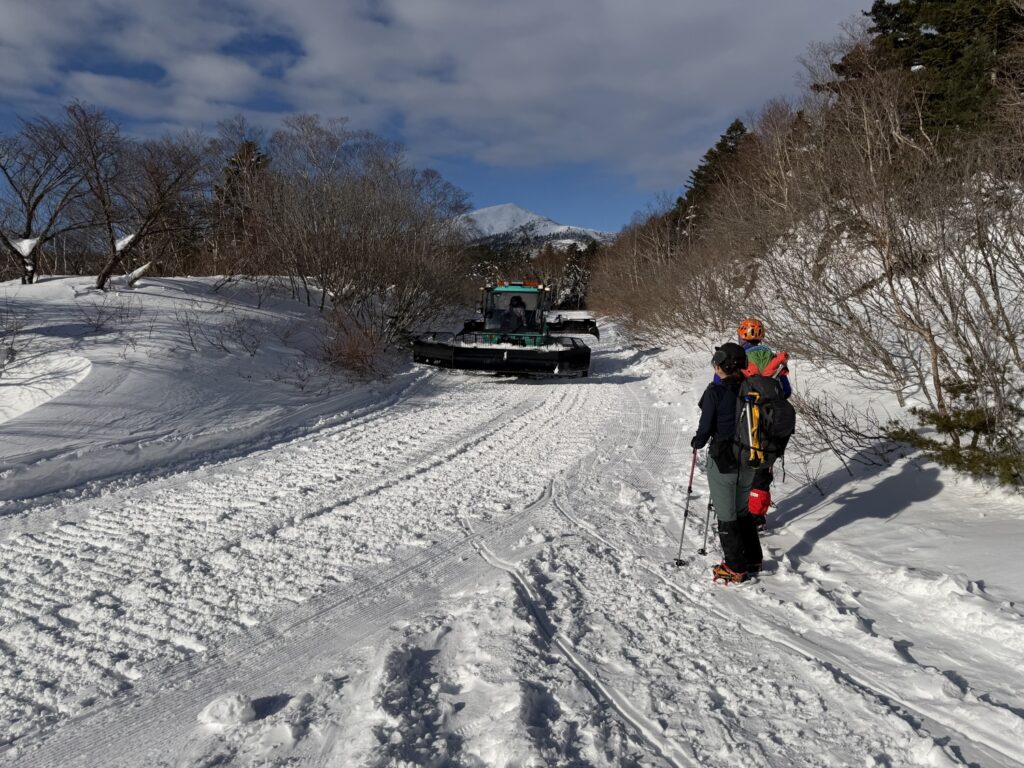
We passed through the Atomi Gate and walked in silence along the cat track. The snow was deep, but the temperature unusually mild — warmth that felt out of place for late December. The effects of the warm winter, no doubt. Our wakan sank into the deep snow, and we probed the surface carefully with our poles as we advanced. Zao at this time of year should have been colder than this. Climate change is visibly reshaping the character of these mountains. A quiet unease settled in — we couldn’t read the snow.
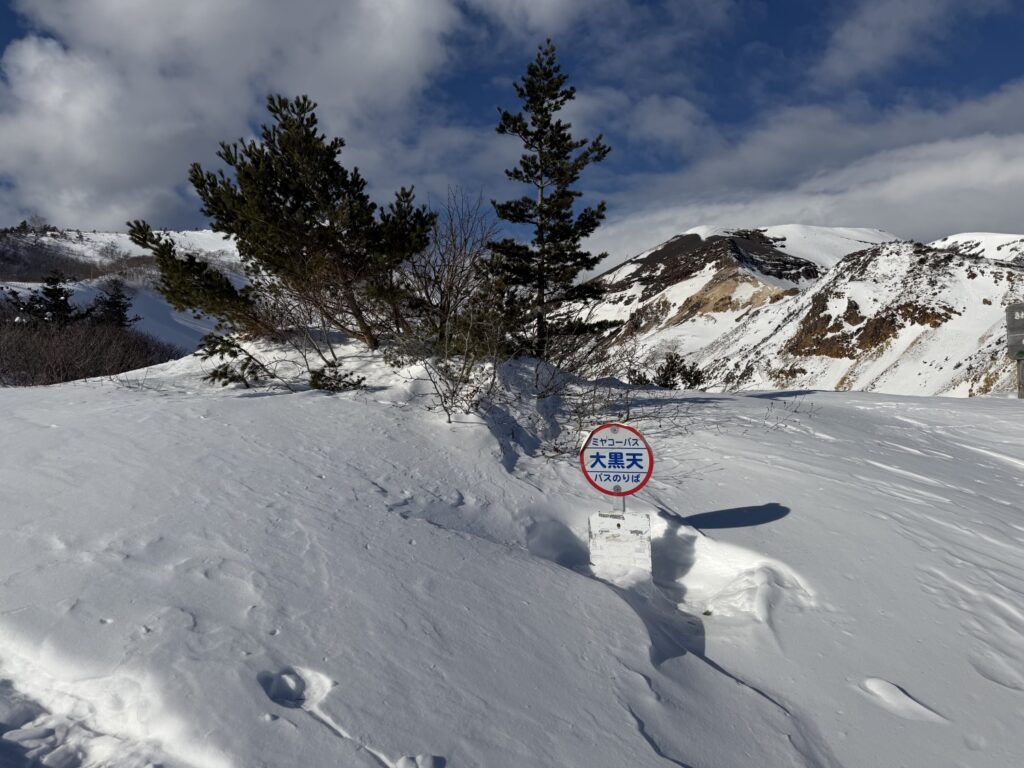
We reached the Daikokuten Trailhead at 9:49 AM. From here, the real climb toward Goshiki Dome would begin. Goshiki Dome — at 1,570 meters, set on the flank of Mt. Goshiki-dake — is a hybrid terrain of snow and rock, a winter fortress shaped by Zao’s harsh weather. The Zao Range straddles Miyagi and Yamagata prefectures, a chain of volcanic peaks including Mt. Goshiki-dake, Mt. Katta-dake, and Mt. Kumano-dake, and in winter it becomes a stage demanding serious technical skill.
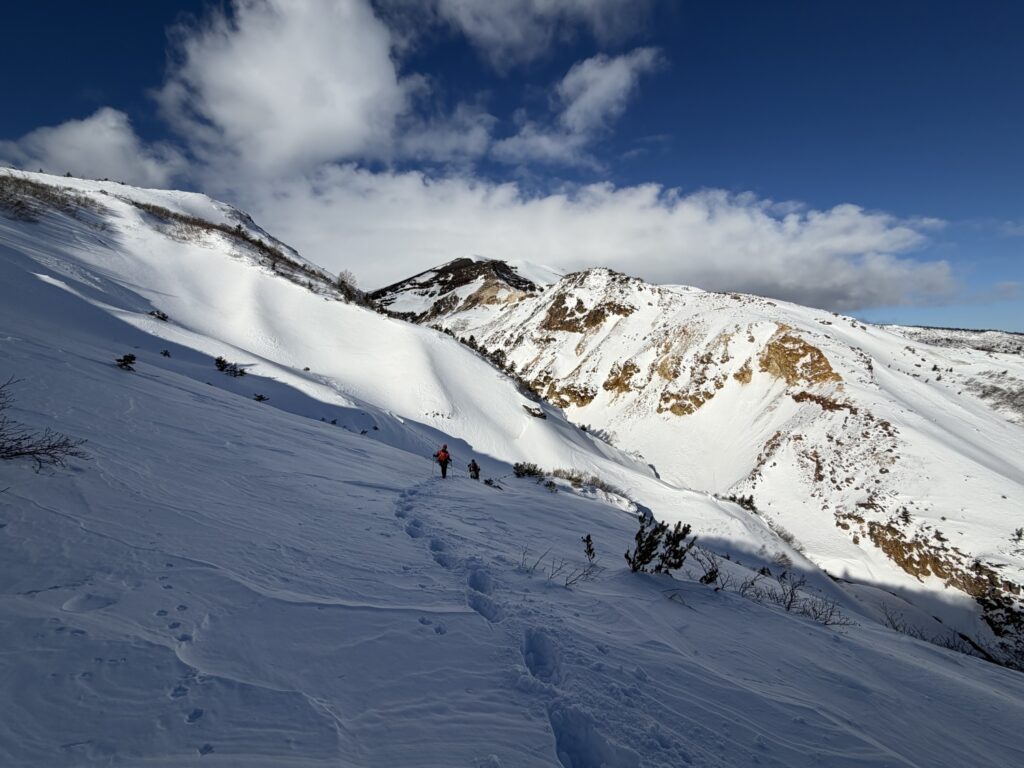
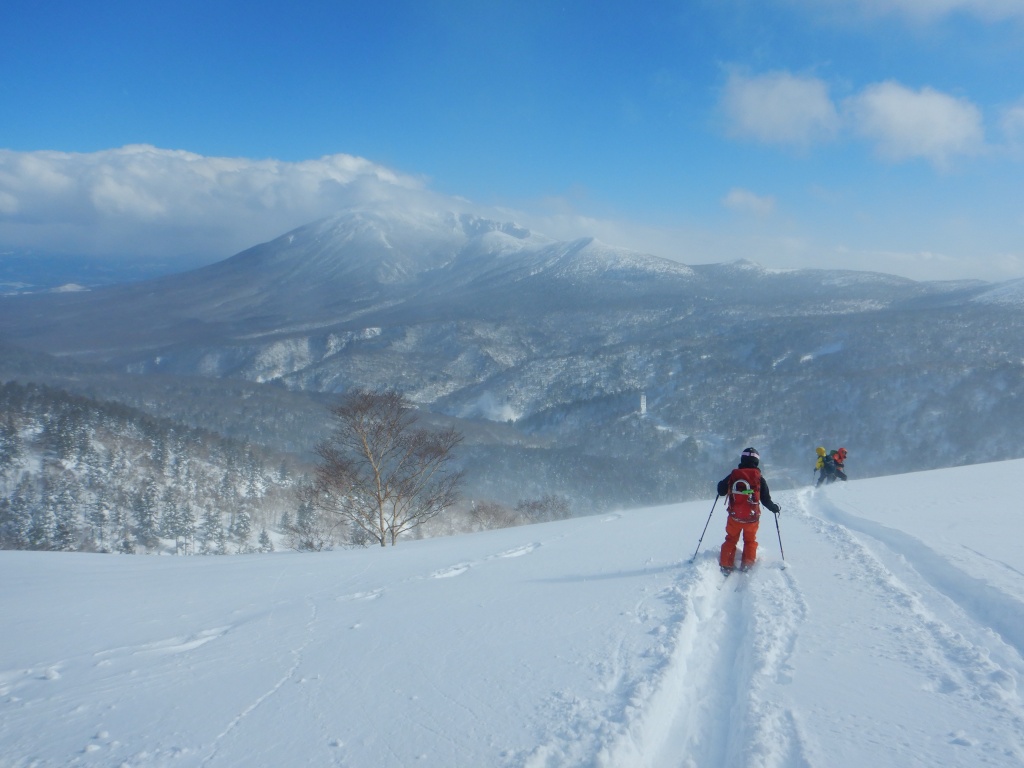
I looked up at the snow ridge stretching ahead. The sky was clear blue, and in the distance, the silhouette of Mt. Goshiki-dake rose beautifully into view. The wind stayed calm. We exchanged glances with our companions and nodded — S, U, and the two T’s, each a seasoned climber in their own right. We pushed on in silence, gaining elevation step by step, the only sound the crunch of snow underfoot breaking the stillness.
Past the Daikokuten Trailhead, we continued on with our wakan strapped on. The snow ran deep, and we advanced carefully, probing the surface with our poles. The forest was quiet, broken only now and then by the soft thud of snow falling from branches.
About an hour past the trailhead, we reached the crossing point of the Nigorikawa’s main stream. The flow beneath the snow looked thin, but that was no reason to let our guard down.
I attempted the crossing. Still wearing my wakan, I stepped carefully forward. In that instant, the snow beneath my foot gave way.
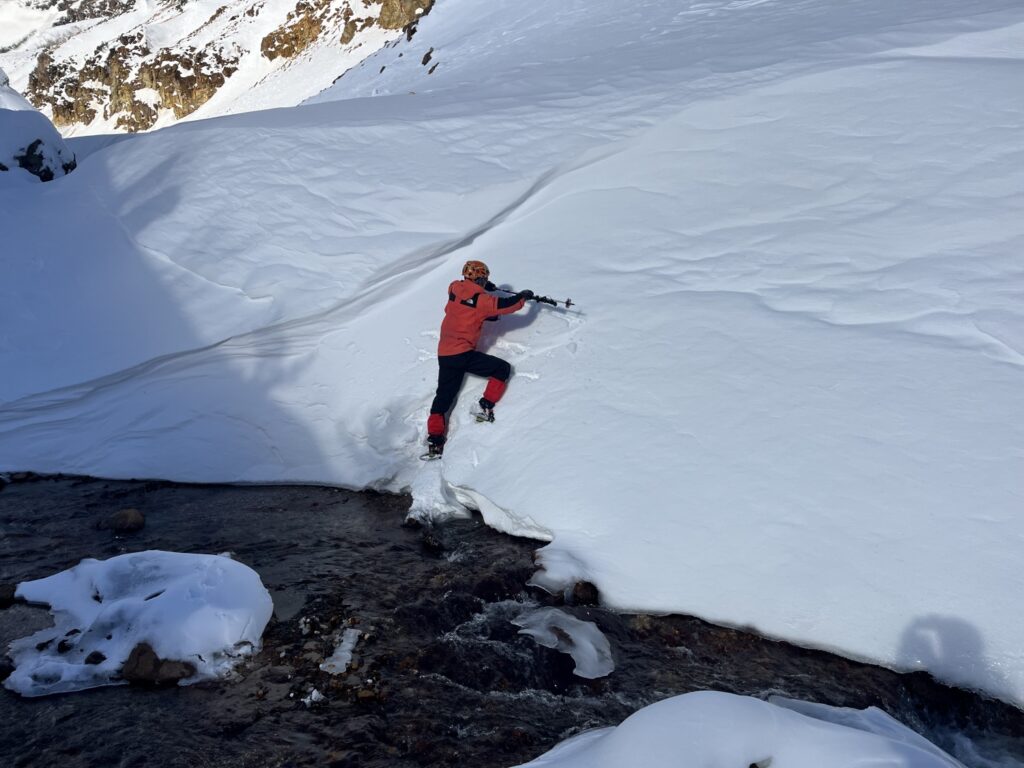
The next moment, one leg was submerged in icy water. My body locked up for a second. I heard my companions’ voices, but my first priority was hauling myself out under my own power. I grabbed at the snow. Somehow I clambered up onto the opposite bank, cold sweat running down my back.
“You alright?”
It was S. I nodded in reply. Fortunately, only part of my boot had gotten wet — nothing serious. But I’d learned firsthand just how treacherous the snow quality becomes thanks to this warmth. A hidden current running beneath the snow — another hazard born of the mild winter.
We composed ourselves and pressed on, gaining elevation as the base of the climb drew closer.
What proved even more troublesome was the snowballing on our crampons. With every step, snow packed itself beneath the points, as uncomfortable as if a stone had wedged itself into the sole of a boot. There was no way to plant a stable step like this. We stopped repeatedly, knocking the snow free with the spikes of our poles and ice axes — a sharp, metallic clack ringing out each time. My companions went through the same ritual beside me. I lost count of how many times we repeated it.
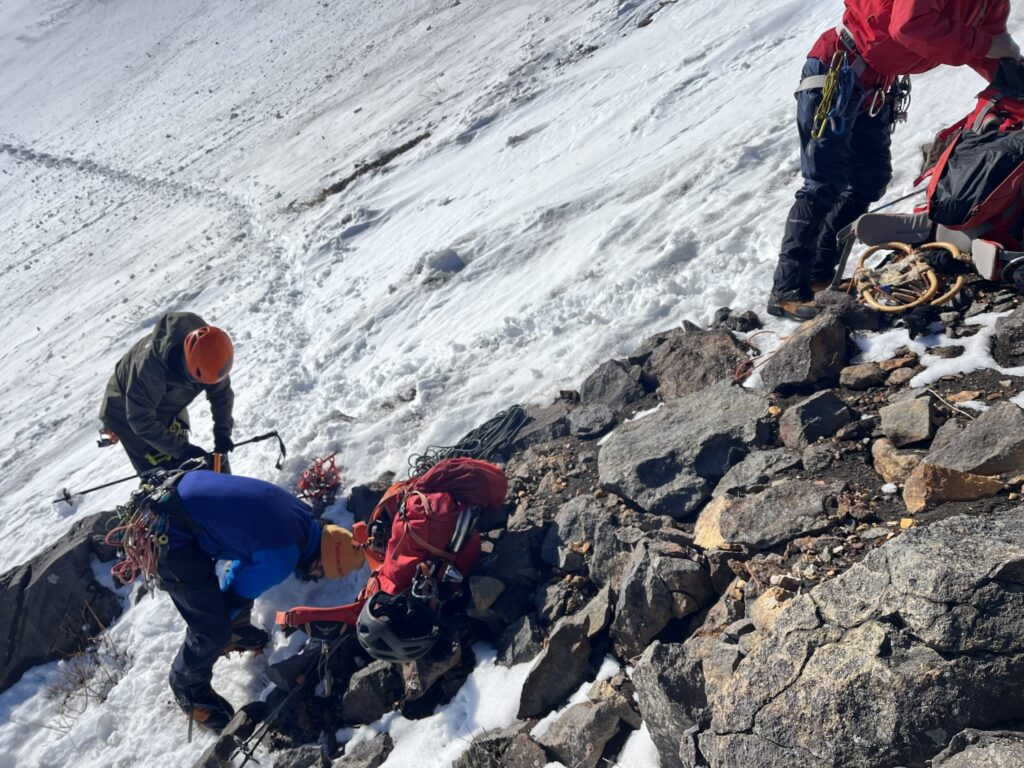
We reached the base of Goshiki Dome a little past 11 AM. There, we swapped our wakan for crampons, stowed our poles, and took up our ice axes. We put on harnesses, checked the rope, and ran through everyone’s gear — harness tension, carabiner locks, helmet fit. From here, things got serious.
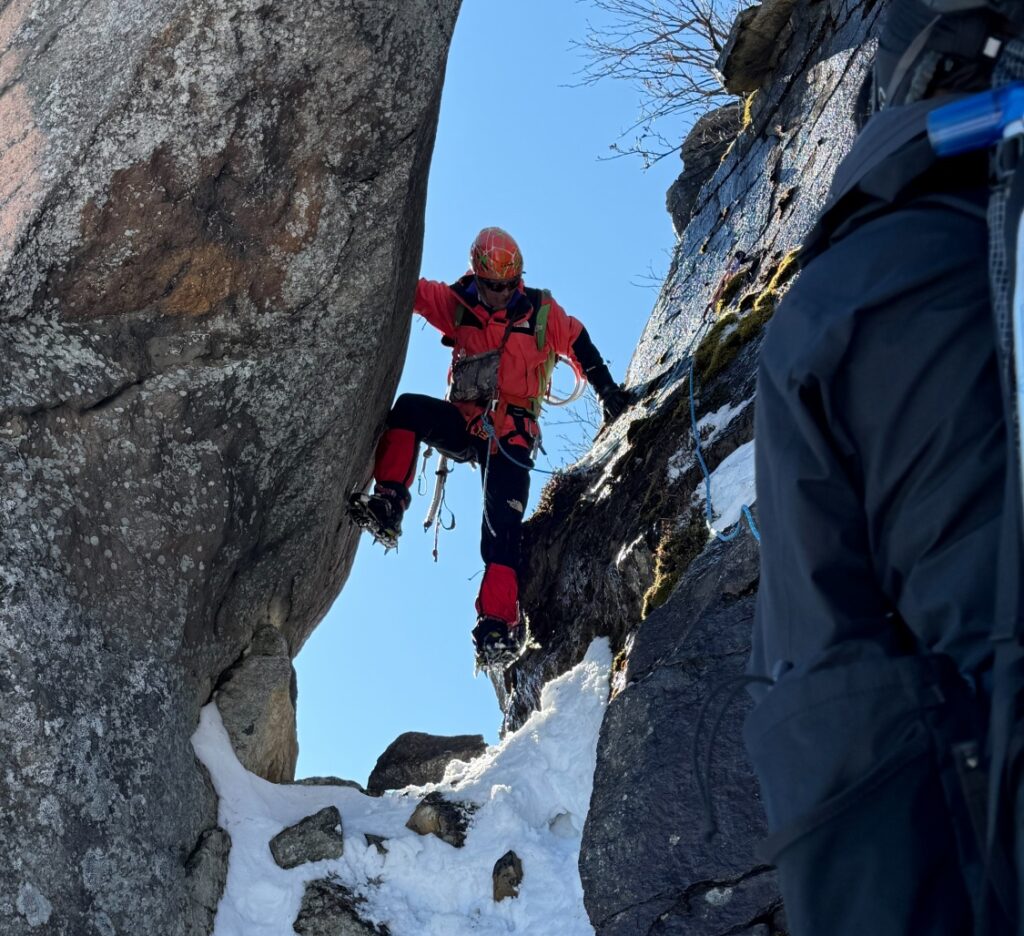
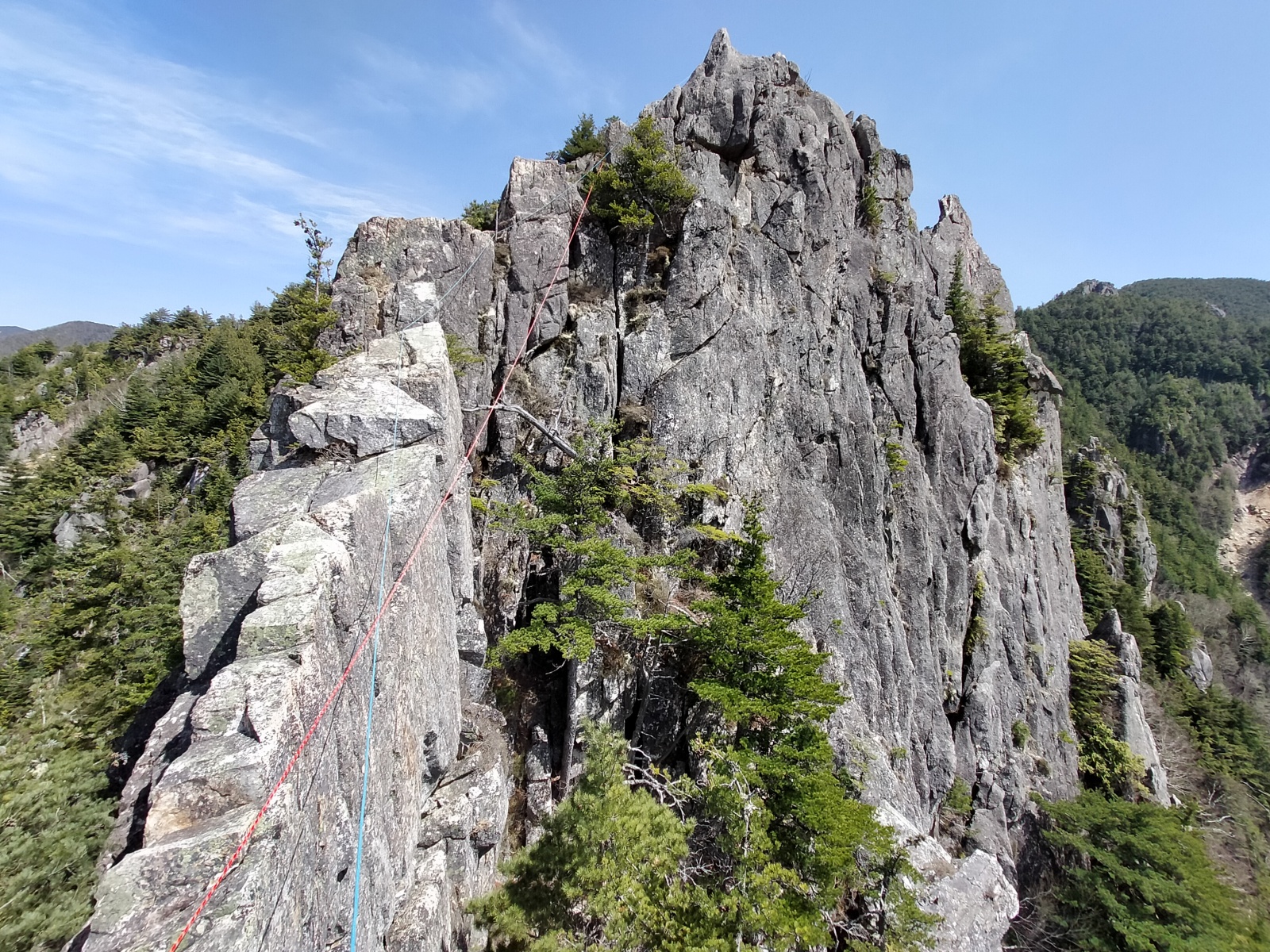
The crux rock ridge rose up ahead of us — roughly ten meters of granite wall, mostly buried under snow and ice but with bare rock showing through in places. S went first, paying out the rope as he climbed. I watched his movements closely.
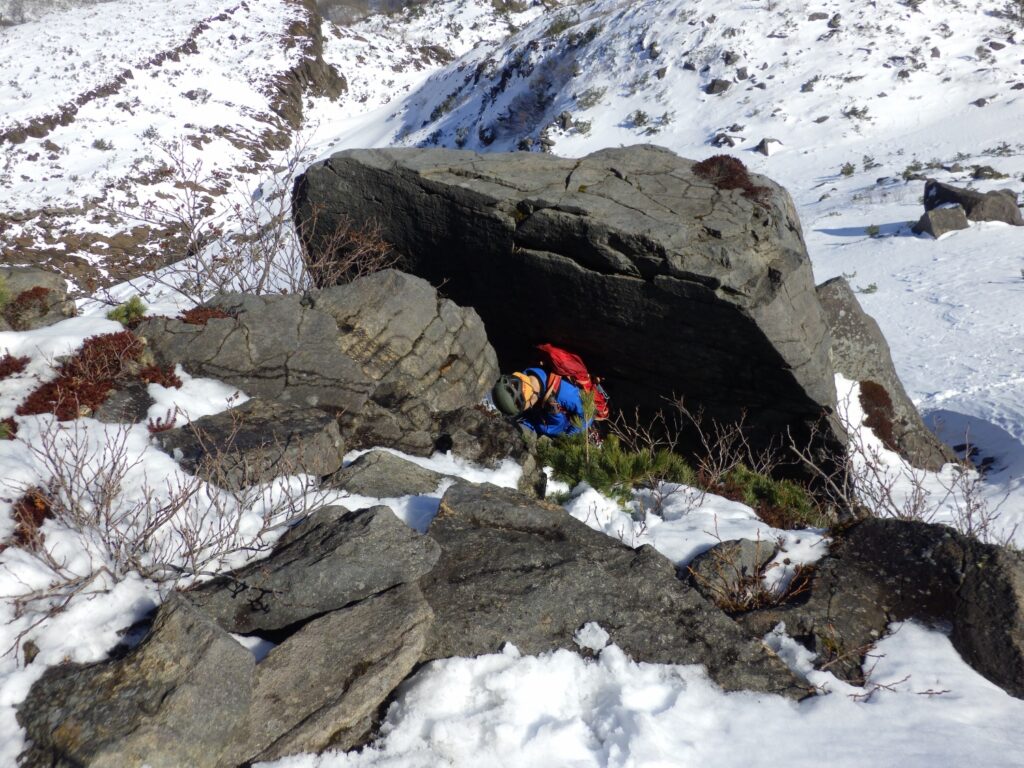
Then it was my turn. The cold of the rock came through even my gloves, the grain of the granite distinct under my fingertips. I searched for holds, testing each one before committing my weight, carefully placing my crampon points into the rock’s hollows. The bite of the front points into stone — every single move carried its own tension.
Snowballs kept building on my crampons, throwing off my footwork. The moment I placed a foot on the rock, I felt it slip. Fear flickered through me. I stopped, gripping the rock with one hand while using the spike of my ice axe with the other to carefully clear the snow — moving slowly, careful not to lose my balance. I repeated this process again and again throughout the climb.
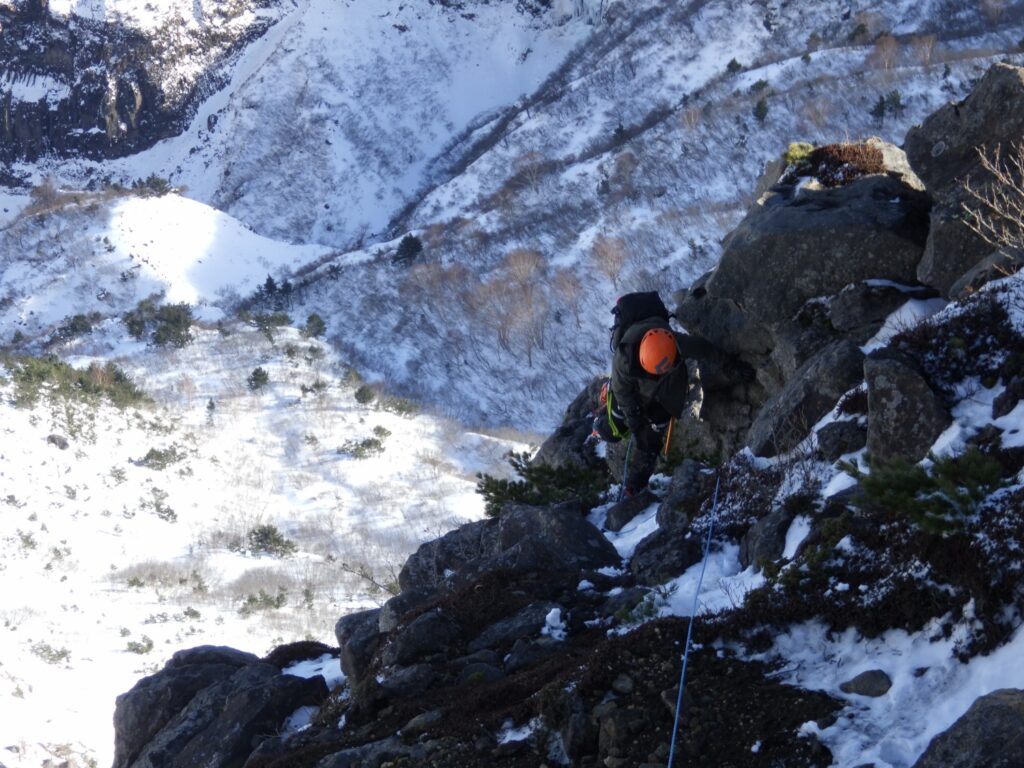
Mt. Katta-dake spread out before us, its snow-draped form smooth and beautiful, like the surface of porcelain. But there was no room to enjoy the view now — every ounce of focus stayed locked on the ridge ahead.
The rope stayed taut as we climbed the ridge one by one. T and U chose their holds with equal care. One after another, we steadily gained ground.
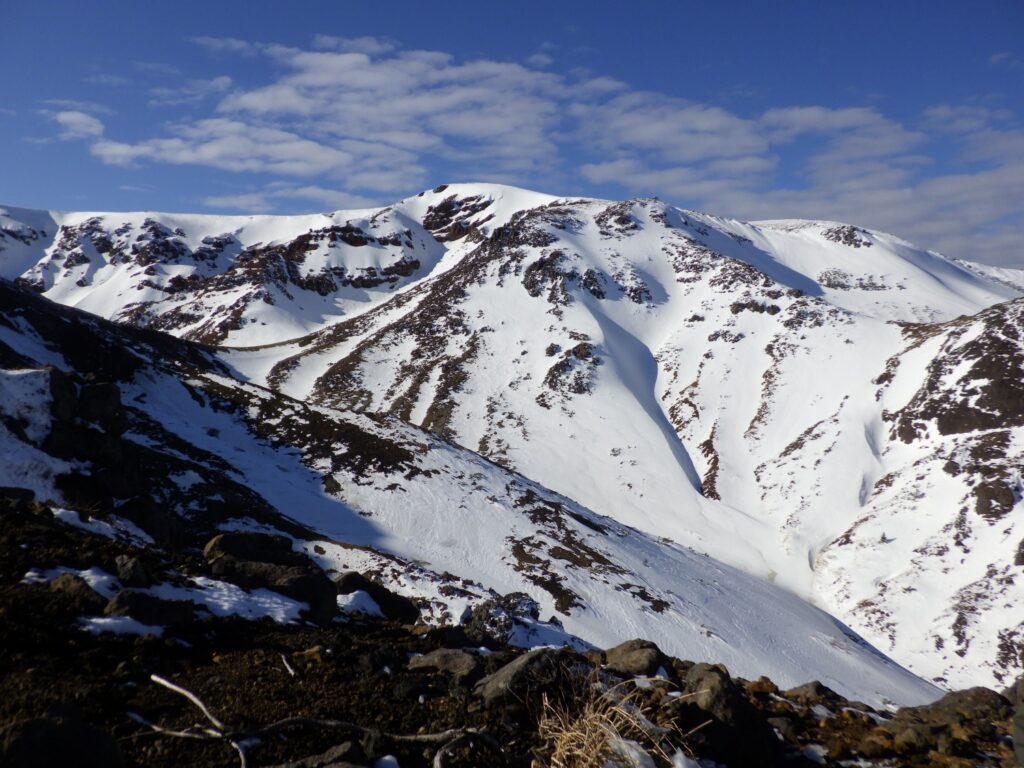
We reached the base of Goshiki Dome’s summit block a little past 2 PM. Fatigue had set in, but a sense of accomplishment outweighed it. Below us, the mountains of Zao stretched out, glowing in the winter sun. Mt. Kumano-dake’s grand form hazed in the distance. Relief washed over me at having made it this far.
For the descent, we chose a snow couloir — a contrast to the climb. Going down the same rock ridge we’d just ascended would have been riskier; this route minimized that exposure. A judgment call made with safety in mind.
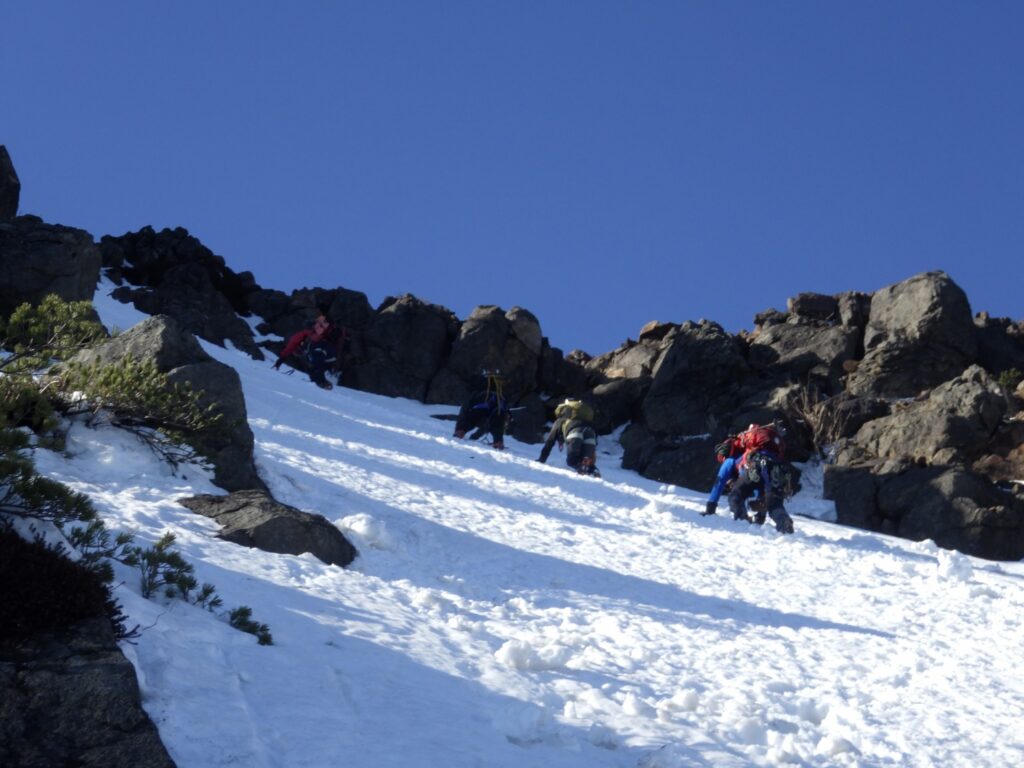
The couloir was packed with good-quality snow. Kicking in with our crampons produced solid, reliable steps — the rhythm of kick-stepping felt satisfying underfoot. We followed S’s tracks down, descending carefully, losing elevation step by step.
The fresh snow covering the slope looked like an unblemished white curtain, rejecting every trace of dirt. We descended quietly through it, the only sound the crunch of snow beneath our boots echoing through the couloir. I wore just a single soft-shell layer up top, yet felt no cold — if anything, the relief of having cleared the crux made my body feel lighter. The moment the tension released, I could feel the strength drain from my shoulders. My companions were descending smoothly too.
Partway down, snowballs built up on my crampons again. I stopped and cleared them carefully with my ice axe. The effects of the warm winter demanded vigilance even on the way down. Still, the snow in the couloir was far easier going than the rock ridge above had been — I felt grateful for the good snow quality here.
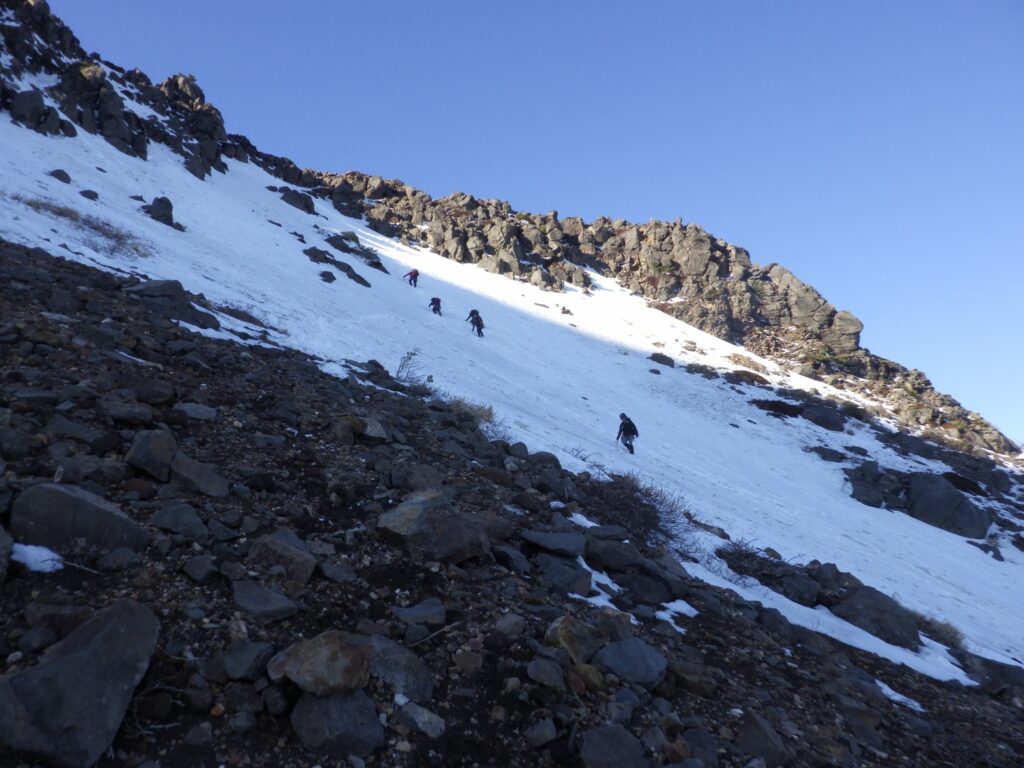
Back at the point where our outbound route met the descent, we switched back into our wakan, packed the crampons away, and picked up our poles again. From here, a long return lay ahead. I could feel fatigue accumulating in my legs. But the descent wasn’t over yet.
By the time we returned to the cat track, the sun had already tilted toward the west. It was a long way still. Shadows stretched long across the snow. Fatigue weighed on our legs, each step heavier than the last. Still, we kept walking in silence — no words exchanged among us, just eyes forward, one foot after the other.
We passed through the Atomi Gate and arrived back at Mountain Field Miyagi Zao Sumikawa at 4:20 PM — eight hours and seventeen minutes of total activity time. The sky was still bright, but the fatigue was real.
As we packed up our gear, I found myself reflecting on the day: the fall into the Nigorikawa, the snowballing on our crampons, the climb up the rock ridge. Each moment had taught us something about the severity of winter mountains. Calling it good training would be easy enough, but the mountains always have more to teach us than that.
A warmth unlike any past winter. Poor snow quality. The climate is undeniably changing. And yet, the mountains still welcome us as they always have — and for that, I’m grateful.
It was a day true to Zao’s character — snow and rock in equal measure. The beautiful forms of Mt. Goshiki-dake, Mt. Katta-dake, and Mt. Kumano-dake shone vividly against the clear winter air. I’m thankful to have spent this December day with good companions.
Summary