【Deep Dive Chronicle】Kaba-san — The Mountain of Tengu, A Winter Pilgrimage
北村 智明
稜線ディープダイブ
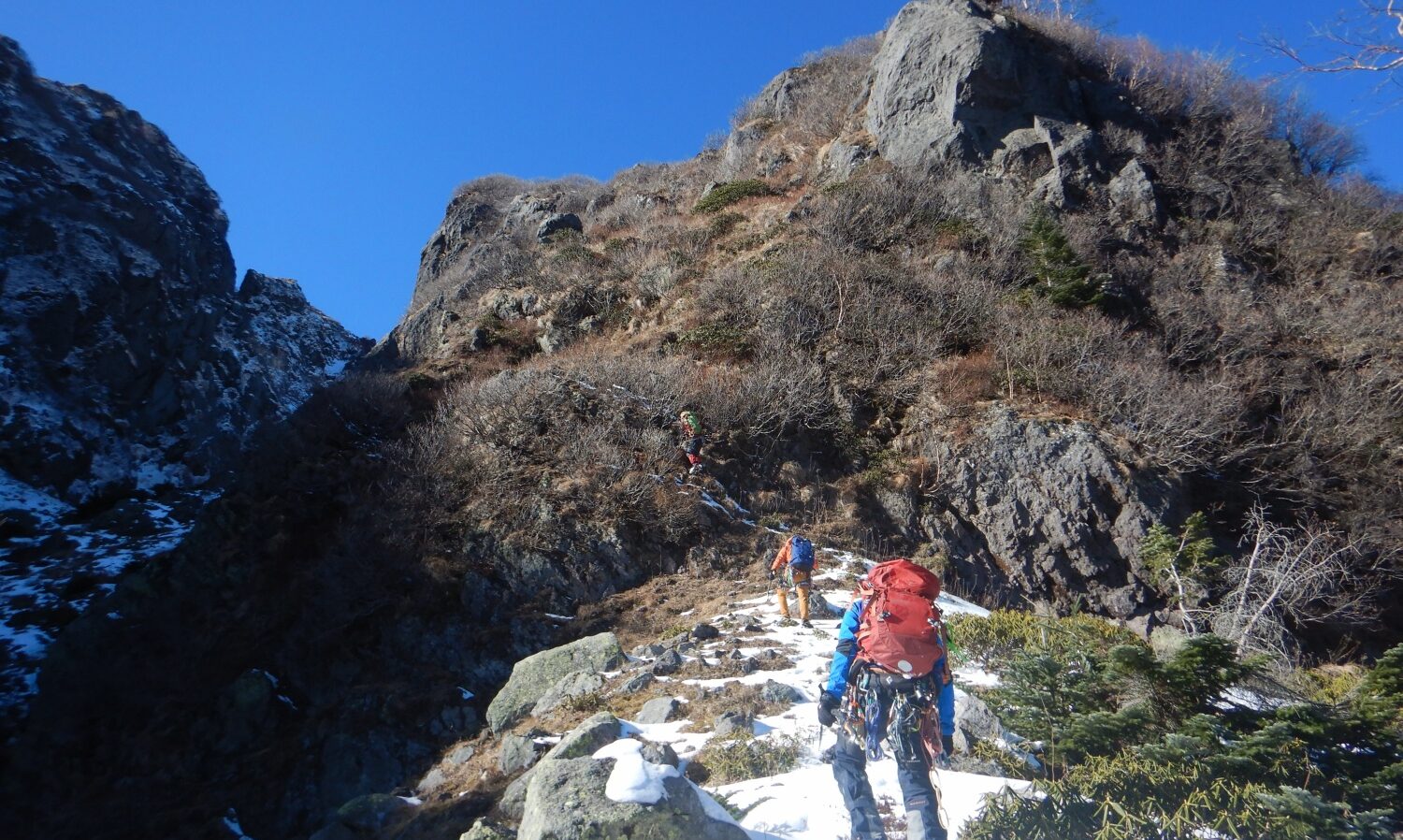
Late November. I set out for the East Ridge of Nikko-Shiranesan (Mt. Nikko-Shirane). A single day on the rugged rock ridge of the highest peak north of the Kantō region — nine companions, an unexpected bout of frozen shoulder pain, and the quiet solitude of a mountain world caught between late autumn and early winter. This is a record of that day: a personal climb, a chronicle of a ridge ascent.
We left Fukushima before dawn, heading south on the Tōhoku Expressway before joining the Nikkō-Utsunomiya Road. Past the winding switchbacks of Iroha-zaka, past the shores of Lake Chūzenji, the road pitched steeply upward toward Konsei-tōge (Konsei Pass). With every meter of elevation gained, the temperature dropped. The thermometer outside the car read minus five degrees Celsius.
Beyond Konsei Pass, we crossed into Gunma Prefecture. The descent required care — a thin layer of snow on the road, the threat of ice. The cold the night before must have been severe. Even from a distance, the surface of Suganuma lake appeared white.
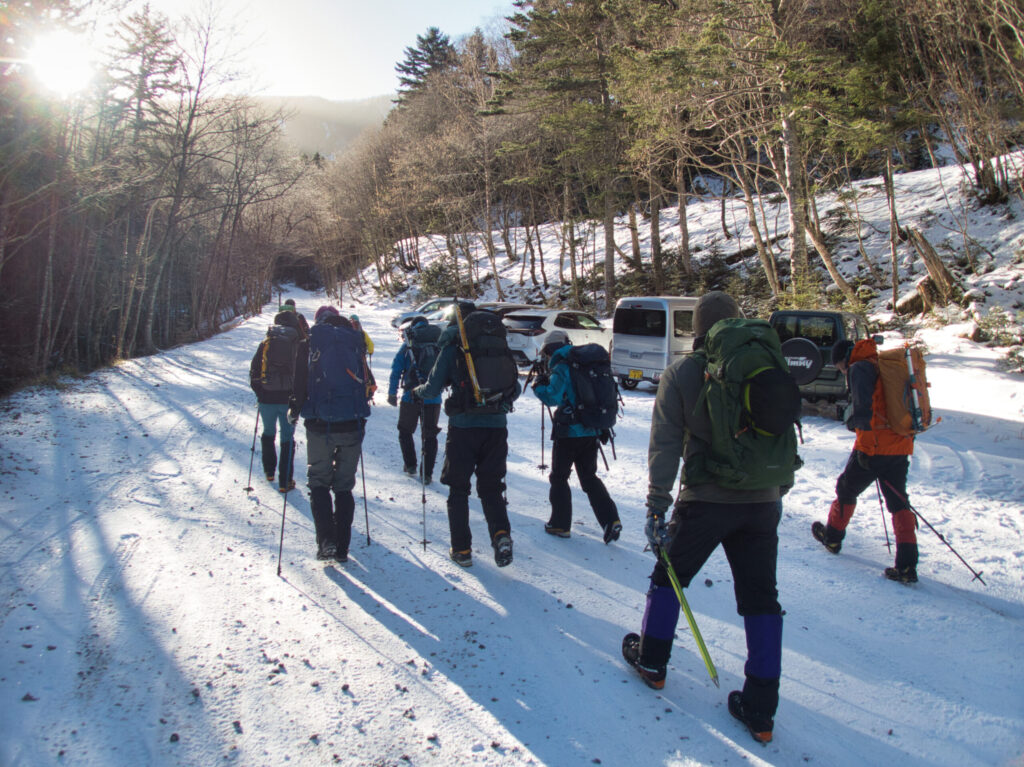
We reached the Suganuma Trailhead parking area just after 8:00 a.m. Several cars were already there. Our group was large — nine in total. We checked our gear and shouldered our packs. The cold air bit into the lungs. Each breath hung in the air, almost solid.
I had come to this mountain carrying a burden. Frozen shoulder — adhesive capsulitis — had been troubling me for months, interfering even with daily life. Lifting my elbow sent sharp pain shooting through my arm. Pulling on a shirt was a small ordeal. Yet turning back was never a real option. I had made a commitment to these people. I told myself I would manage — climb carefully, compensate where I could. I taped the shoulder. That was the best I could do.
Nikko-Shiranesan rises to 2,578 meters, the highest peak north of the Kantō region — one of Fukada Kyūya’s celebrated Hyakumeizan (100 Famous Mountains of Japan). The dominant summit of the Nikkō Volcanic Group, its andesite lava dome rises in a rounded cone. The mountain earns its name — Shirane, meaning “white root” — from the snow that mantles it in winter. To the east stands Mae-Shiranesan; surrounding it, Zazen-yama and Shiranegakushi-yama; and cradled within its flanks, Midagaike and Goshiki-numa.
We signed in at the trailhead and began. White breath dissolved into the cold air.
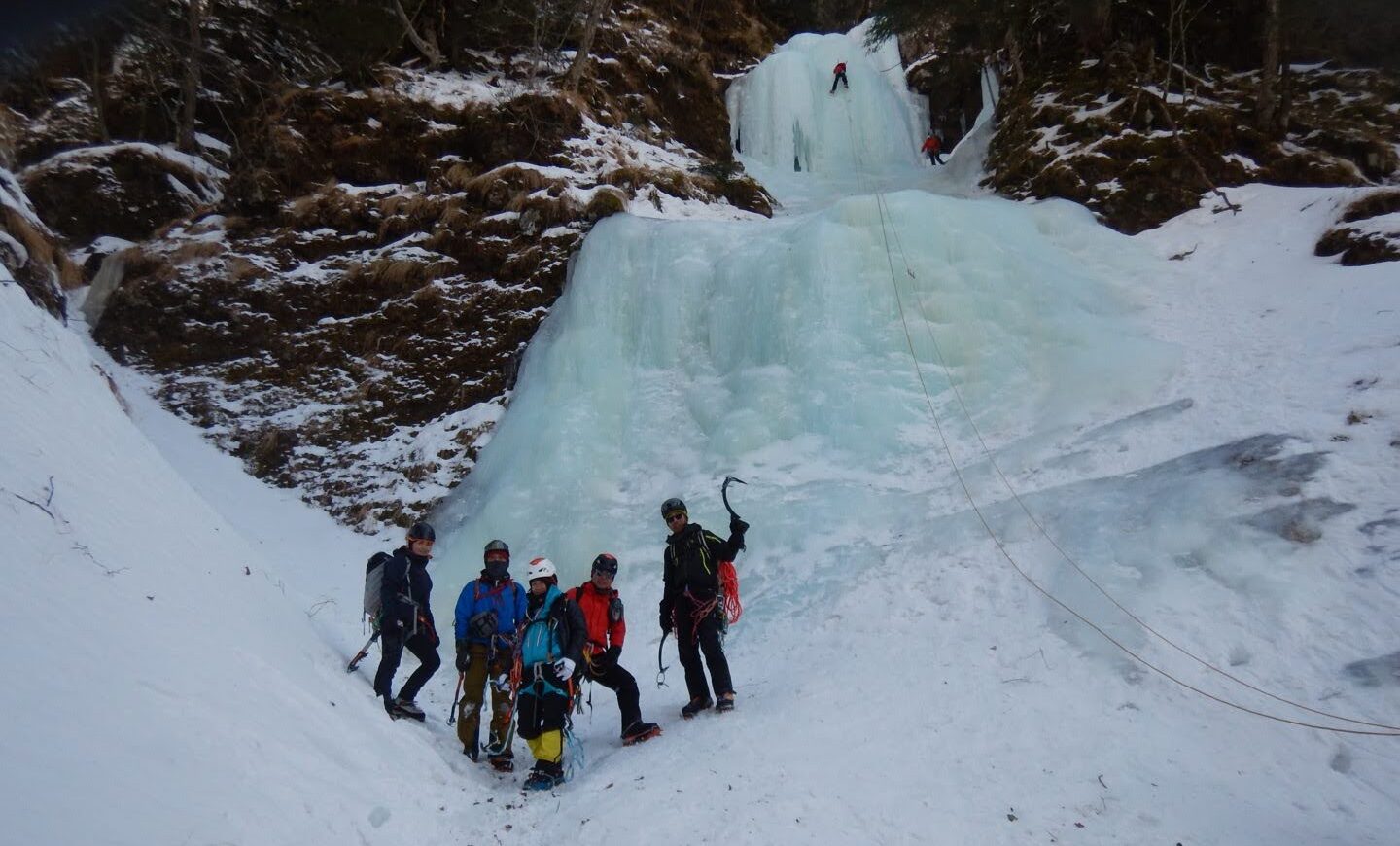
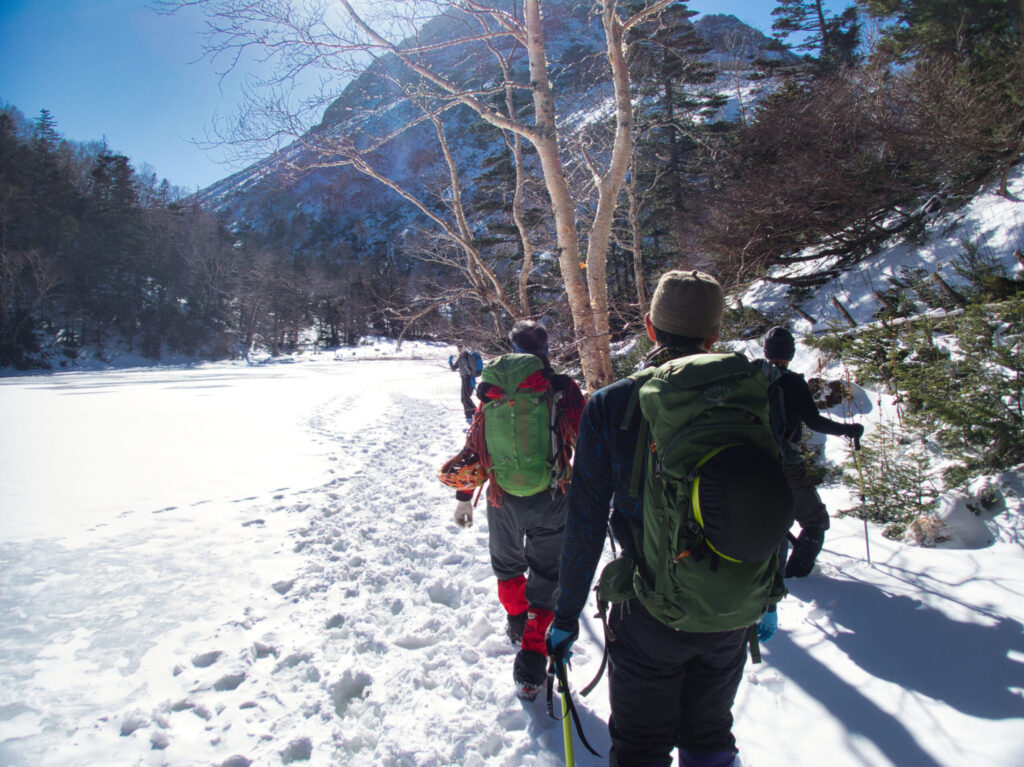
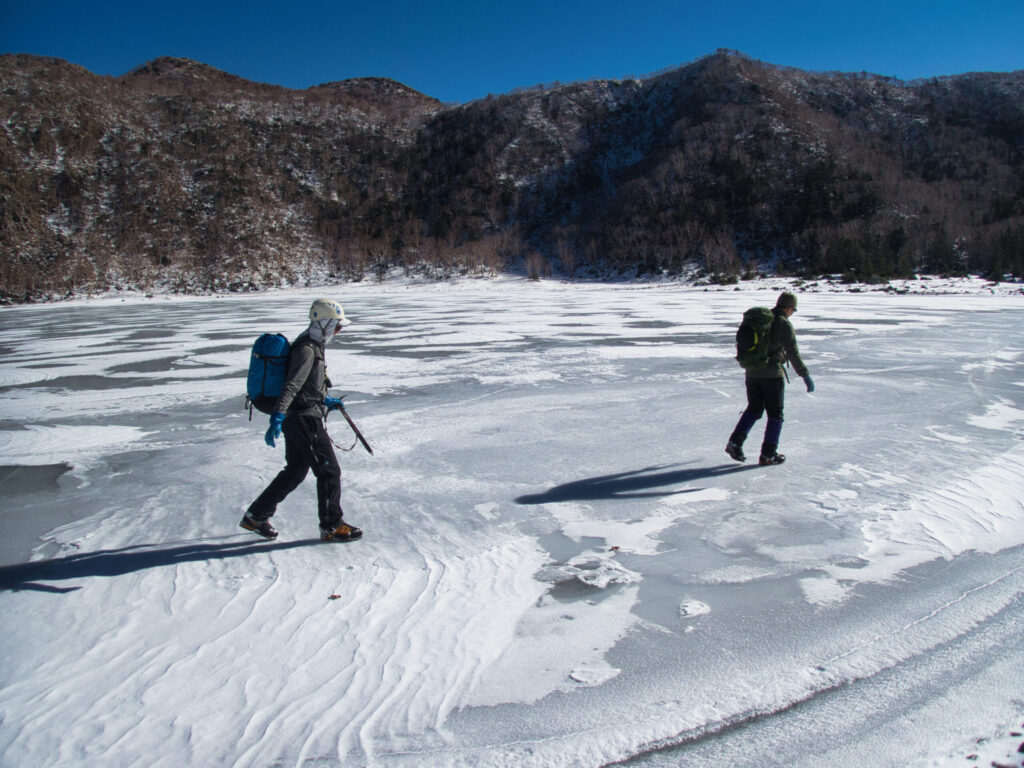
Through a forest of conifers, we emerged onto Midagaike — completely frozen. Though still November, the ice was thick enough to walk on, groaning underfoot with each step. The surface of the lake gleamed in the morning light like white porcelain, almost blinding. We crossed carefully. At intervals, a deep sound rose from somewhere beneath the ice — a creak, a crack — as though the lake itself were alive and breathing.
“You alright?” called a companion from ahead, turning back. “Fine,” I said — though my heart was hammering. I understood intellectually that the ice was thick enough. Still, walking on transparent ice unsettles the mind. In places the lake bottom was visible through it. Several meters deep, perhaps.
Beyond the lake, a slope of dried grass stretched ahead. Snow and earth mingled on the path. The others walked on, talking and laughing. The sound of voices drifted back. This rhythm — tension and release — is what makes a mountain day good. I walked alongside them, laughing too, while quietly taking stock of the shoulder. Still manageable. Keep going.
Part of the group had chosen the standard route. We split at Goshiki-numa — the East Ridge party going one way, the others another. “See you at the summit,” someone called, and we parted.
Shortly after 10:00 a.m., we reached the base of the East Ridge and stopped to gear up. Harnesses on, helmets buckled. The sound of carabiners rang out in the cold air. I checked the shoulder once more. I could move it within a limited range — no further. Lifting the elbow straight up caused sharp pain. Lateral movement was manageable. If I twisted my body to compensate, I could climb. I had convinced myself of this.
The East Ridge is a variation route (bariēshon rūto) that ascends directly to the summit from the eastern flank of Nikko-Shiranesan. There is no single crux that is technically demanding — the grade is roughly Grade 1 (Based on Japanese Alpine Club Standard). But in conditions like these, with rock and snow intermixed, the mountain demands careful attention. The andesite is coarse-grained and holds are plentiful, but once snow freezes onto the surface, the difficulty rises sharply.
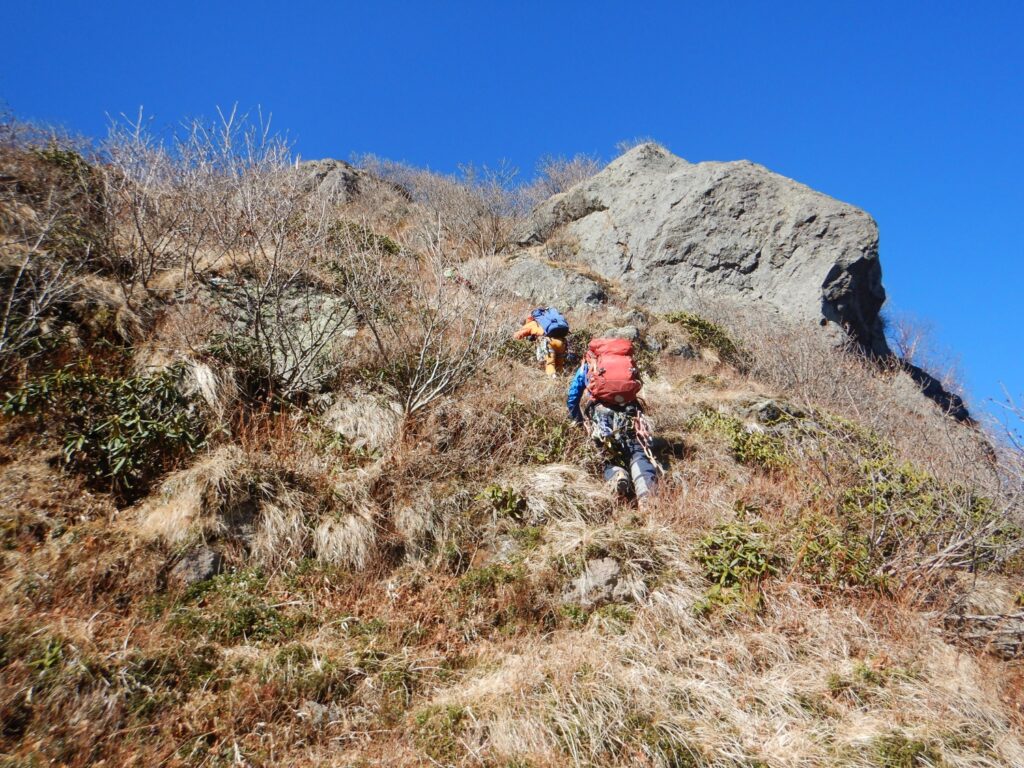
From the base, we were able to move mostly on foot. On a slope mixing grass, scrub, and snow, we front-pointed upward on crampons. I kept my elbow low, twisting my torso to reach for holds — left hand gripping, right hand resting lightly for balance. I loaded weight onto my feet and tried to minimize the work done by my arms. The pain was there, but within a range I could endure.
The wind came. Cold, sharp — cutting across the cheek like a thin blade of ice. As we gained elevation, it strengthened. Still within acceptable limits. If anything, the cold it carried sharpened my concentration.
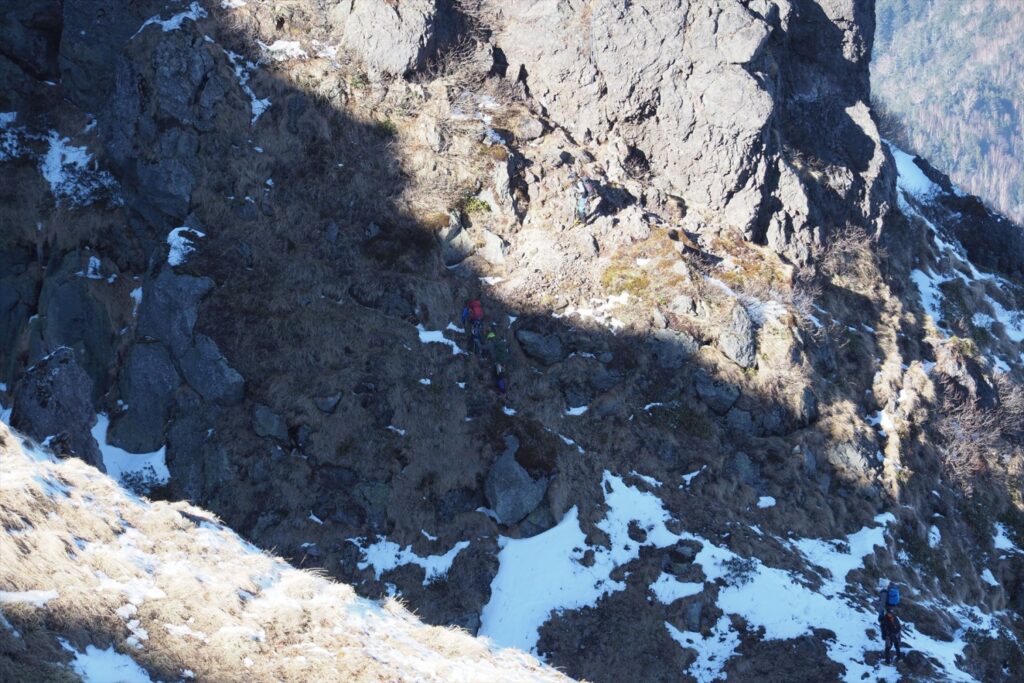
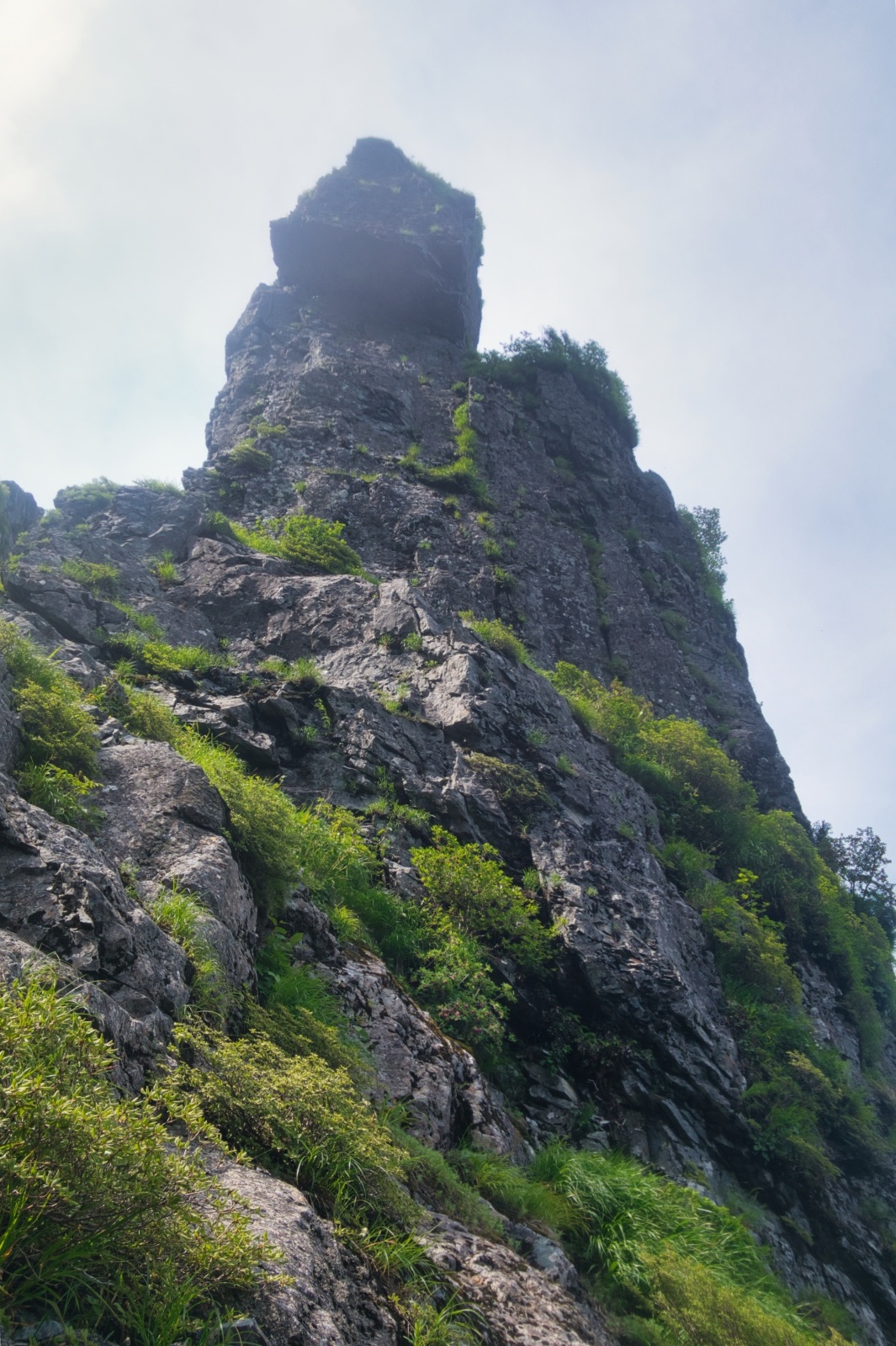
Near the top of the ridge, we roped up for a single pitch — the one place that warranted it. The rock here rose like the teeth of some enormous creature, coated in snow and ice. The rope paid out. A companion led; I followed as second, watching the line, feeling the tension.
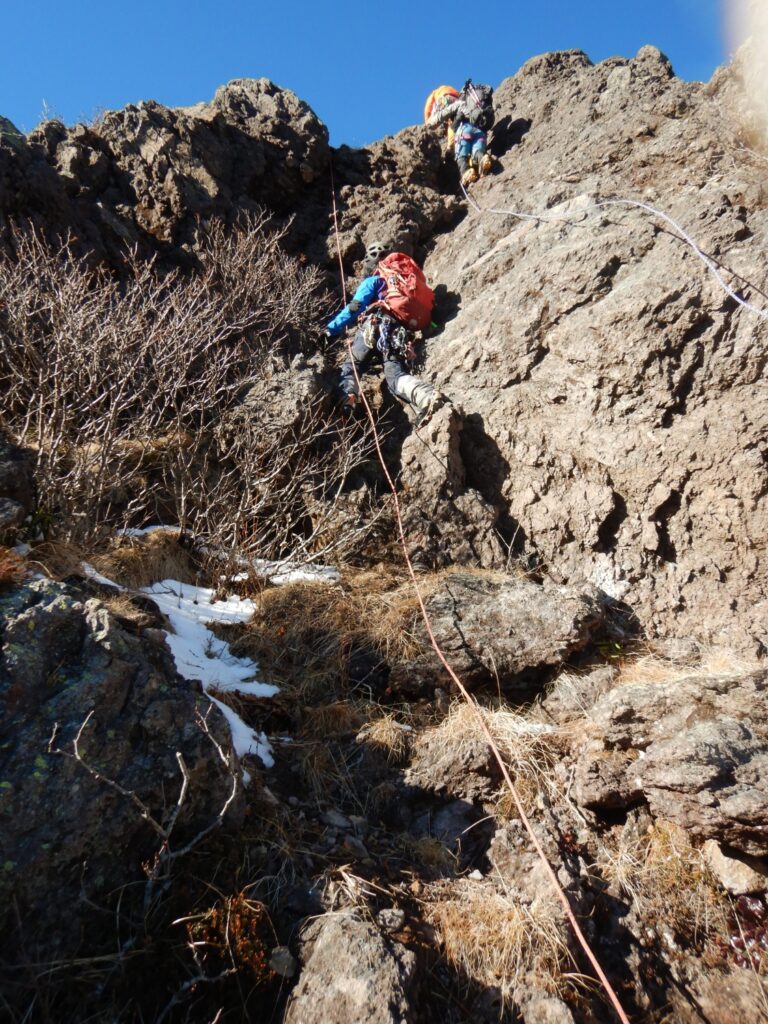
“Climbing,” I called, and stepped onto the rock. The coarse andesite gave solid friction underfoot. Three points of contact — weight on the feet. The front points of my right crampon bit into a depression in the rock, then the left. I pulled upward. A dull ache in the shoulder, but manageable. I reached for the next hold, twisting left, extending the arm laterally — less load on the joint this way. Fingertips found the edge of a flake. A solid hold. I weighted it and gained another step. Deliberate, careful, placing each crampon point with precision.
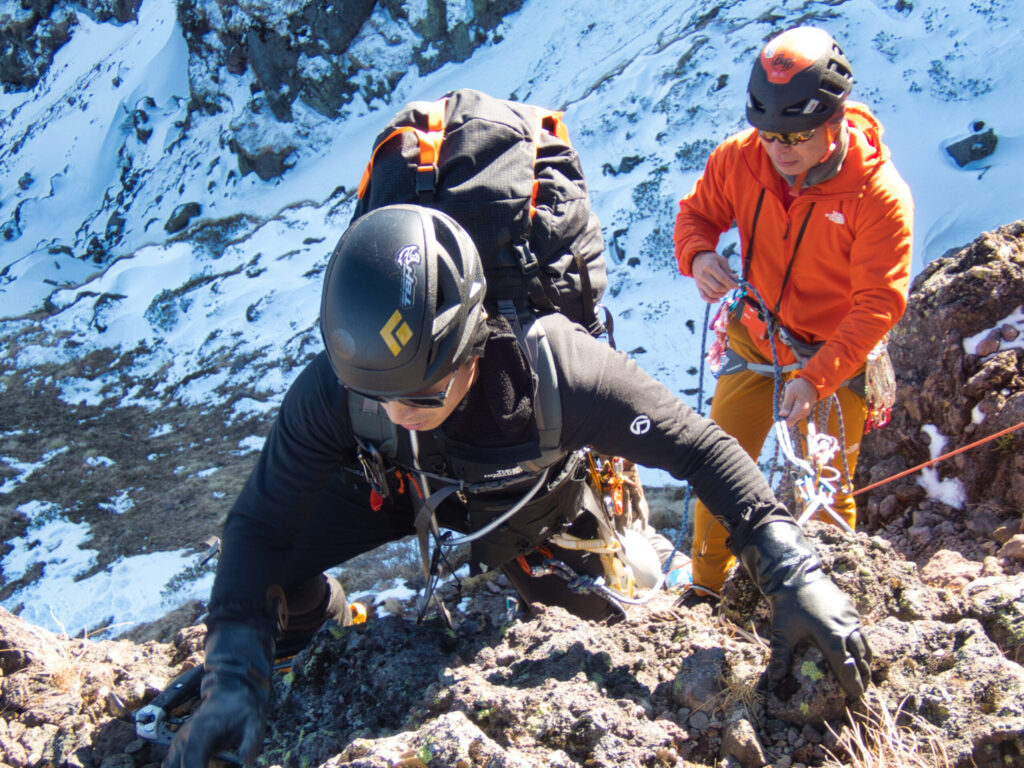
The wind howled. The rope swayed. I steadied my breathing and considered the next move. No need to rush. My pace, my rhythm. I checked the shoulder again.
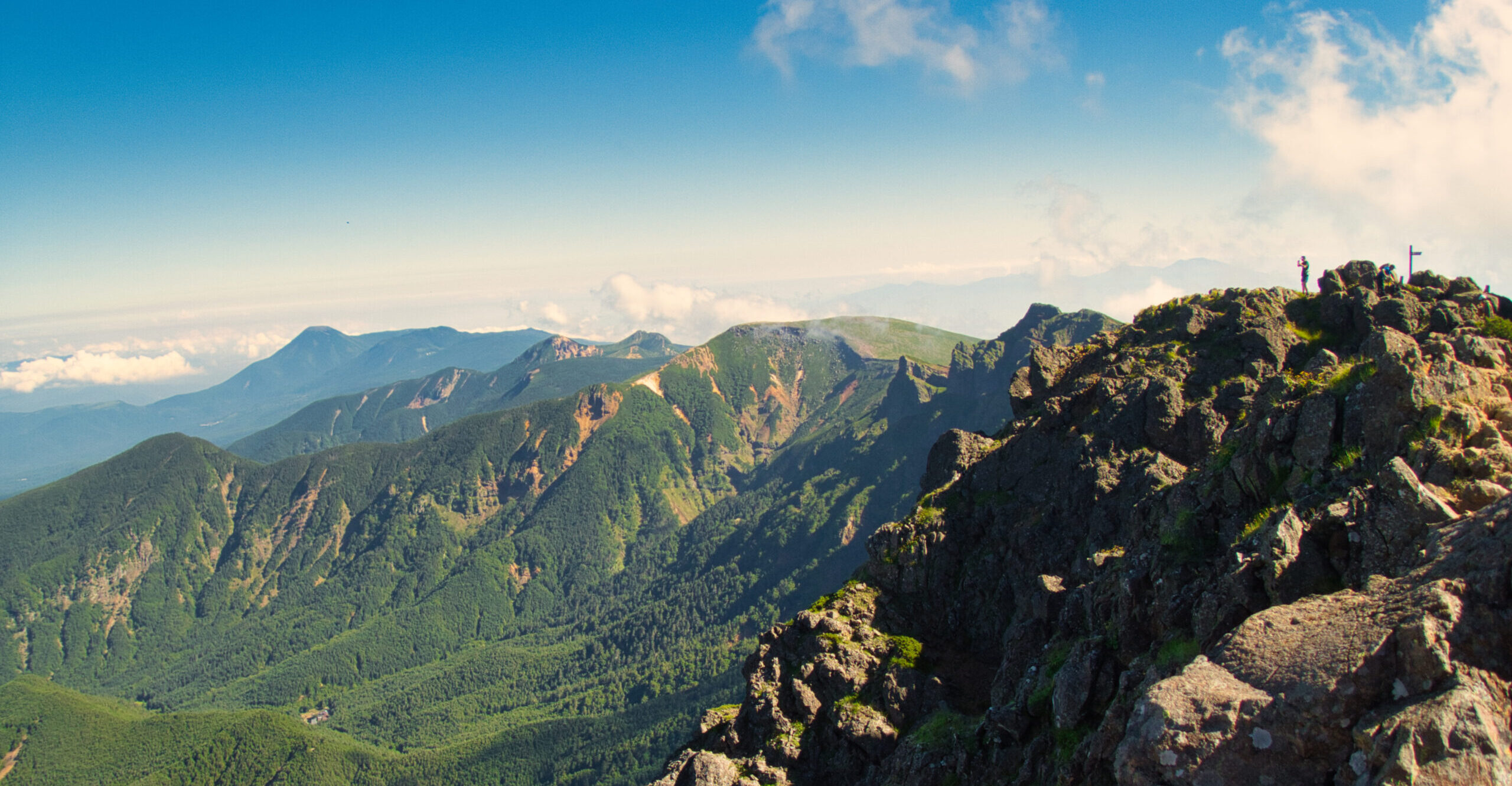
Topping out onto the ridgeline, the world opened up. Mt. Nantai (Nantai-san) glittered white in the distance. Lake Chūzenji was visible. Below, Goshiki-numa spread its frozen surface to the afternoon light. The wind was strong, but the visibility was flawless.
The ridge rock was glazed with snow and ice. The wind buffeted. I kept low, maintaining balance, moving deliberately — one step at a time, verifying each foothold before committing. Ahead, small stones occasionally clattered as companions picked their line up through the terrain.
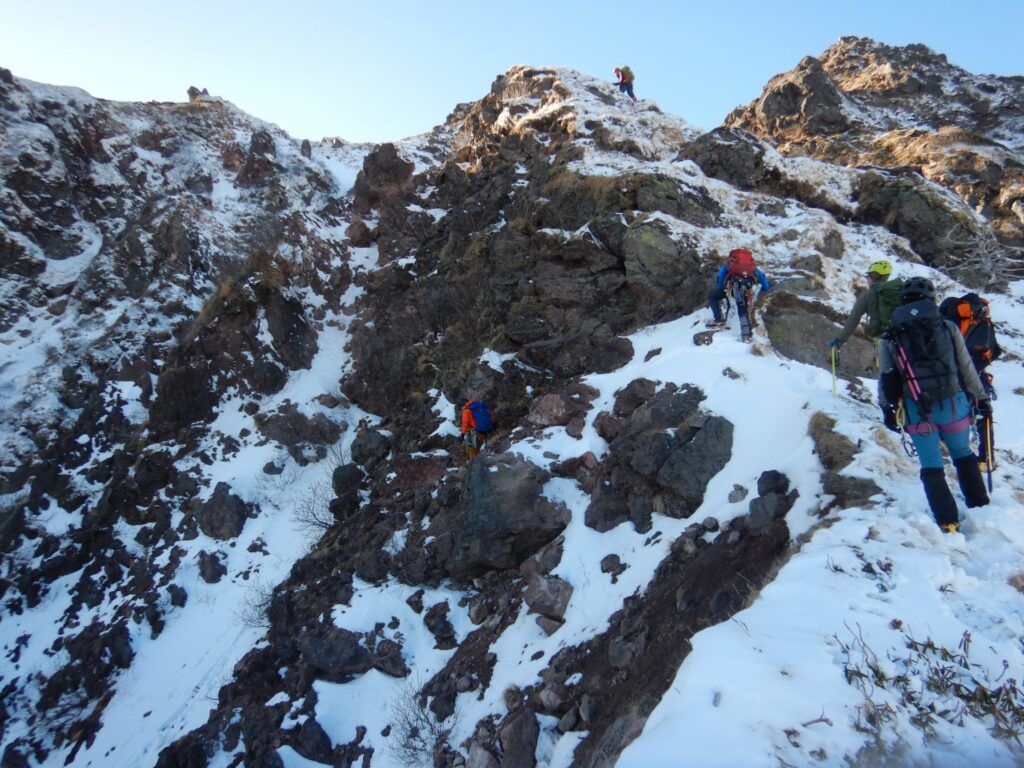
Just past noon, we cleared the crux section. From here, the ridge eased to a more moderate angle. I felt the tension release. The shoulder still ached, but we were through. I pulled a snack from my pack and ate. The relief of having made it through a technical section under physical constraint is its own particular satisfaction. Even a Grade 1 route takes on a different character when the body has limitations. The mountain always asks for humility.
Around 2:30 p.m., we stood on the summit of Oku-Shiranesan — 2,578 meters, the highest point north of the Kantō region.
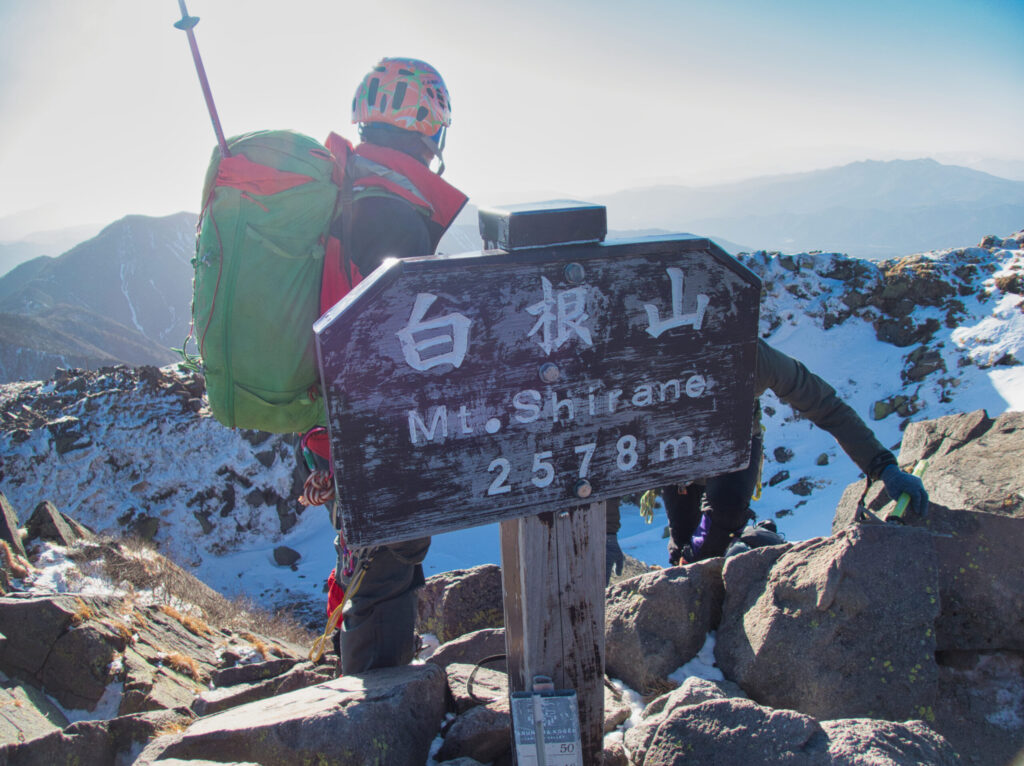
The view from the top was sweeping. We had been lucky with the weather — far to the south, the silhouette of Mt. Fuji floated faintly against the sky. White peaks. The sharp summit of Tanigawadake. The ridgelines of the Oze highlands. A full 360-degree panorama. The wind was cold, but the sun felt good on the face. The standard-route group had already arrived. “Good work,” we said to each other.
Below, the surface of Goshiki-numa caught the sun and reflected it like a polished mirror. Midagaike lay frozen in the same stillness. The ice we had walked across in the morning was visible far below.
The summit stay was brief. Wind, cold. A few photographs, then we turned for the descent.
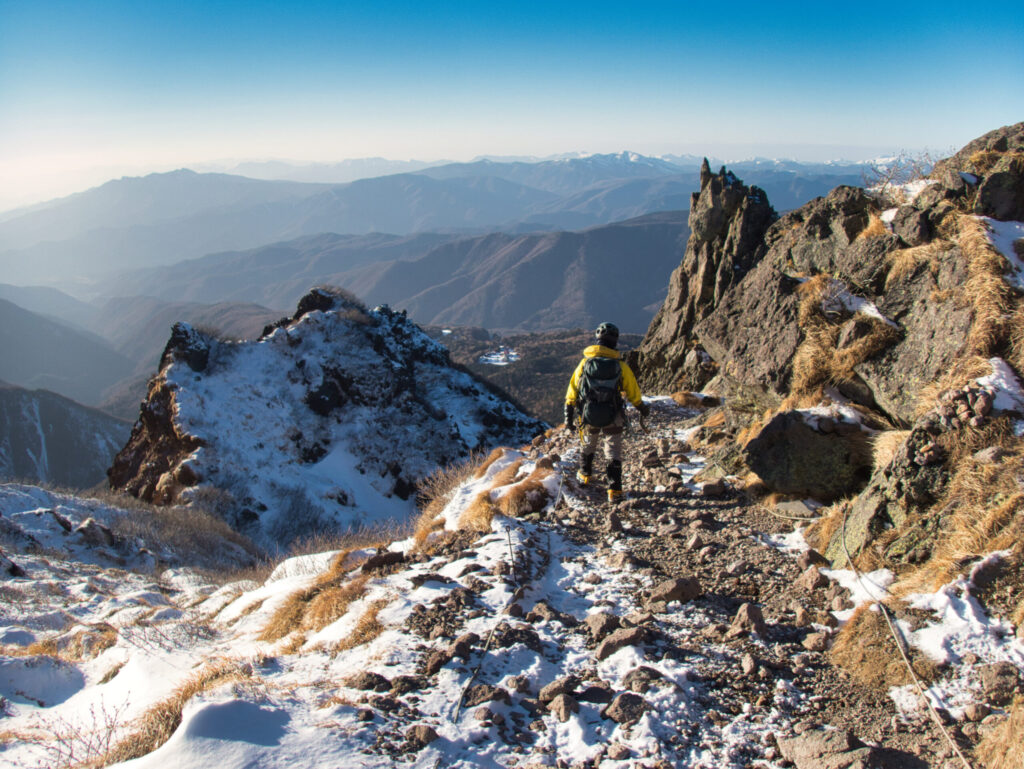
We descended via the Kita-one (North Ridge) — the standard trail, a mix of snow and rock. In contrast to the East Ridge, we moved in silence down a managed path. Fatigue had accumulated. The shoulder ached more than before. My footing became unreliable; I caught my crampons on rocks more often than I should have. The grating sound of steel on stone was a rebuke. Focus, I told myself. Pay attention.
Daylight was running out. The western sky turned red, then darkened toward indigo. By the time we passed Midagaike again, dusk had already settled. Headlamps on — just in time. In the circle of light, the shadows of trees shifted around us. Conifer branches swayed in the wind, casting strange shapes across the snow.
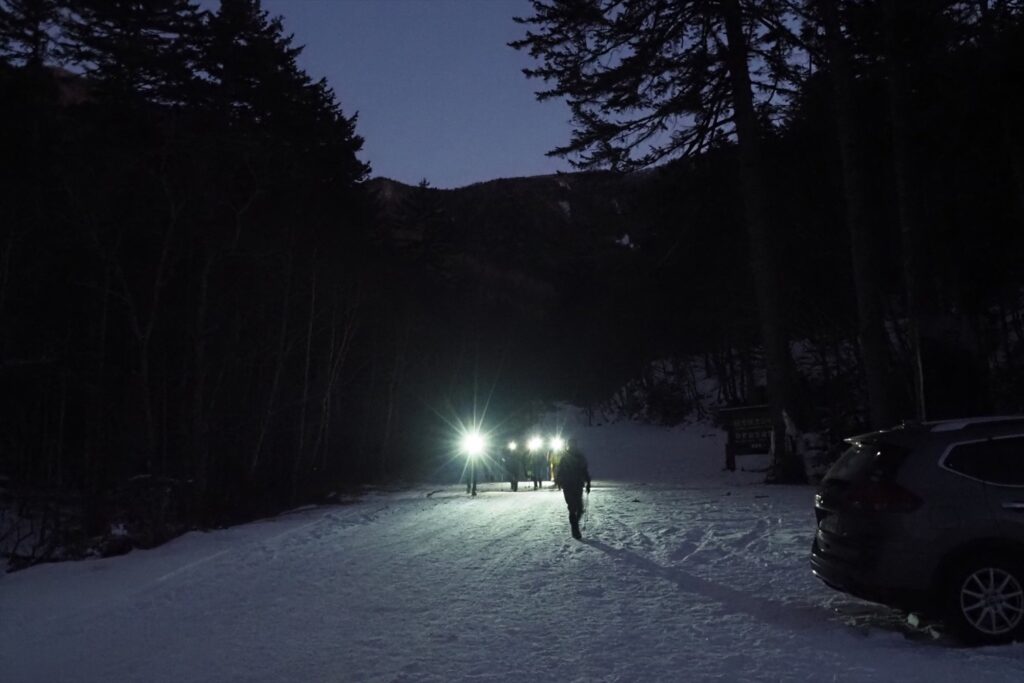
We returned to the Suganuma Trailhead just after 5:00 p.m. The snow on the forest road had softened slightly in the afternoon sun. Long shadows stretched into the trees. I switched off my headlamp and lowered my pack from my shoulders. As the weight left me, an involuntary sigh escaped.
After the descent, we drove to Nikko Wanoshiro Onsen “Yashio-no-Yu” — about twenty minutes away. Walking in, warm air met us at the door.
The moment I sank into the bath, I felt the tension drain from my body. The water was on the mild side — suited to a long soak. Even the shoulder pain eased slightly. The soft heat wrapped around exhausted muscles with something close to kindness.
After the bath, we headed to the dining room and ordered set meals. The food settled into tired bodies. We talked through the day — the crux on the East Ridge, the frozen lake, the headlamp descent. Good conversation at the end of a good day.
Note for international visitors: Yashio-no-Yu is reported to be tattoo-friendly. Policies can change, so it is worth confirming directly with the facility before your visit.
We left well after 6:00 p.m. The drive back to Fukushima was long — north on the Tōhoku Expressway, arriving home around 11:00 p.m. Traffic was light on the night highway. The lights of towns passed outside the window, drawing me back into ordinary life.
It had been a mountain day shaped by an unexpected limitation. Frozen shoulder. But by not pushing beyond what my body would allow — by compensating, adapting, and staying honest about what was possible — I made it through. The fact that the technical grade was modest helped. Had the route demanded more, I would have turned back. Knowing when to retreat, reading one’s own limits clearly — that judgment, in the mountains, matters above all else.
The East Ridge of Nikko-Shiranesan. A single day on a winter rock ridge with nine companions — a day that reminded me, through pain and patience, of what this landscape is capable of offering.
LOG SUMMARY