【Deep Dive Chronicle】Nanatakisawa Stream Climbing: Ascending the Waterfall Chains of Mt. Niojidake
北村 智明
稜線ディープダイブ

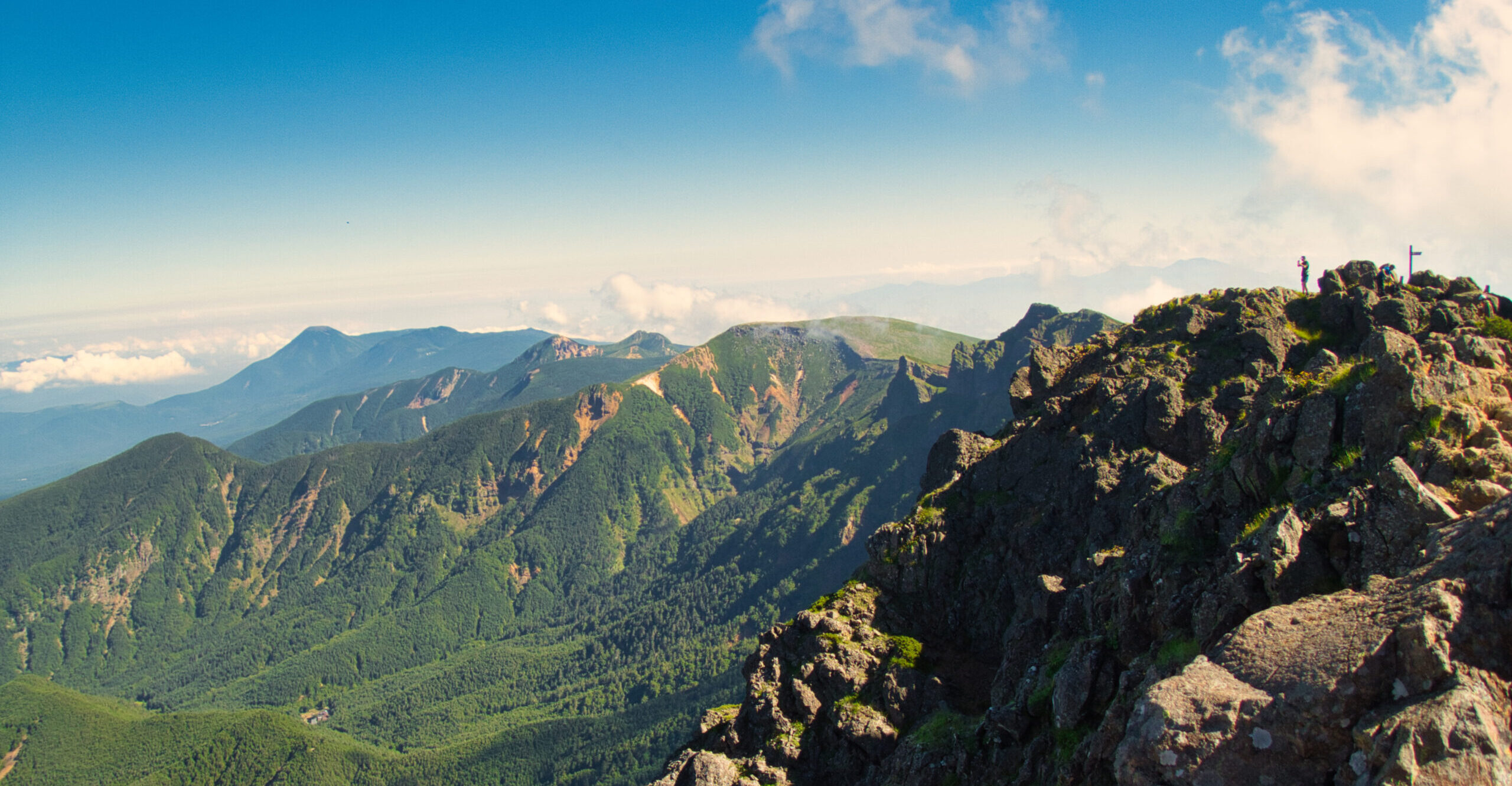
Late July. We set our sights on Mt. Akadake (2,899m), the highest peak of the Yatsugatake Range. A two-day guided tour with eleven guests — a journey through the rocky ridges of Bunzaburo-one (Bunzaburo Ridge) and the sweeping panoramas from the summit. This is a record of that climb, written both as a mountain guide and as a fellow mountaineer, in pursuit of all that summer alpinism has to offer.
The bus from Fukushima arrived at Minoto-guchi just before noon. Situated at 1,490 meters on the southern flank of the Yatsugatake Range, this trailhead is the gateway to Akadake and Mt. Amidadake. As we stepped off the bus, the full force of the summer sun hit us without mercy.
The political climate in Japan was tense following the House of Councillors election — but the mountains stood unchanged, welcoming us as they always had. I scanned the faces of my eleven guests. Some were tackling Yatsugatake for the first time; others returning to the mountains after a long absence. Getting every one of them safely to the summit was my first and only priority. With final gear checks complete, we set off.
Past Akadake Sansō and through the hamlet of Minoto, the trail took on its proper alpine character. The Yatsugatake — a volcanic chain straddling Nagano and Yamanashi Prefectures — extends roughly twenty-five kilometers from north to south. Its highest point, Akadake, rises to 2,899 meters, its rugged andesite ridges the product of ancient volcanic forces. The stream-side path was dappled in light, the canopy offering welcome shade. I exchanged words with the group as we moved, carefully reading the pace.
By the time we passed Entei-hiroba, the afternoon was already well underway. Our plan called for a gain of 730 vertical meters over three hours. We climbed steadily through the forest, and before long, the hut of Akadake Kosen came into view.
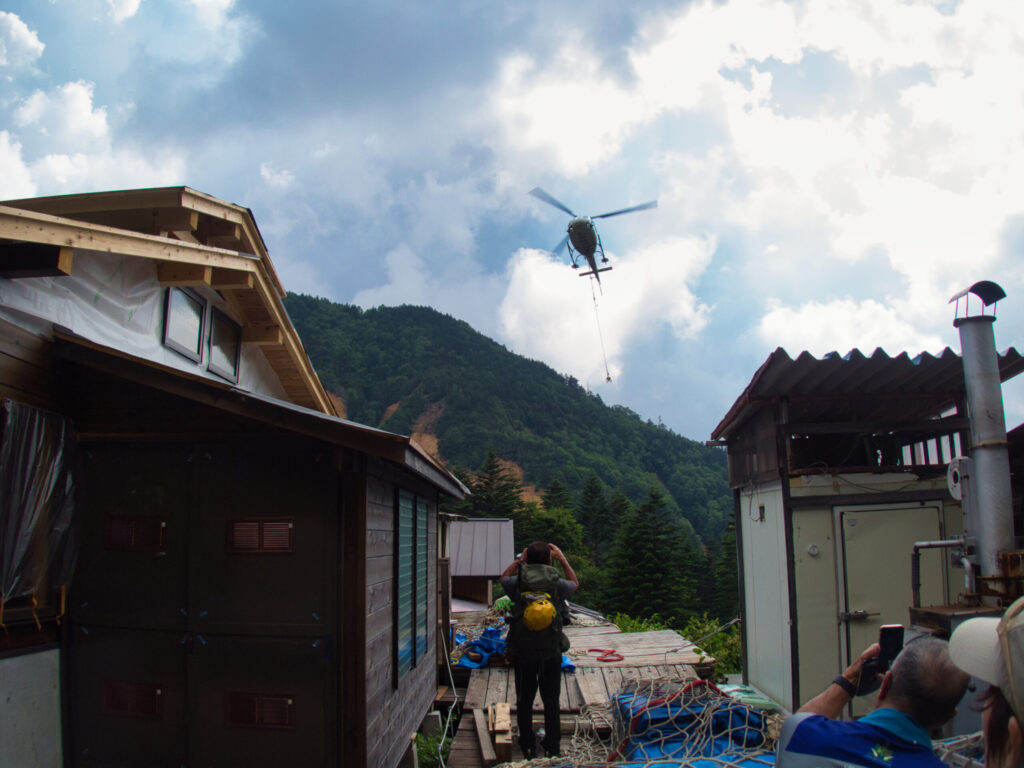
Above the hut, a helicopter made repeated passes, ferrying supplies. Mountain hut operations have changed with the times — loads that were once carried on porters’ backs now arrive from the sky. I watched the scene with quiet satisfaction, relieved that we had reached our first destination without incident.
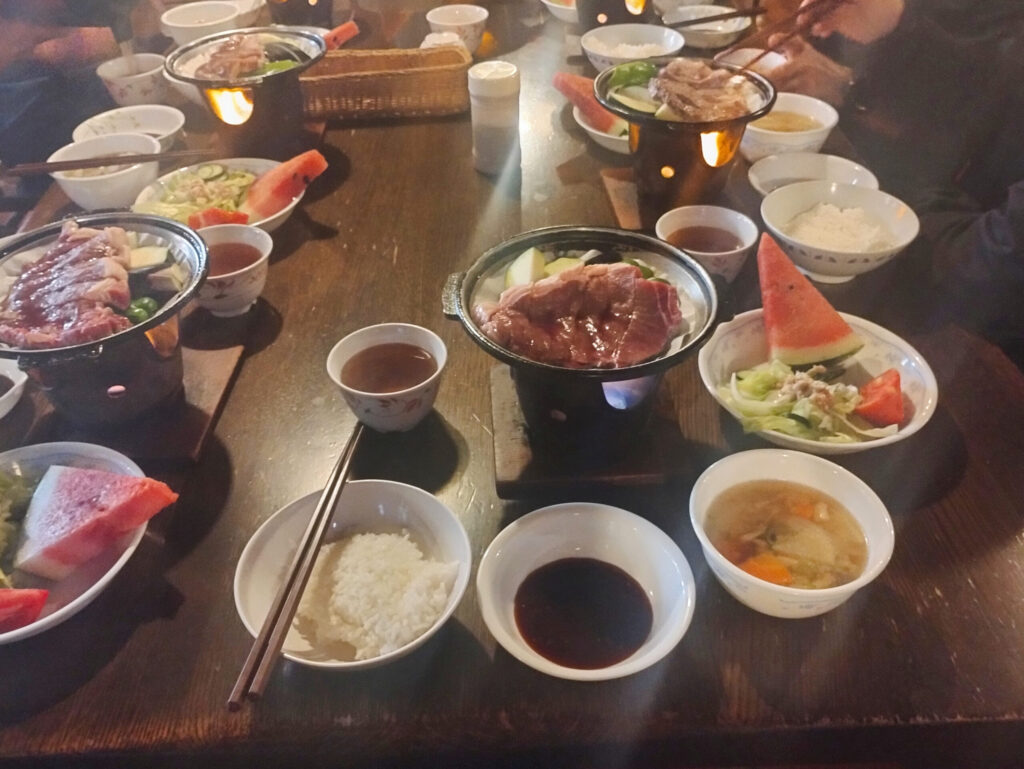
Dinner that evening was, for a mountain hut, remarkably indulgent: steak. Over the table, we ran through the next day’s itinerary. One combination in particular stayed with me — a grandfather and his high school granddaughter, sharing the mountain together. It was a reminder of why this work matters.
The following morning, we left the hut at 4:50 AM. With onigiri (rice balls) from the hut kitchen in hand and headlamps cutting through the pre-dawn grey, we headed toward Nakayama-nokkoshi. The sky held only a pale hint of light. The goal was to clear the technical sections before the day heated up, reducing the risk of afternoon weather deterioration.
From Gyōja Hut, we approached the base of the main ridge leading to Akadake — the point where the real climbing begins. I briefed the group carefully on chain passage technique: three-point contact, deliberate footwork, and above all, no rushing.
The rock sections of Bunzaburo-one (Bunzaburo Ridge) rose before us. Stepping over chockstones and gripping the fixed chains, we gained elevation methodically. At one point, I noticed a guest’s expression tighten as the exposure increased. I moved alongside, indicated the next moves, kept my voice steady. That moment of breaking through fear — and the sense of achievement that follows — is one of the mountain’s deepest gifts.
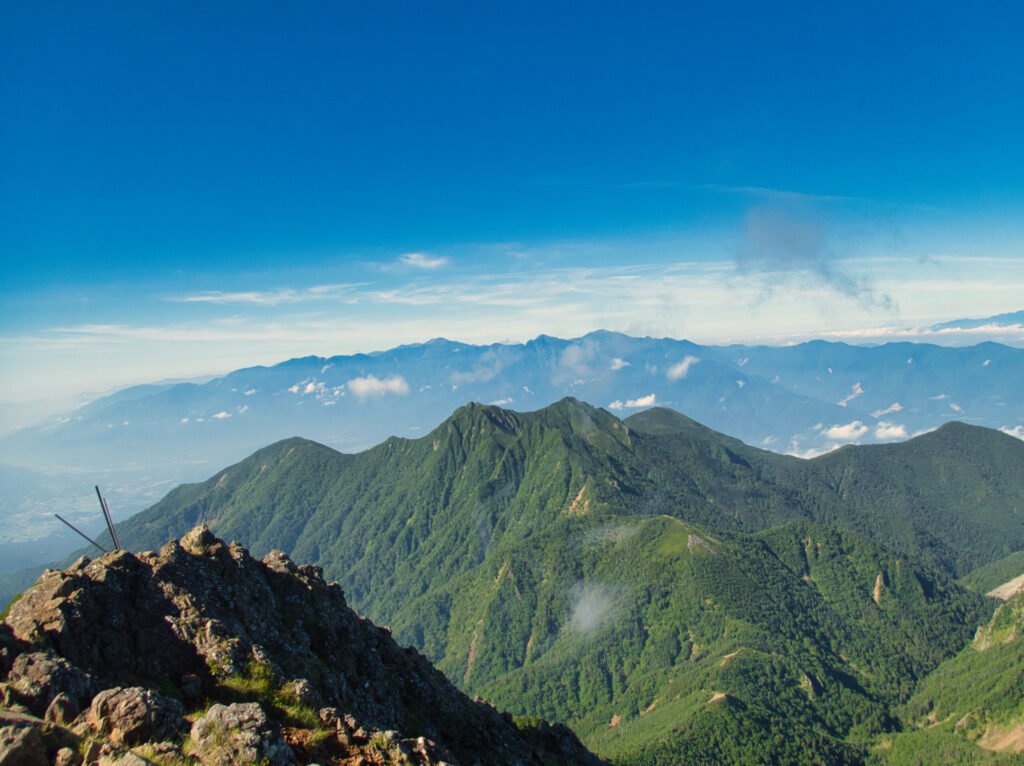
Beyond the Bunzaburo-one junction, we continued through the Kiretto fork and the Ryūtō-hō fork. The rock underfoot was the Yatsugatake’s characteristic andesite — solid, with good purchase for hands and feet. Cautious, but steadily upward.
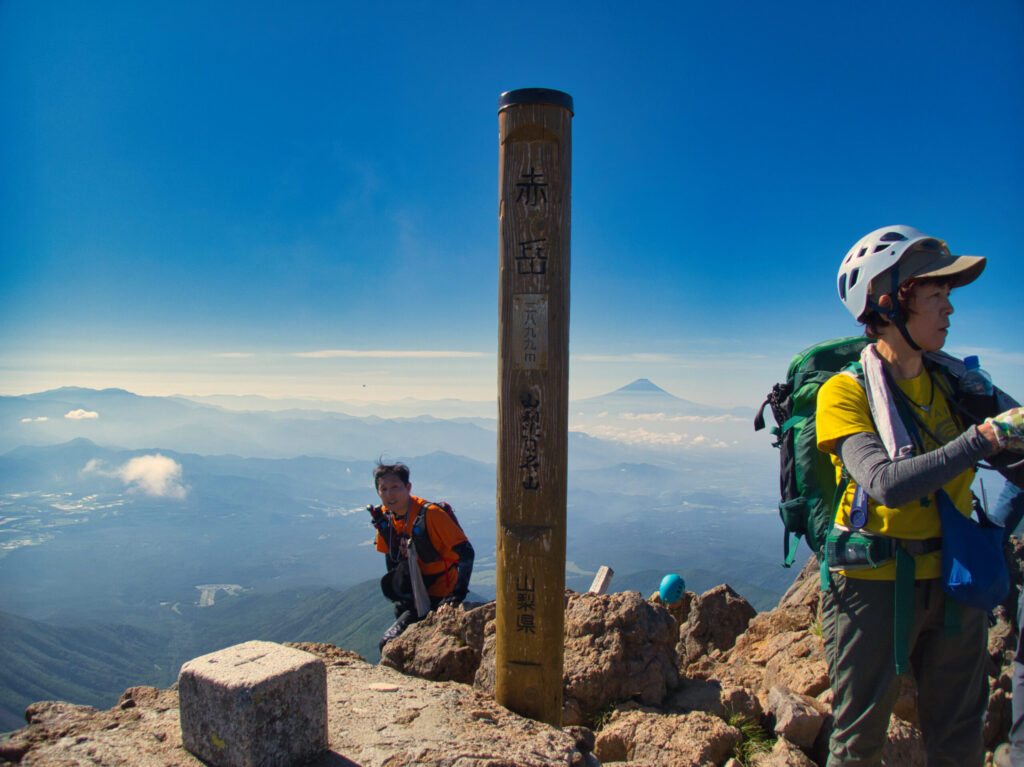
At 8:24 AM, we stood on the summit of Akadake — one of Japan’s famous 100 Hyakumeizan. Below, the Southern Alps, the Northern Alps, and the elegant silhouette of Mt. Fuji rose through a thin veil of haze. The smiles on my guests’ faces were all the reward I needed.
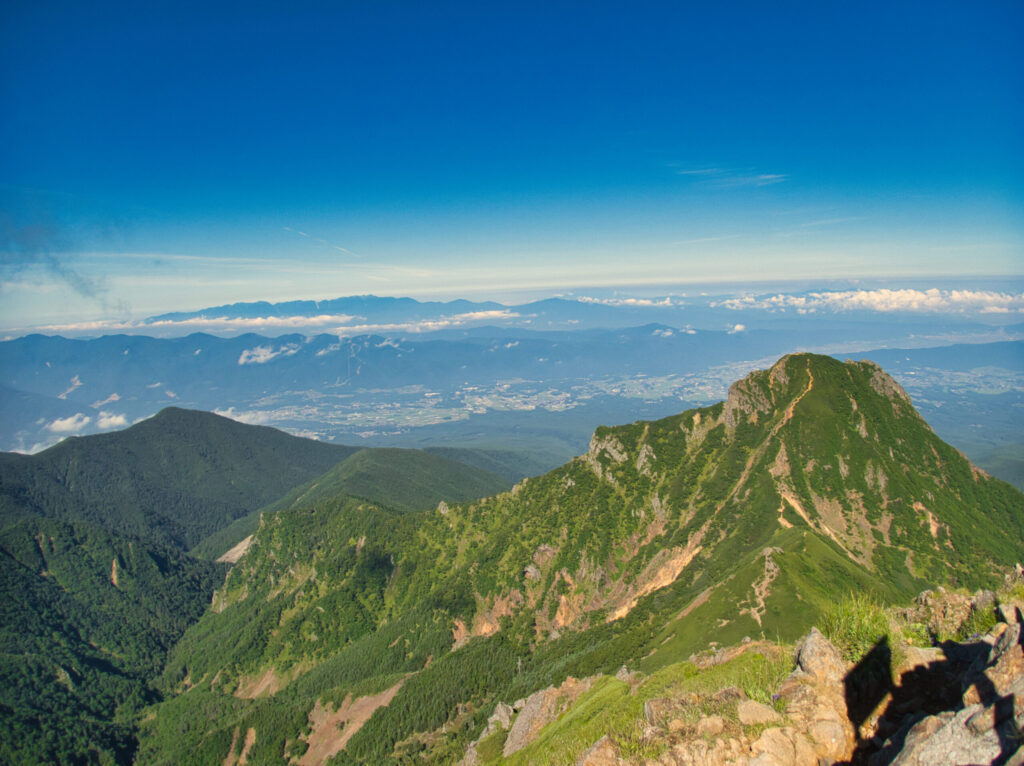
The summit was ringed in blue sky, the andesite ridges of Yatsugatake radiating in all directions. One guest, who had never before stood above 2,000 meters, spoke her feelings aloud. Her words filled the air on that peak.
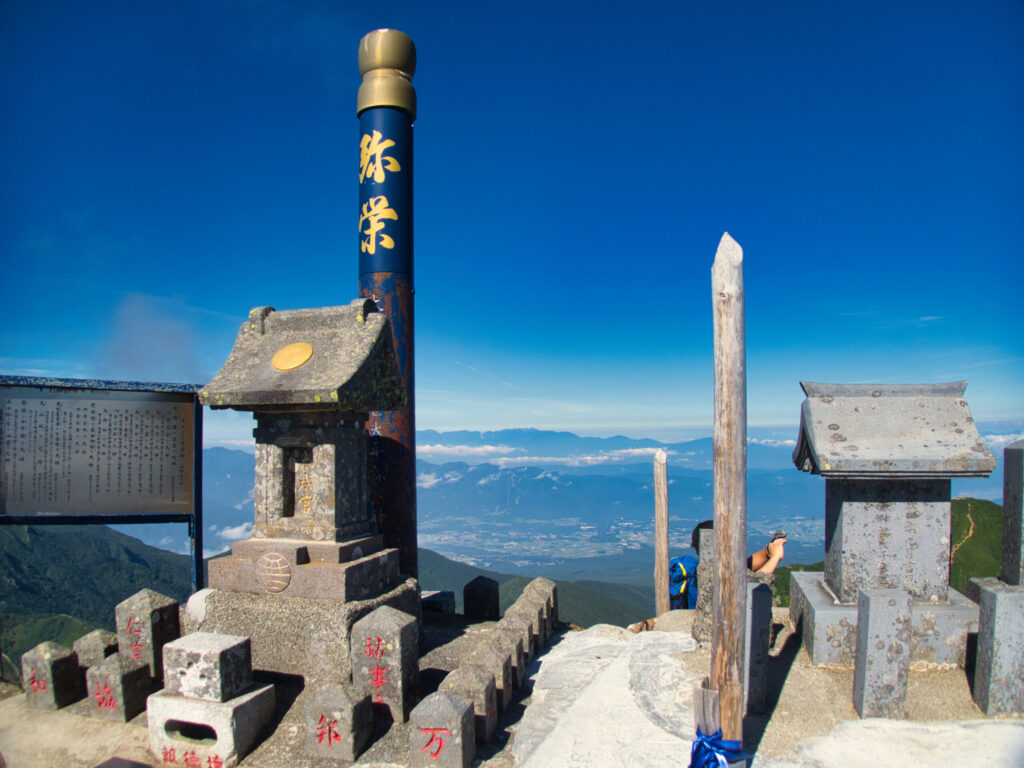
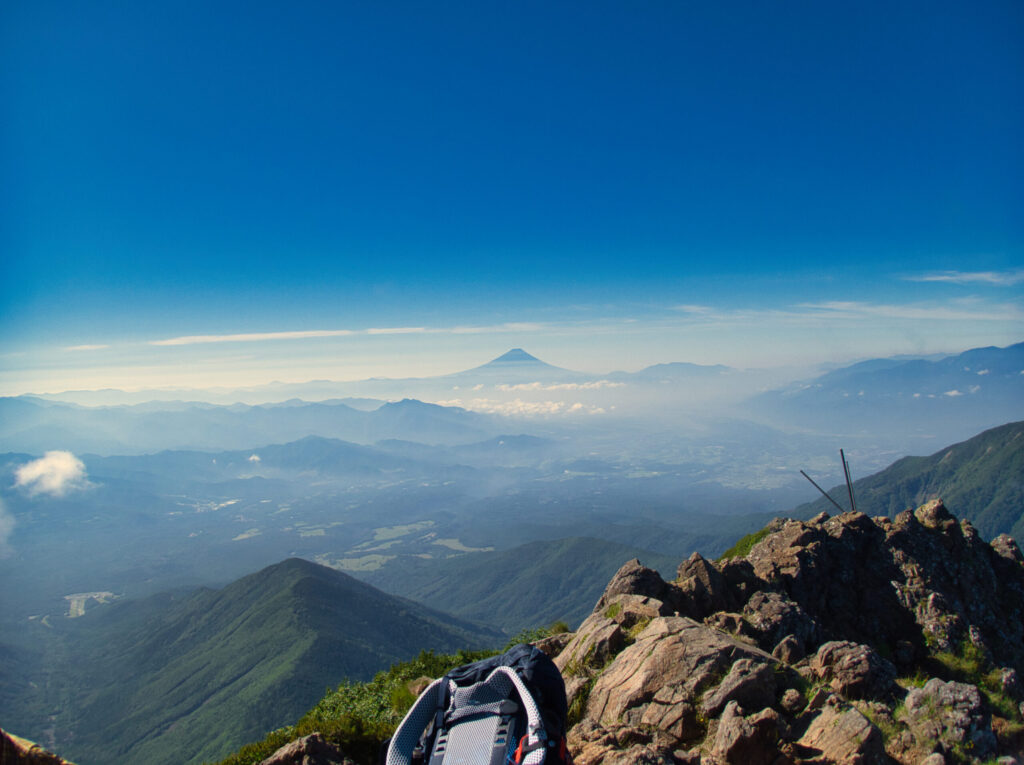
After time on the summit, we turned to the descent. Retracing our steps along Bunzaburo-one, we passed through Gyōja Hut and took the Minami-sawa route down. The change of perspective on the descent brought its own sense of discovery.
We stopped for a proper rest at Gyōja Hut. Reading the fatigue levels in the group, I adjusted our pace accordingly. At the hut’s small shop, several guests browsed summit badges and tenugui (hand towels) — the summit badge, as ever, a coveted memento of the climb. Descent demands its own vigilance. Accumulated fatigue makes footwork unreliable. I kept the encouragement flowing, occasionally lightening the mood with a well-placed joke — anything to maintain spirits through to the trailhead.
Past the ruins of Naka-no-Gyōja Hut, the trail opened toward Minoto Sansō, and finally, the forest released us to the trailhead at Minoto-guchi. At 1:59 PM, the entire group had descended safely.
The bus carried us onward to Yūkawa Onsen Kappa-no-yu in Tateshina. Two days of sweat dissolved in the hot spring waters. Soaking alongside the guests, I turned the mountain over in my mind — the rocky ridges of Akadake, the views from the summit, the hours we shared on the trail. Two days, full to the last.
The summer Yatsugatake had received us into its depths, and then sent us on our way.
LOG SUMMARY