【Deep Dive Chronicle】Central Buttress of Ichinokura-sawa: A Day After the Exam, Onto the Wall
北村 智明
稜線ディープダイブ
A long-cherished dream finally came true. The Takidani Crack Ridge lies on the western face of the south peak of Kita-Hotakadake in the North Alps — a classic route we had planned time and again, only to be turned back by bad weather. Over three days in August, with Karasawa as our base camp, we made our bid. The Daikiretto, the descent of B-sawa Gully, the razor-thin Megane no Koru col, and the ordeal of the Janken Crack. A summer North Alps chronicle, written by a climber.
We left Fukushima in the dead of night. In the first days of August, with the political situation in turmoil below, we turned our backs on the noise of the lowlands and pointed ourselves toward Hotaka. The Takidani Crack Ridge — a climb we had planned countless times over the years, each attempt cancelled by bad weather or the demands of work — was finally going to happen. In the car, no one said much. Each of us held our anxieties and expectations privately, close to the chest.
We drove west, west, west along the expressway. The summer stars beyond the car windows shimmered without interference from city lights. Eventually we exited at Matsumoto, then on to Sawando. We grabbed a few hours of sleep in the parking lot, but the car was stifling in the summer heat, and it was a fitful night. I woke multiple times in my shallow sleep, and each time, thoughts of the days ahead came to me: photographs of the Crack Ridge, the route map, what a senior climber had told me about the quality of the rock. The anxiety was real. But there was no turning back now.
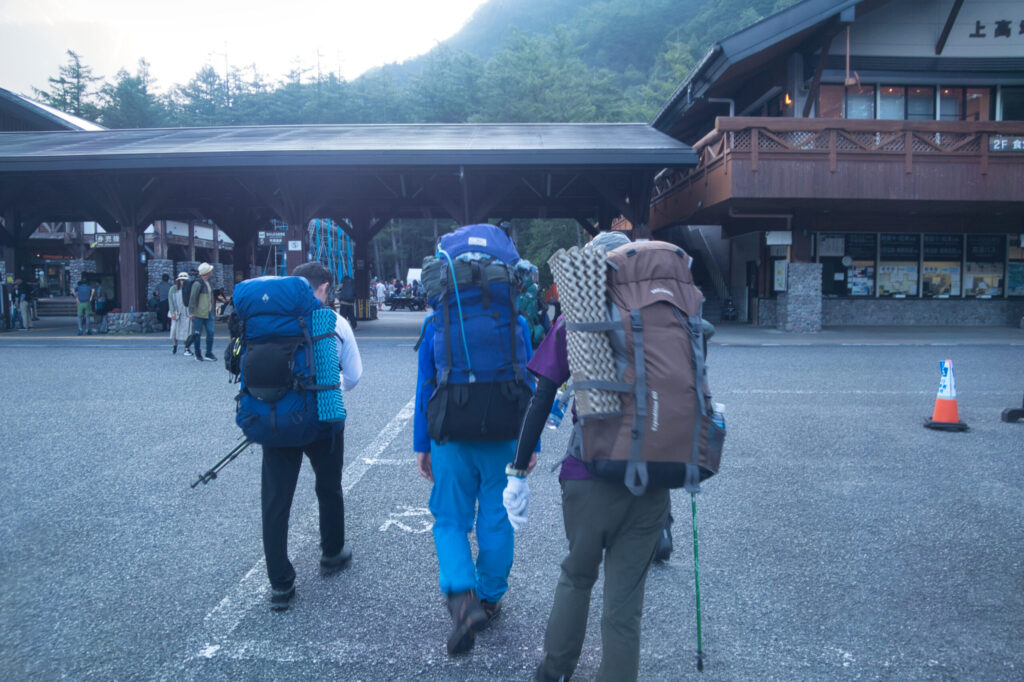
On the early-morning bus to Kamikochi. Stepping off at the bus terminal, cool air brushed the skin. The highland at 1,500 meters above sea level was still wrapped in the quiet of morning. We crossed Kappa Bridge. Before us, the Hotaka range caught the morning sun and glowed gold. Somewhere along that severe rock ridge, the Crack Ridge we were aiming for was waiting.

We set off along the trail following the Azusa River. Passing Myōjin, then Tokusawa, we steadily gained altitude through beautiful, dappled forest, the sound of cicadas raining down on us. Though a long way still remained ahead, we honored our tradition at Tokusawa: soft-serve ice cream. The cold sweetness quenched our parched throats.

The path from Yokoo to Hontani Bridge never gets old, no matter how many times you walk it. The valley narrows, rock walls press in on both sides, and the sound of water grows close. We crossed Hontani Bridge and the steep climb began. Sweat poured out. We plugged on in silence, taking breaks as needed. Past the steep S-Gare slope, the view opened wide.
Karasawa Cirque. The natural amphitheater at 2,300 meters, cradled by the Hotaka range, spread out before us. Okuhotaka-dake, Kita-Hotakadake, Maehotaka-dake — their rock peaks rose in a circle around the cirque, a glacially carved landscape that conveyed the immensity of time in a way no human endeavor can approach. Here we would make base camp for all twelve of us. Of the twelve, only four — our team — were bound for the Crack Ridge. The others would head for Jandarm or Okuhotaka-dake.
By the time we finished pitching the tents, the cirque was sweltering under the full force of midsummer sun. It was hard to believe we were over 2,000 meters. Our shirts were soaked through. I washed my face at the water source; the cold snowmelt water cooled my flushed skin.
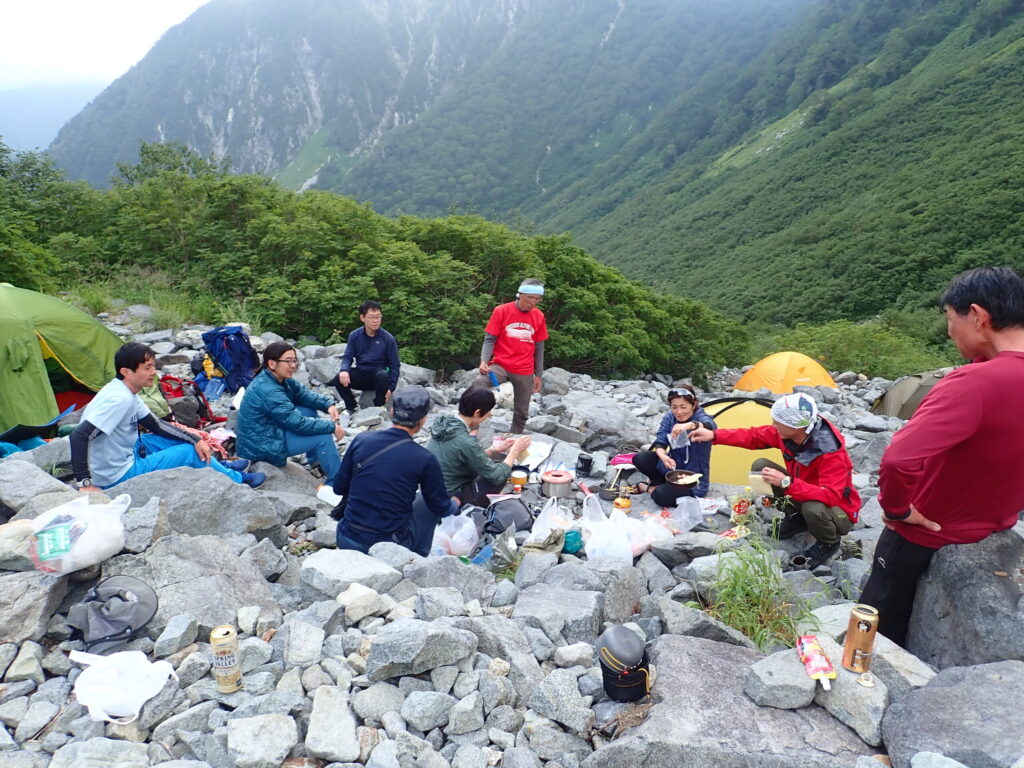
Camp party at Karasawa
In the evening, we all gathered for a camp party. Laughter and the sound of drinks poured into the valley. Everyone talked about what lay ahead: those heading for Jandarm, those bound for Okuhotaka-dake, and we four for the Crack Ridge. I stepped away from the circle for a moment and looked up at the rock face of Kita-Hotakadake. Our route was up there somewhere. At this time tomorrow, we would be on that wall. The thought brought a surge of mixed feeling — anticipation and unease, tangled together.
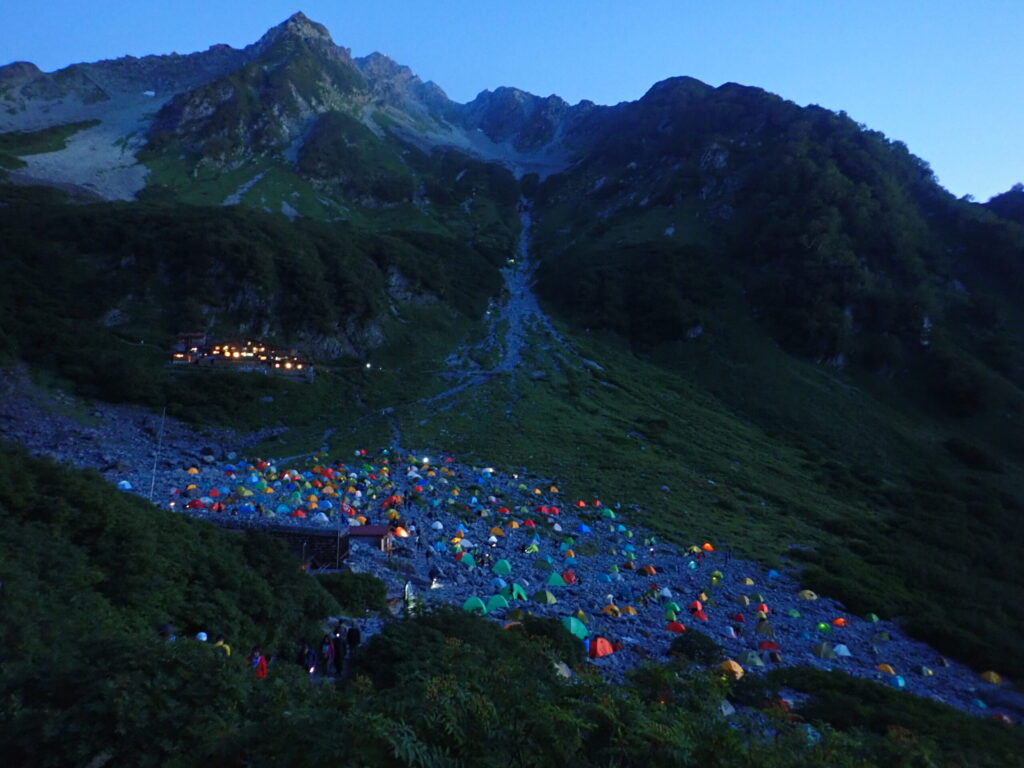
Night view of Karasawa
In the tent that night, I ran a final check on the gear. Harness, helmet, carabiners, rope — I took each item in hand and confirmed nothing was wrong. The Takidani Crack Ridge was first ascended in 1932 by young climbers, a classic route rated Grade 3 upper that runs directly up the western face of the south peak of Kita-Hotakadake. “Takidani” is a collective name for the cliff zone running from Karasawa toward Kita-Hotakadake, and it carries the nickname “Graveyard of Rock.” Climbers have called it that for its notoriously poor rock quality and long history of accidents. A sacred site that has absorbed the dreams and challenges of generations of climbers — and, simultaneously, an object of dread. Within Takidani, the Crack Ridge is known above all for its crumbling rock and the crux pitch: the Janken Crack. I thought of Fukada Kyūya’s Nihon Hyakumeizan — he had mentioned this very Crack Ridge in his chapter on Hotaka. Tomorrow, we would attempt the rock ridge that the literary great had gazed at with longing. I went over the route diagram one more time, to be thorough. I traced the line in my head: from Karasawa up to Kita-Hotakadake, traverse the Daikiretto (the Great Notch, one of Japan’s most exposed ridgeline sections), descend B-sawa Gully, rappel around the end of the ridge, and reach the base of the Crack Ridge. Then the climb. There was no point pretending the anxiety wasn’t there. But I couldn’t afford to let an opportunity years in the making slip away.
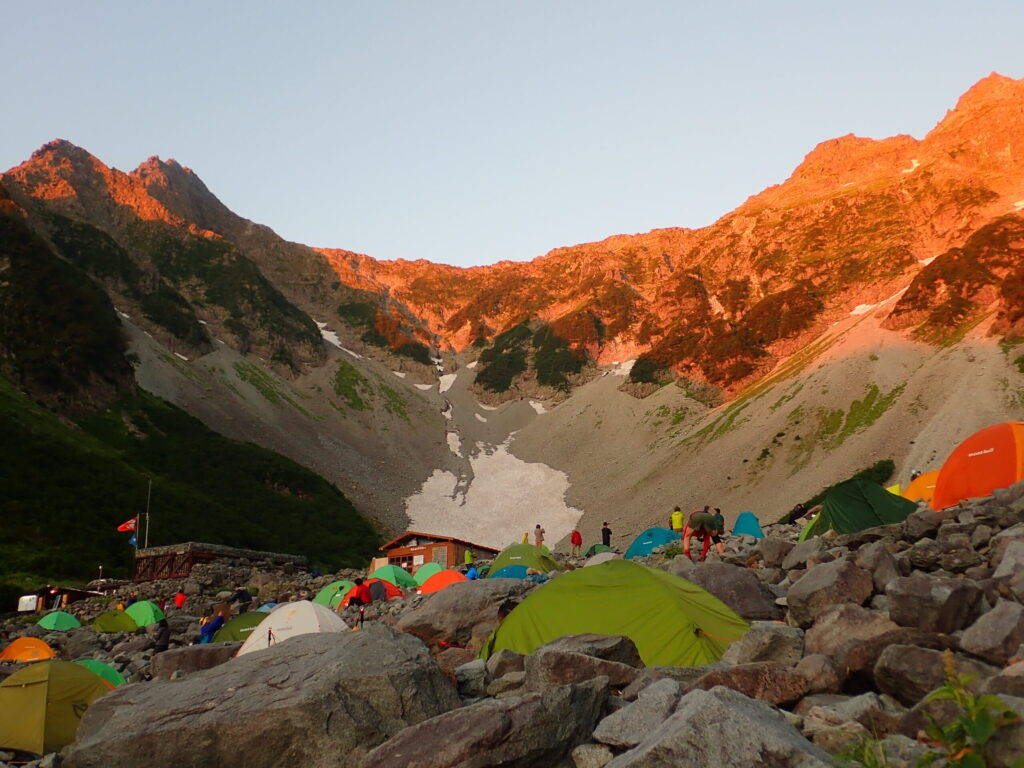
Morgenrot over Karasawa
We left Karasawa at 4:30 AM. Headlamps swayed in the dark. The other tents were still silent. We alone moved out into the pre-dawn black, climbing Kitaho-zawa Gully. The footing below was hard to make out. One step at a time, carefully. Gradually the eastern sky began to lighten. The ridge was close.
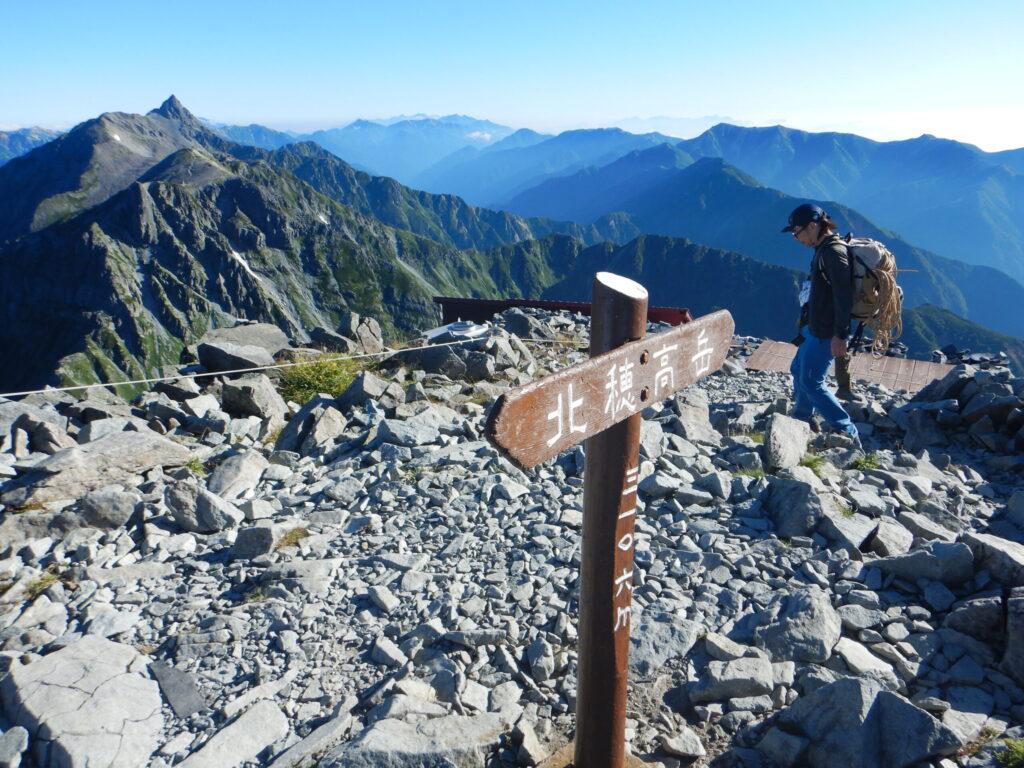
We stood on the summit of Kita-Hotakadake — one of Japan’s 100 Famous Mountains, at 3,106 meters above sea level. The morning sun lit up Yari-ga-take and the Tateyama range was visible in the far distance. But there was no leisure to enjoy the scenery. Our destination lay ahead. We pressed on toward the Daikiretto. Below us, Karasawa; across the void, the rock ridge of Okuhotaka-dake. We moved carefully along the knife-edge ridgeline.
We missed the descent point into B-sawa Gully. We had been watching the map, and yet somehow we had pushed well into the Daikiretto before realizing it. “We’ve gone past the descent point,” S called out. We spread the map and confirmed our position. Nothing for it but to backtrack. Time lost. Frustration crept in. But frustration causes poor decisions. A deep breath. Composure restored.
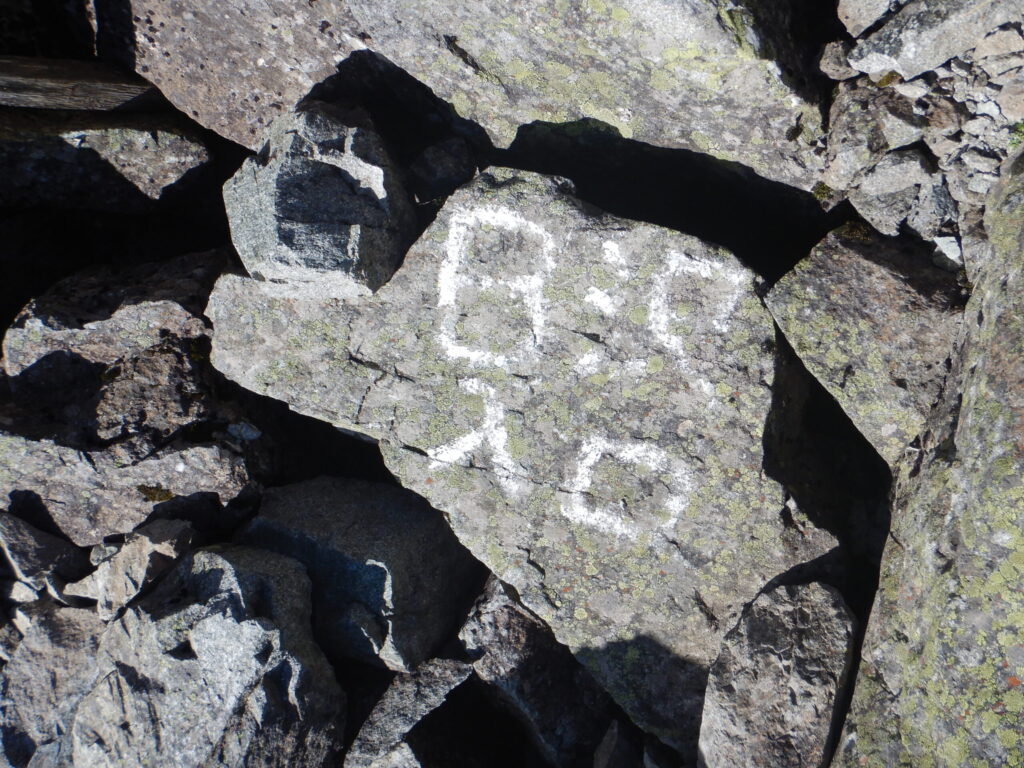
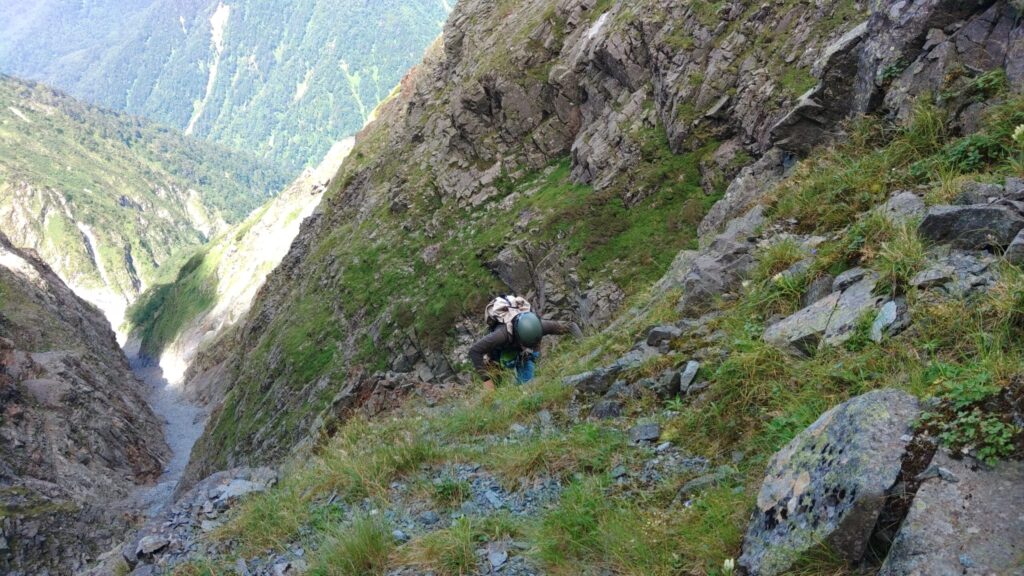
We turned back and eventually found the descent point. From here we would drop into B-sawa. A few years ago, a fatal rockfall accident had occurred in this gully — I remembered it clearly. Carefully, carefully. The descent began. A steep slope thick with loose rock and shifting stones. Every foothold moved. Every step sent pebbles skittering away. Before long those pebbles caught larger rocks, and the whole mass went thundering down the gully.
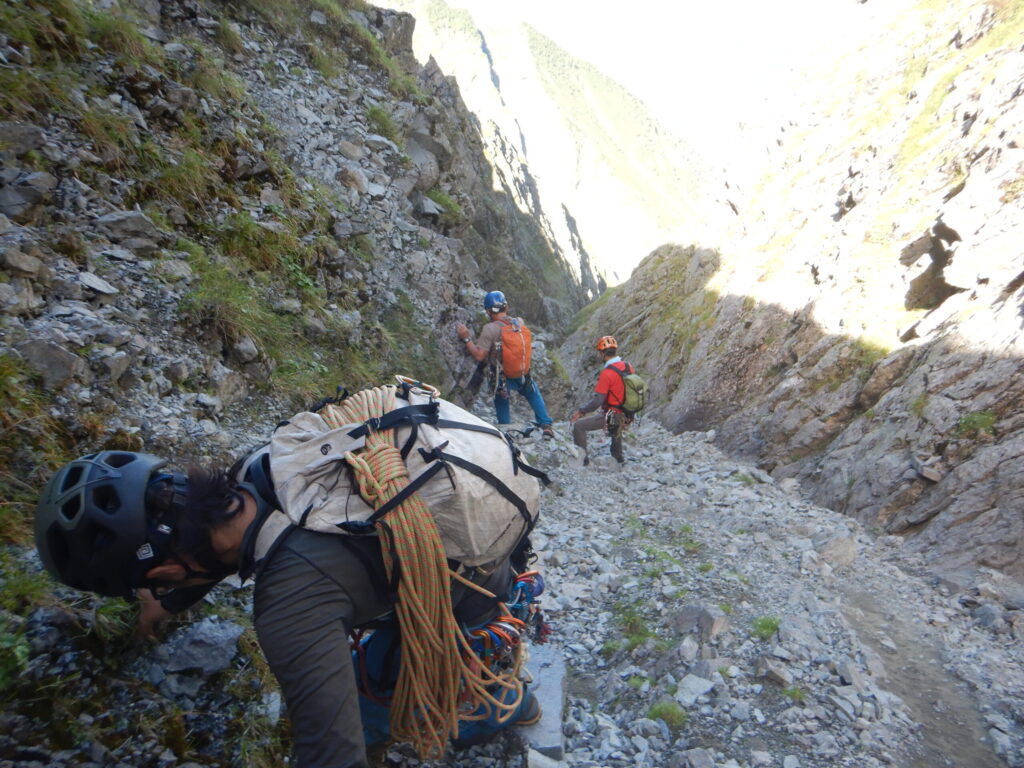
A chill ran down my spine. If a full rockslide let go from above right now, we had nowhere to go. Even wearing helmets, we would be helpless against large falling rock. We pushed the descent as fast as we dared while staying careful. A foothold crumbled. I caught my balance by reflex. A dull pain shot through my ankle. A fist-sized stone had rolled down and struck my foot.
“You alright?” S called over. “I’m fine,” I answered, though the pain didn’t go away. As the descent continued, rocks hit my legs again and again. Knees, shins, ankles — dull impacts landed everywhere. This gully was alive. That’s how it felt: a raw violence to it, as if the rock and gravity were refusing us entry, pushing us back.

The rappel anchor came into view. Reaching it meant the worst section was behind us. We rigged the rope and went down one by one. The rope rasped against rock. Looking down, there was still significant exposure. Don’t lose focus, I told myself. Everyone descended safely. From there we traversed the ridge on a diagonal rappel to work around the terrain. Complex ground. A single route-finding error would dead-end us.
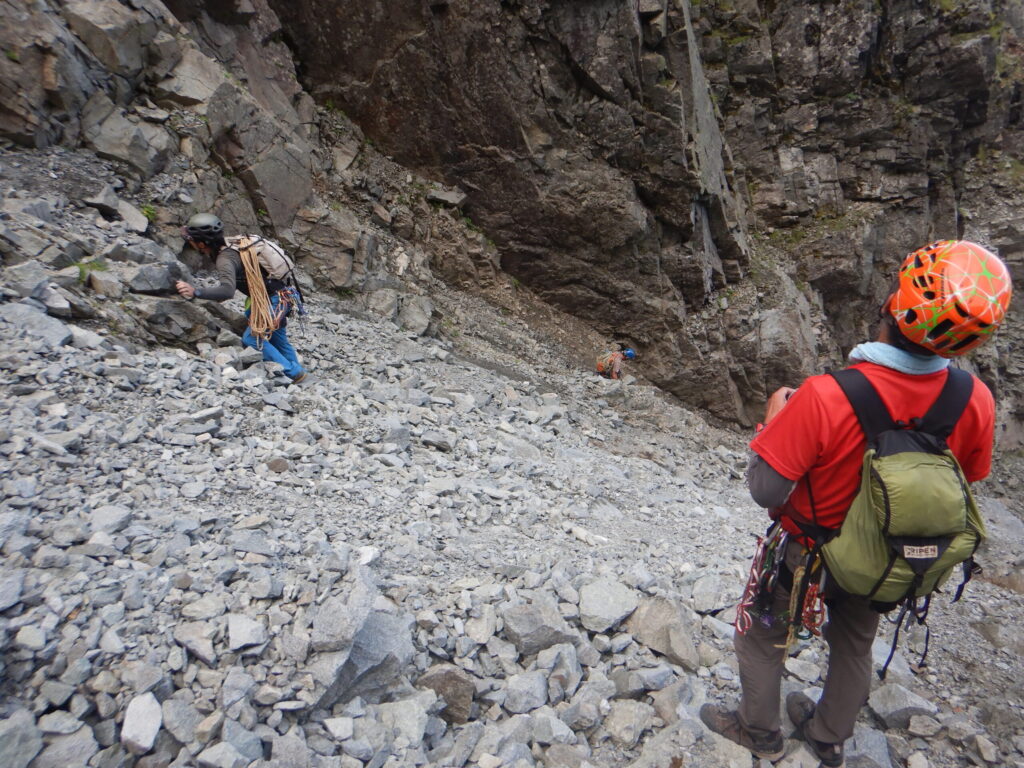
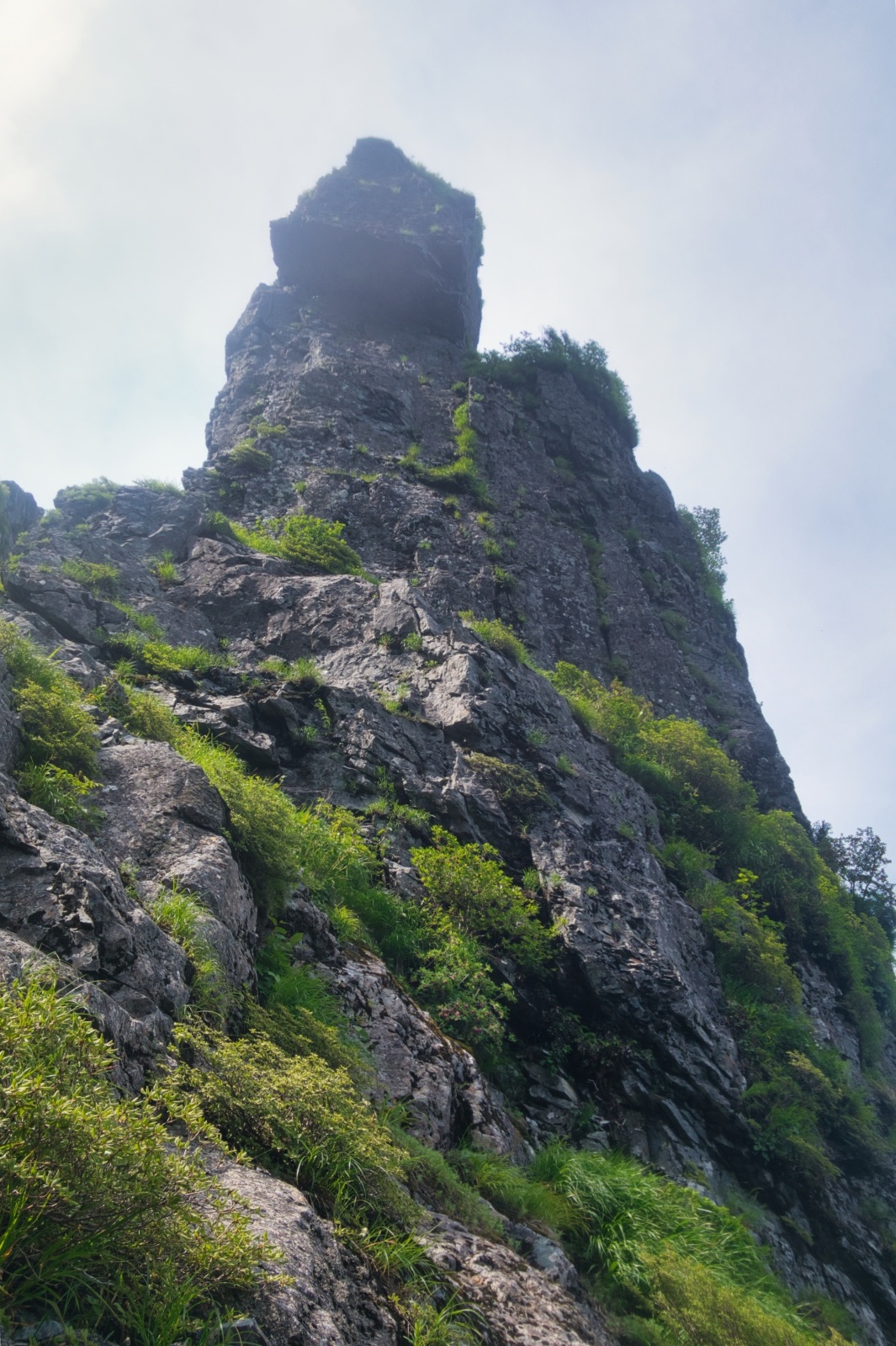
At last we reached the base of the Crack Ridge. Looking up, a near-vertical wall loomed over us. In the granite face, pyramidal natural sculptures were carved by time. This was our route. How long had it taken us to get here? No matter — the real battle started now.
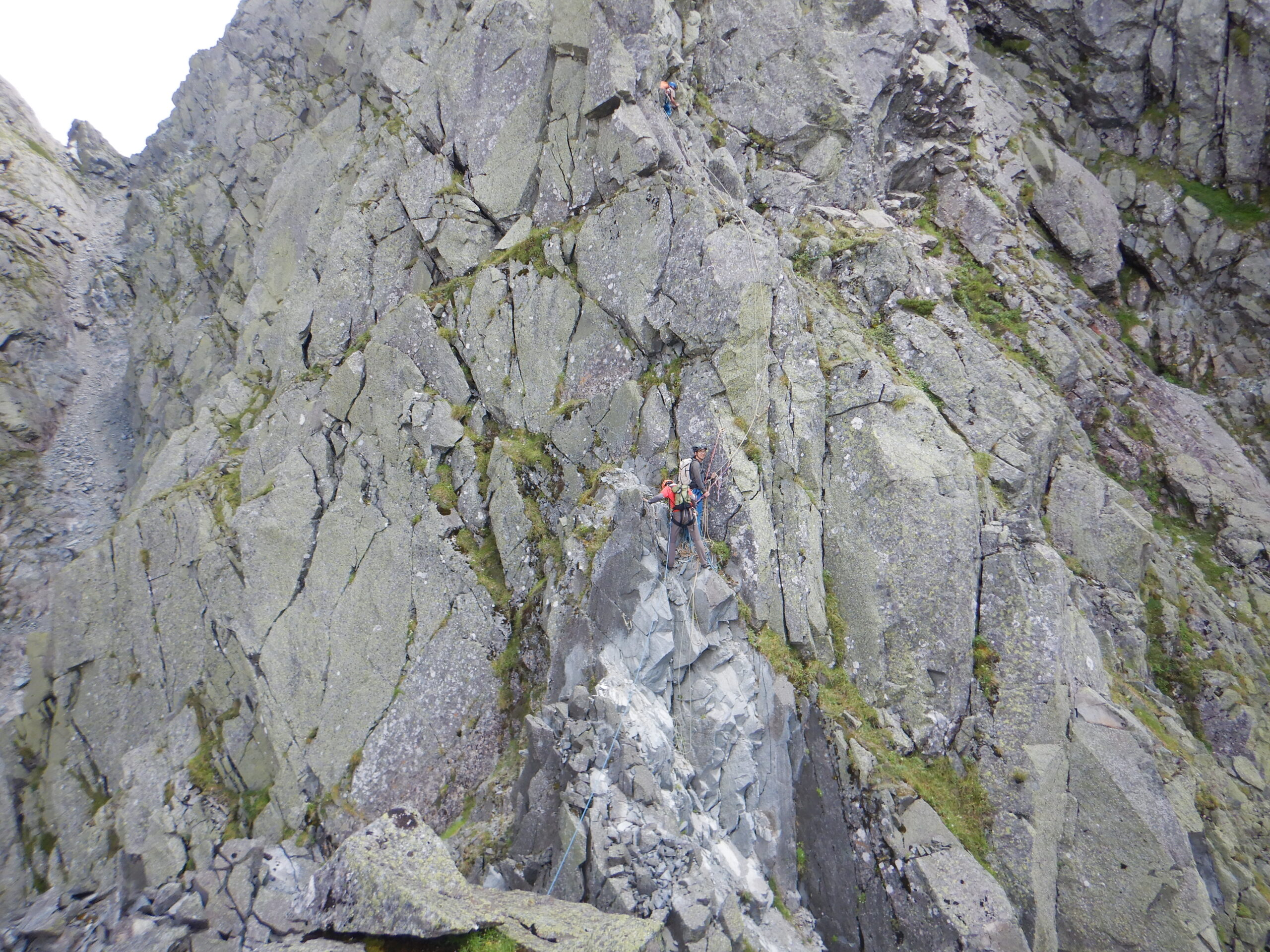
We tied into the rope. T led off. I took up the belay. Rope in hand, I fixed my attention on T’s movement. “Climbing.” T’s voice rang out. The figure on the wall looked small. The exposure was real.

The rock was worse than expected. T moved with caution. Grasping a hold, the surface broke away. A foothold crumbled underfoot. “It’s rotten,” T said. I felt exactly the same. On rock like this, every single move had to be read before committing to it. A fall here would end years of planning — and far worse, it could end everything. When my turn came, I got onto the wall and began searching for holds. What I found was brittle — apply force and it would collapse, ease off and I would fall. A razor-thin balance. Sweat ran into my eyes. No chance to wipe it away. Nothing but the rock in front of me. As the altitude increased, the wind built. My body swayed.

Pitch by pitch, we gained height. The poor rock quality kept slowing us down. S lost a foothold and nearly fell. We kept moving. On the fourth pitch, we hit the Megane no Koru — a narrow, sharply exposed col whose name means “Spectacles Notch.” A ridge barely a meter wide, with nothing on either side. On the left, the steep slopes of B-sawa fell away; on the right, the cliff dropped to the first Takidani ridge. Wind poured through and threatened to topple us.

Fear wrapped itself around every part of me. My legs were shaking. A fall to either side would mean death. There was no stopping here. But my feet wouldn’t move forward. A deep breath. One step. Then another. Testing the ground beneath each foot before committing. The wind gusted and the body swayed. I fought to hold my balance. Finally, the col was behind me. My back was soaked — cold sweat.
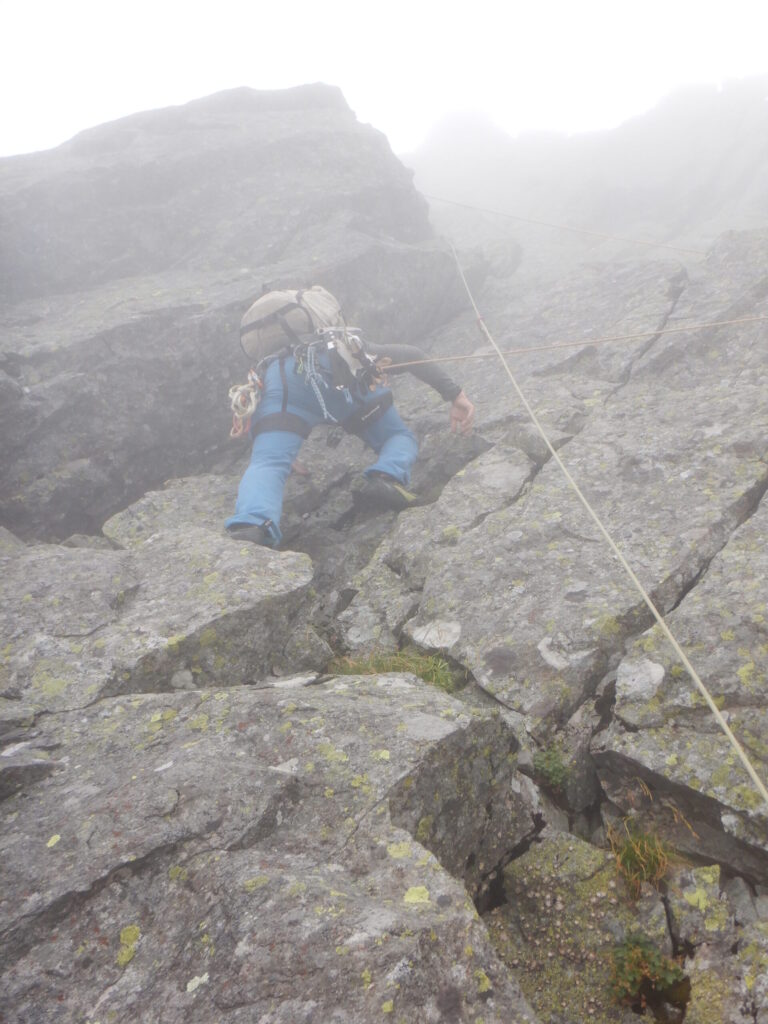
The fifth pitch was the Janken Crack — the crux. Looking up, a crack split the rock vertically. Narrow. To climb it, you had to torque your body into it. T led. This was where jamming technique would be tested: drive the fist into the crack, expand it, lock it in place; do the same with the feet. But the poor rock made it punishing here too.
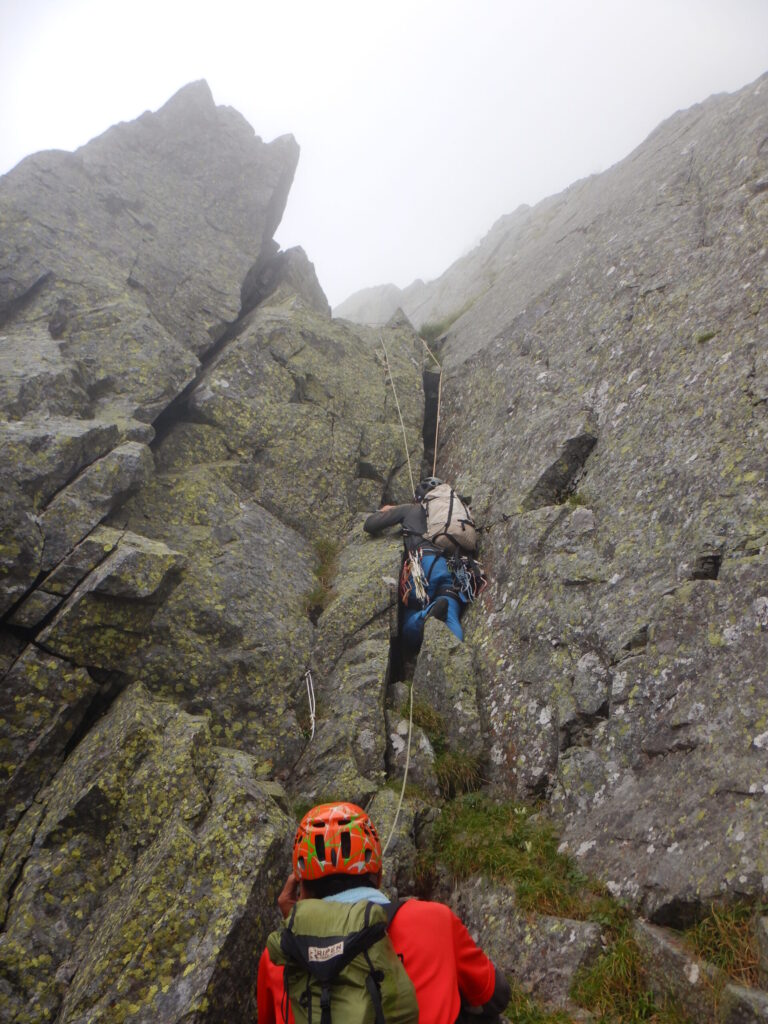
T’s movement stopped. “It’s hard.” Those two words said everything. Apply force and the rock breaks away. Ease off and you fall. A razor-thin balance. T inched upward. It took time. But rushing was not an option.
Then it was my turn. I got into the crack. Drove my fist in. Expanded it. No sense of the lock holding. The rock was too weak. I tried another spot. Then another. Trial and error, over and over. It was less a test of physical strength than a grinding attrition of the nerves. Every move forward demanded a judgment call on the knife-edge between caution and commitment. I forgot that time was passing. Only the rock directly in front of me existed. Sweat ran into my eyes. No chance to wipe it away.
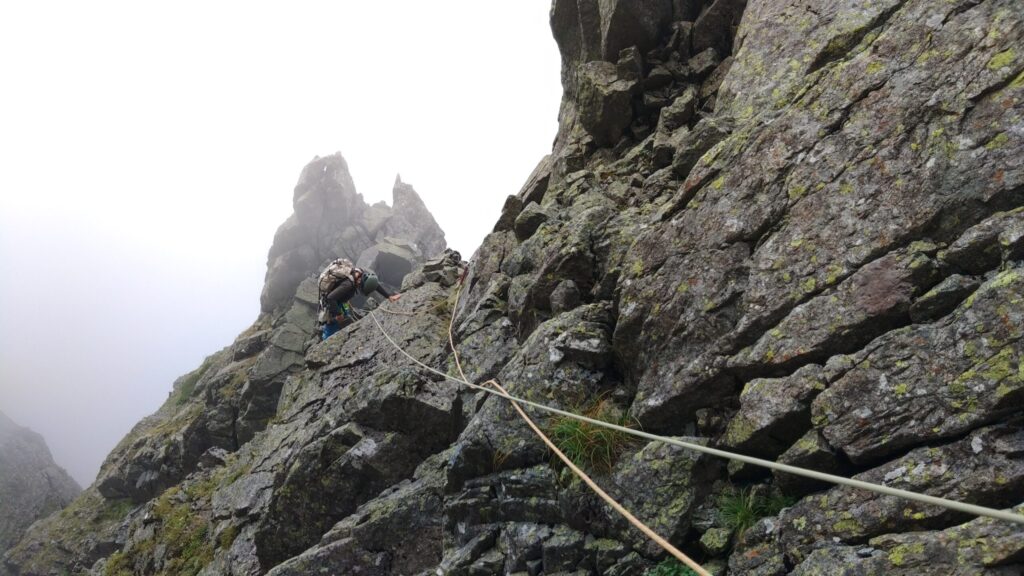
Everyone was struggling. All four of us were ground down by this crack. But one by one, we climbed it. The second S also made it. Then, finally, me. Just a little more. I summoned what remained of my strength. One last jam placed and held.
The angle eased. Sky grew near. Almost there. One final move, and I hauled myself up onto the ridge. The south peak of Kita-Hotakadake. We had done it. A dream years in the making was now real. We looked at one another in silence; our faces said everything — fulfillment, relief, and an exhaustion that hadn’t gone anywhere yet.
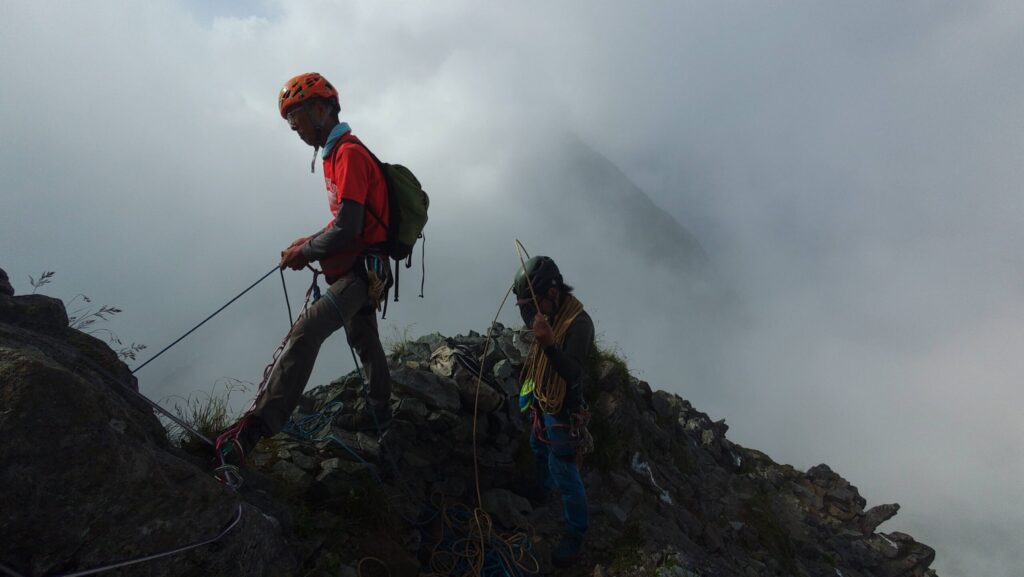
But there was no time to fully celebrate. Fatigue filled every part of the body. We still had a short walk to Kitaho Hut. On unsteady legs, we moved toward the hut. When we got there, we collapsed onto the outdoor benches.
We rested for a while. Drank water. Cold water on a parched throat — the sensation of coming back to life. I bought a brown towel as a souvenir — proof of the climb; I would keep it carefully. Looking at my legs, I counted the blue-black bruises: countless marks left by the rocks of B-sawa. They hurt. But they were badges of honor, too.
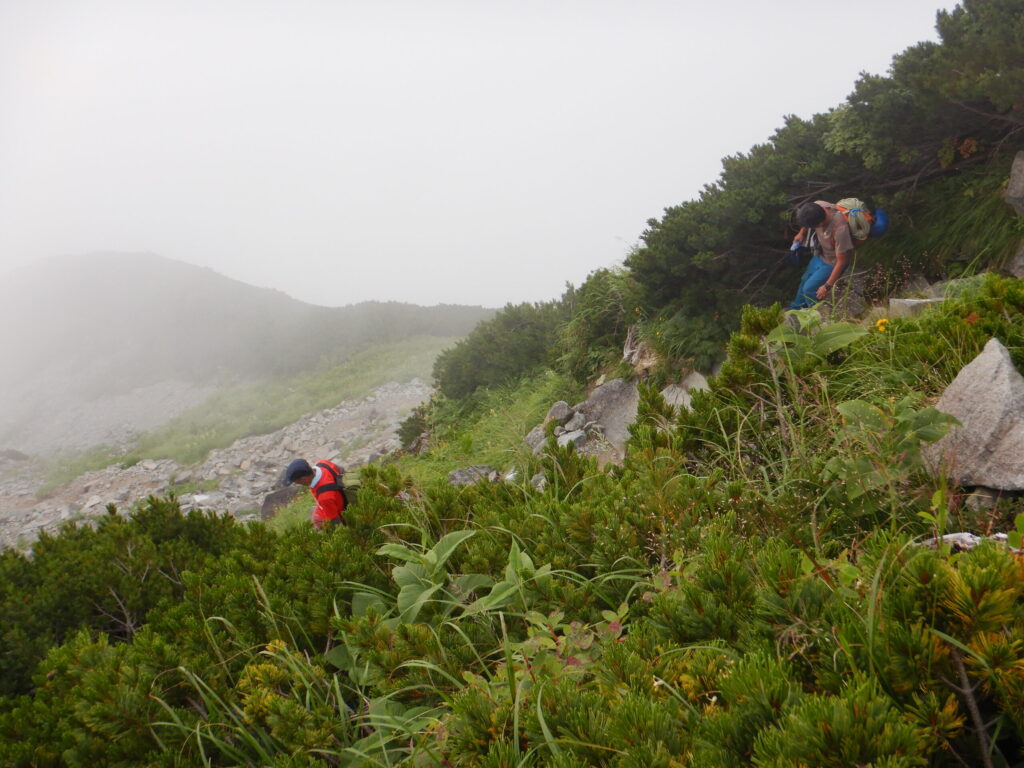
The descent back to Karasawa was long. I had never felt the phrase “bone-tired” more literally. My legs were like lead. But they kept moving. One step at a time, sure and steady. Eventually the tents of Karasawa came into view. The clusters of colorful tents looked for all the world like a paradise.
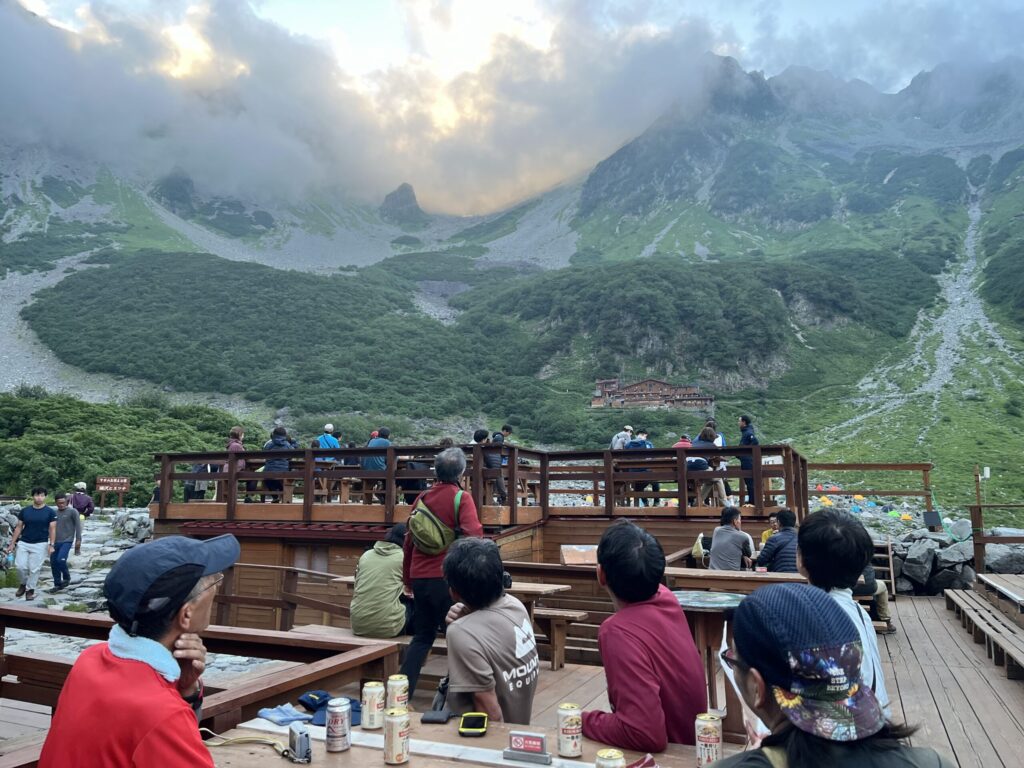
The other members had all returned safely as well. They met us with tired faces, their own climbs behind them. That night, we poured drinks together again. Those who had been to Jandarm told their stories; those who had made the return trip to Okuhotaka-dake told theirs; and we told ours from the Crack Ridge. It was a full, satisfying evening.
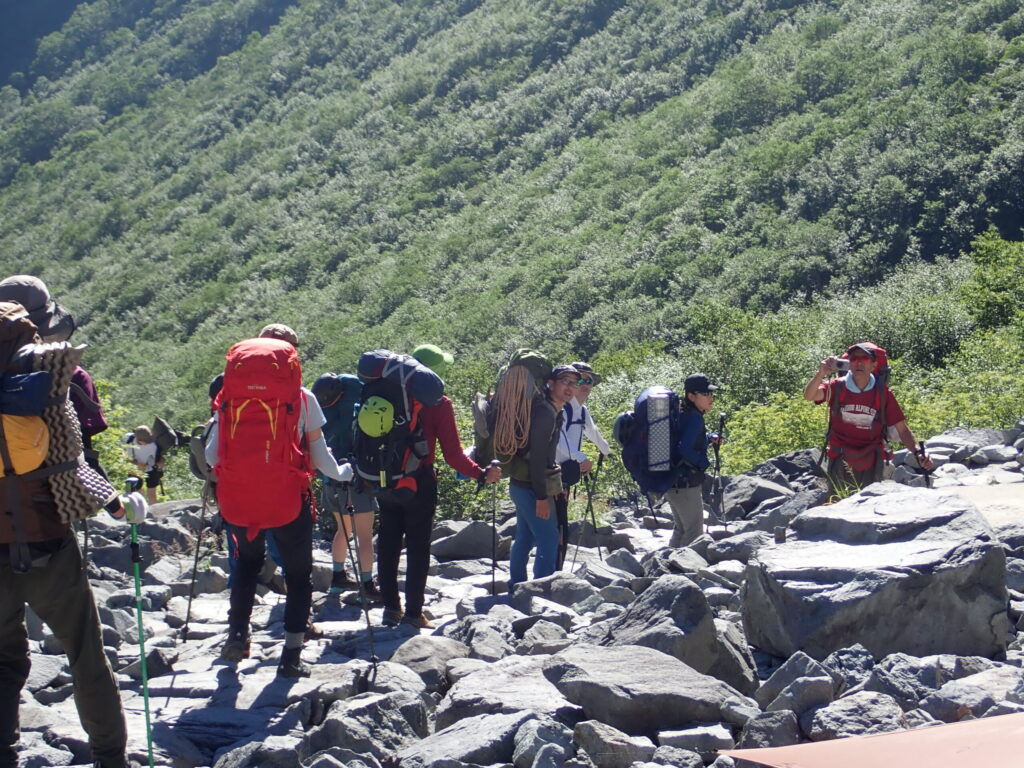
The next morning, we struck camp and left Karasawa, a twinge of reluctance in every motion. We retraced the way we had come — down S-Gare, across Hontani Bridge. By the time we reached Tokusawa, the climb of the day before felt distant, almost like something from another life. We had soft-serve ice cream again. The cold sweetness spread through tired bodies. The finest meal imaginable.
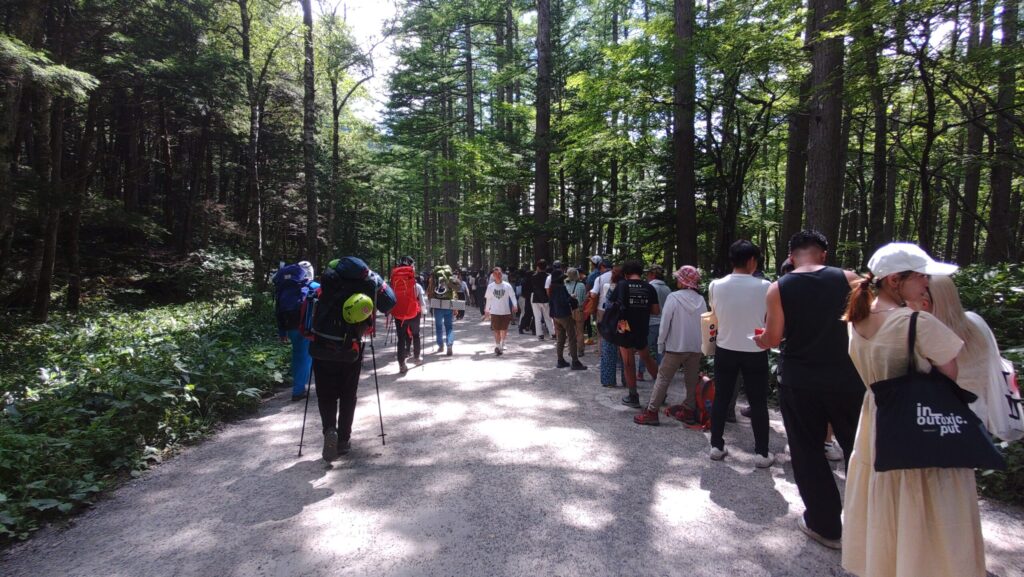
By the time we reached the Kamikochi bus terminal, everything had taken on the quality of a distant dream. But the bruises on my legs, and the memory of rope still alive in my hands, told me it had been real.
The Takidani Crack Ridge. A climb years in the waiting. Crumbling rock, the terror of B-sawa, the tension of Megane no Koru, the ordeal of the Janken Crack. And yet, with all of that included, this mountain journey will remain with me, unforgotten. The rock ridges of Hotaka will always be calling us back — some day, again.
[LOG SUMMARY]