【Deep Dive Chronicle】 Stream Climbing Iwanadomezawa: Sawanobori into the September V-Gorge
北村 智明
稜線ディープダイブ

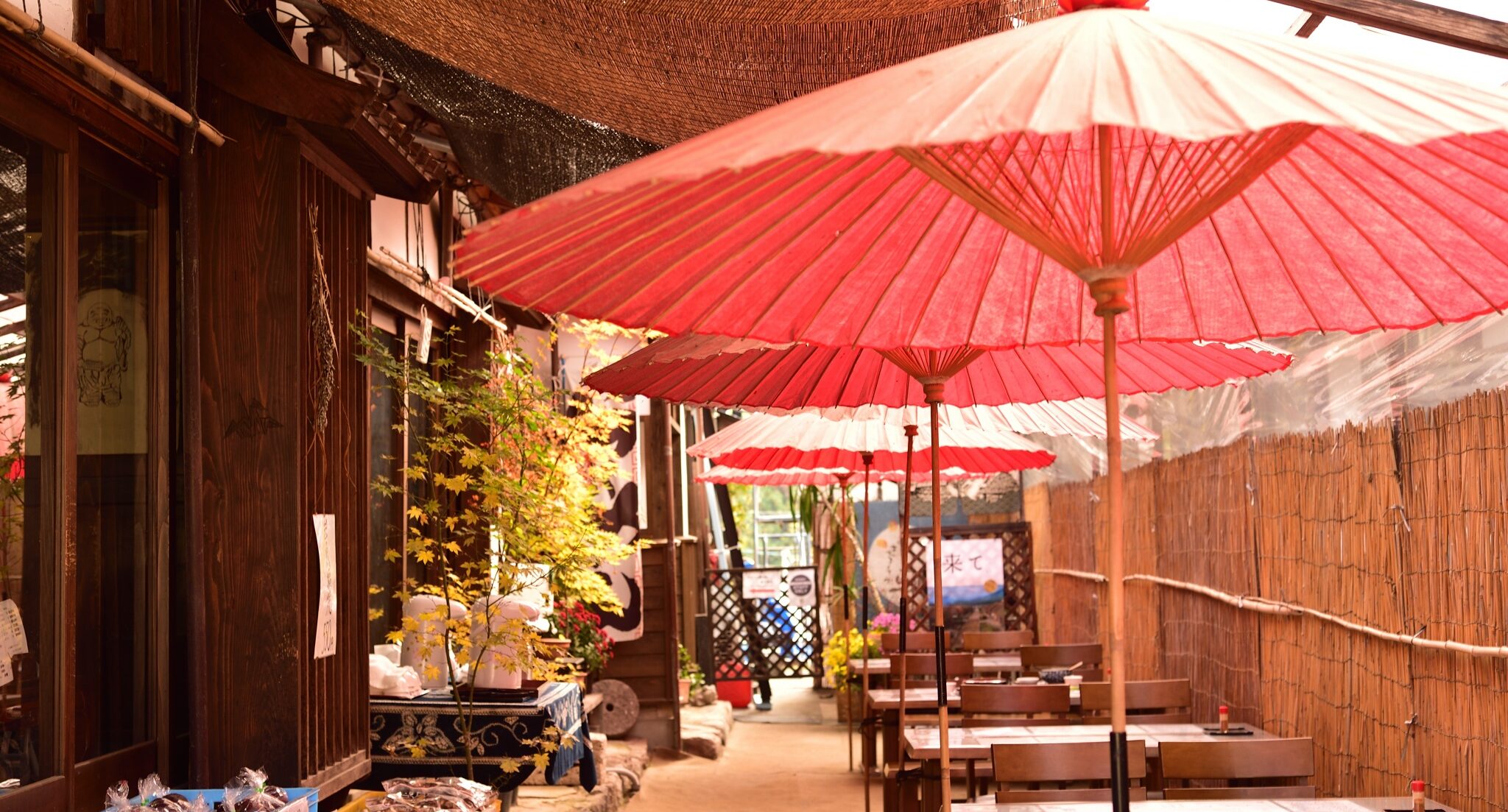
In late October, I headed to Mt. Onodake (Onodake, 1,383m elevation) in the Aizu region. While on a journey to visit Ouchi-juku, I was drawn to the mountain at the peak of autumn colors. This solo hike, lasting just under three hours, was filled with golden beech forests and profound silence. Once thriving as a mountain of ascetic practices and selected as one of Utsukushima’s 100 Famous Mountains, I walked this low-altitude peak on an autumn day with deep introspection.
It was shortly after the state of emergency had been lifted. I could finally plan mountain trips outside the prefecture without hesitation. With this sense of relief, I headed toward Aizu.
I drove south from Fukushima along the national highway, passing through Aizuwakamatsu and continuing on the mountain road. My initial destination was Ouchi-juku, a village known for its thatched-roof post town that I wanted to visit after a long absence. However, when I spread out the map along the way, a mountain called Onodake caught my eye. Though the cumulative elevation gain was less than a thousand meters, I knew from experience that during autumn foliage season, these modest peaks hold the most concentrated colors and touching beauty. Without hesitation, I changed my plans. Ouchi-juku could wait until after the descent.
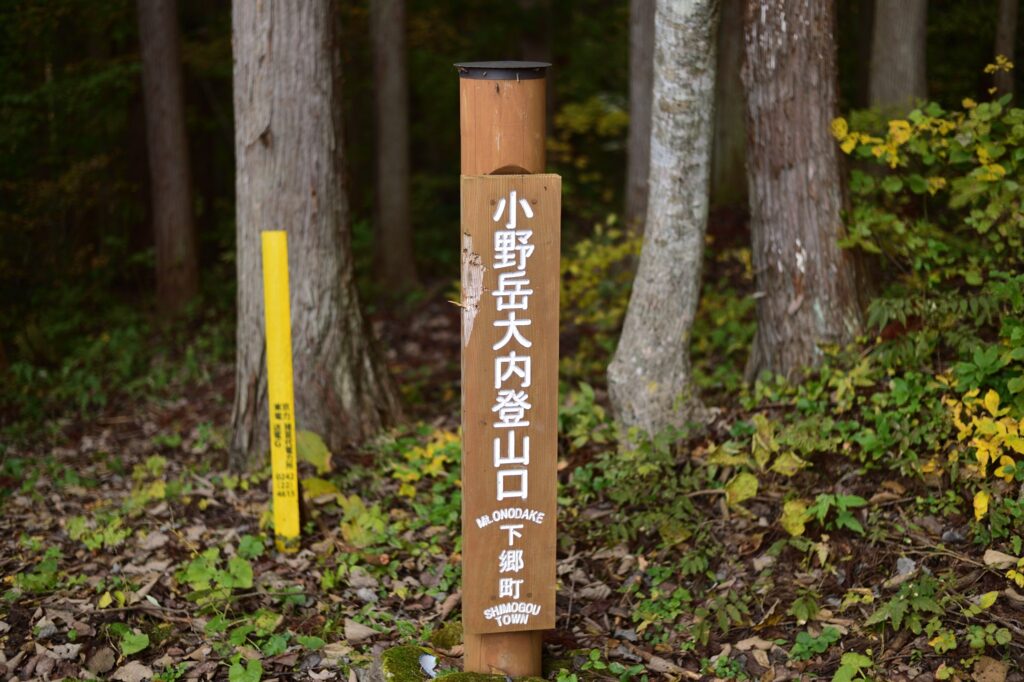
Just after 7:00 AM, I arrived at the parking area at the Ouchi trailhead. Several cars were already parked. After preparing my gear, I began walking at 7:38 AM.
Mt. Onodake – located on the western edge of the Aizu Basin, this mountain has long been an object of worship. The summit enshrines Ono Gongen, and in the past, many ascetic practitioners climbed this mountain. Though only 1,383 meters in elevation, the spiritual role this mountain has played in the Aizu region is no less significant than that of Fuji or Hotaka. Additionally, selected as one of Utsukushima’s 100 Famous Mountains and the Tohoku 100 Mountains, it continues to be deeply beloved by local people as one of Aizu’s representative peaks. The fact that an ascetic route from Mt. Haguro to Nikko once passed through this mountain area speaks to its importance. For the people of Aizu, it is a spiritual anchor.
The trail was covered in fallen leaves. Beech, oak, maple. With each step, the dried leaves produced a pleasant, crisp sound. In the quietness of solo hiking, only that sound was comforting to the ears. There was indeed uncertainty underfoot, but mountains always demand humility and cultivate the judgment to assess footing.
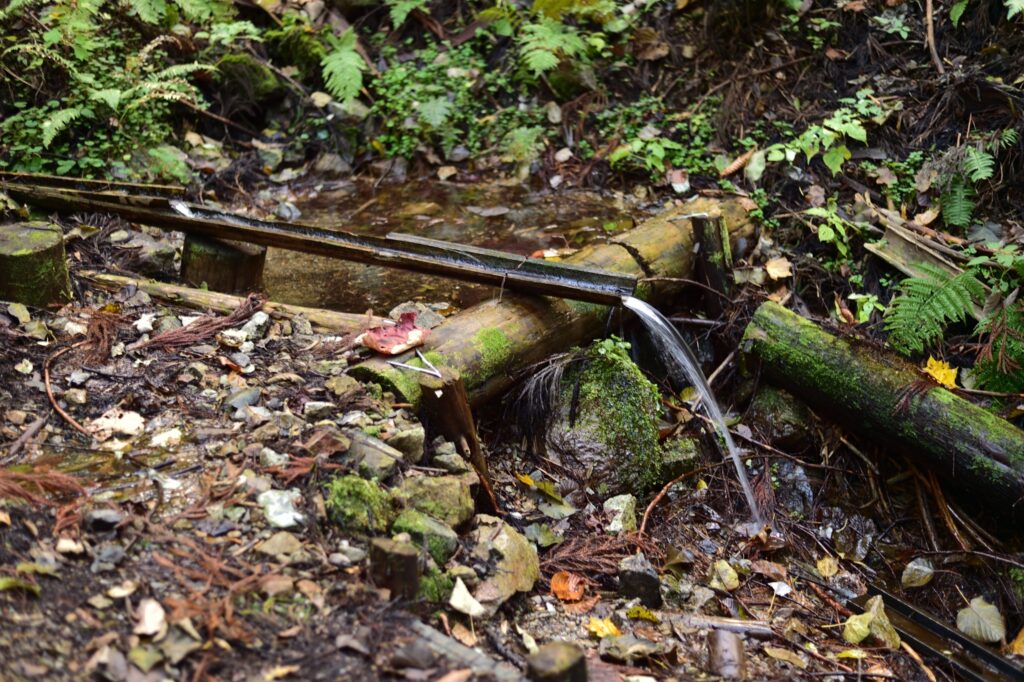
After about five minutes of walking, I reached Ono Spring (Ono no Izumi). Crystal-clear water emerged from between the rocks. When I immersed my hand, the cold was numbing to my fingertips. Taking a sip, I could even detect a sweetness. Mountain water doesn’t lie. The life cycle of this land is condensed in this very spring.
Past the spring, the real climb began. The slope was gentle, but gradually gained elevation. Sweat beaded, my breathing quickened. One must not overestimate one’s abilities. I slowed my pace and maintained my own rhythm. The advantage of solo hiking is being able to follow one’s inner voice without concern for others.
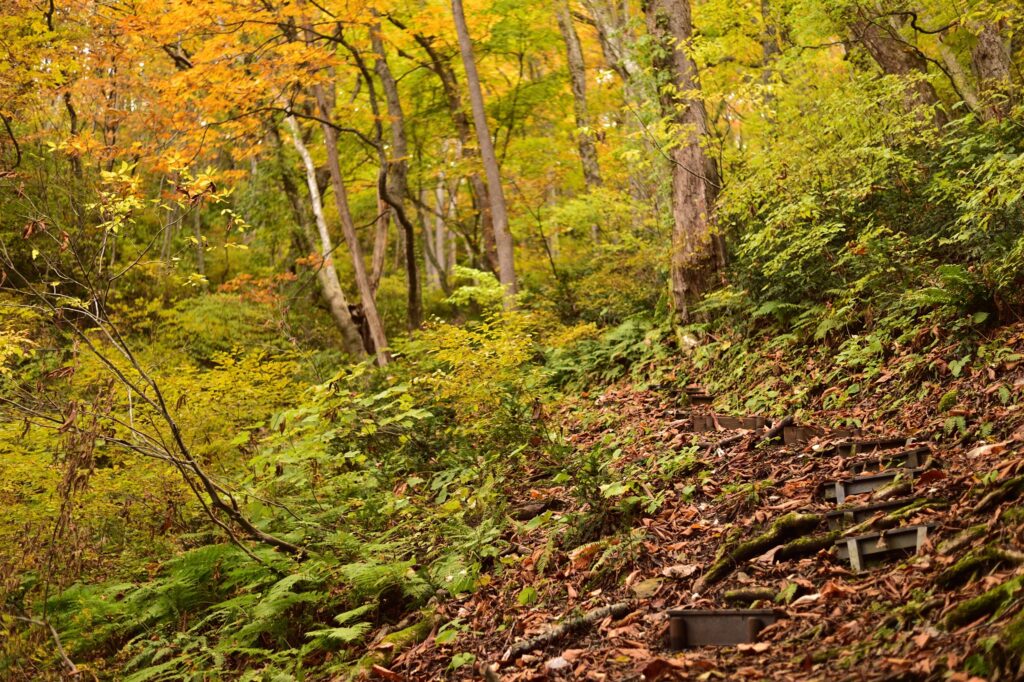
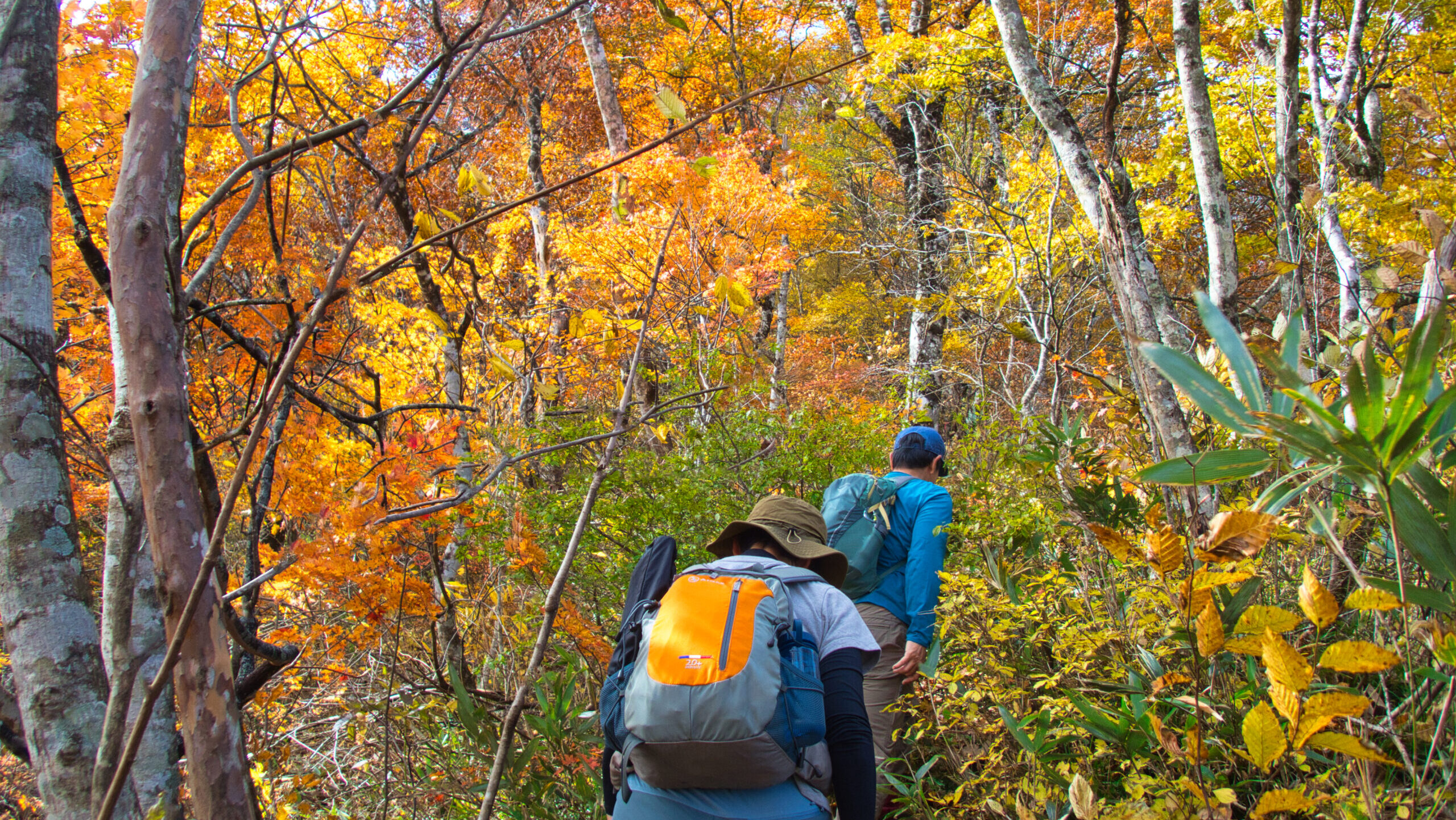
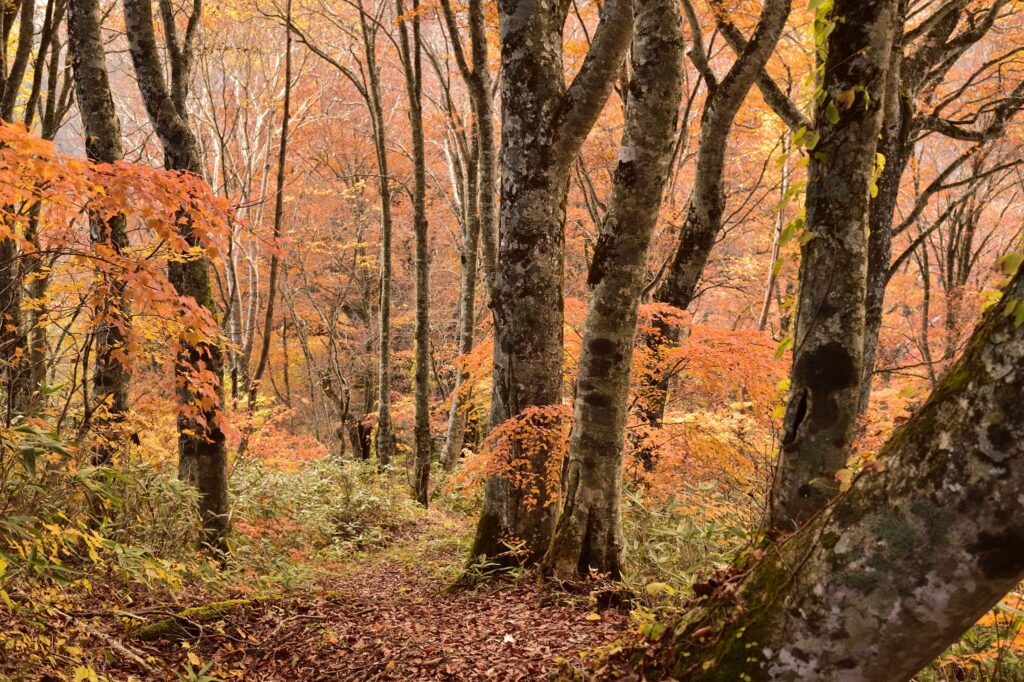
The forest was already adorned in autumn splendor. Beech leaves glowed golden in the autumn sunlight. The layers of leaves were thick, filtering the light, enveloping the entire forest in a soft golden glow. Moss-covered tree trunks displayed jade-like hues steeped in the deep silence of the forest. Red and orange maple leaves carpeted the ground beneath my feet. Mushrooms peeked out here and there.
It was a beautiful scene, but caution was required. The trail, thickly covered with dead leaves, concealed rocks and tree roots, making footing difficult to assess. I advanced, checking the firmness of the ground with each step. A slip could throw off balance in an instant. It is precisely on such low mountains that the admonition against complacency lies hidden.
As elevation increased, the vegetation changed. Beech trees became dominant, and ancient giants began to appear. Deep wrinkles were carved into their thick trunks, and their imposing presence told of the centuries this mountain has witnessed. Bird calls occasionally echoed.
After about twenty-five minutes of climbing, I reached Tenbo-dai (observation platform). Here the view opened for the first time. The Aizu Basin spread below, and far to the northeast, Mt. Bandai presented its majestic form bathed in morning light. I took a deep breath. The cold, clear air filled my lungs, making me realize how far I had come from urban clamor.
I took a short break and ate some trail snacks. Simple, but sufficient nourishment for this level of fatigue. I washed it down with water from my bottle and resumed walking.
Past the observation platform, the trail followed the ridgeline. Valleys dropped away on both sides, requiring even greater attention underfoot. Dead leaves had accumulated, covering the surface of rocks. I checked footing with each step. Without caution, the mountain quickly bares its fangs. Eventually, a sign for a viewpoint appeared ahead. At 9:09 AM, I stood there. The southern side opened up, revealing Ouchi-juku village in the distance. The scattered thatched roofs looked like gazing at a relic from the Edo period.
Just two minutes from the viewpoint, I reached the summit of Mt. Onodake at 9:19 AM.
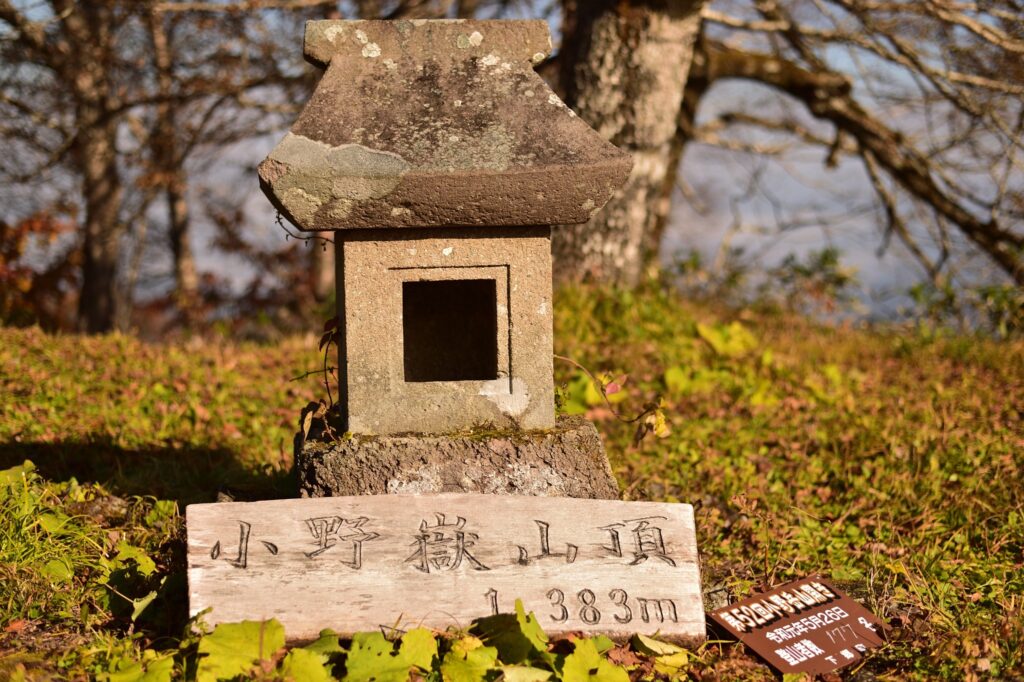
The summit was narrow, with only a small shrine for Ono Gongen. However, the view was expansive. Below, the blue surface of Lake Okawa Dam gleamed, and the surrounding mountains were dyed in autumn colors. Aizu’s mountain ranges layered upon one another. There was no wind, and the sunlight was warm.
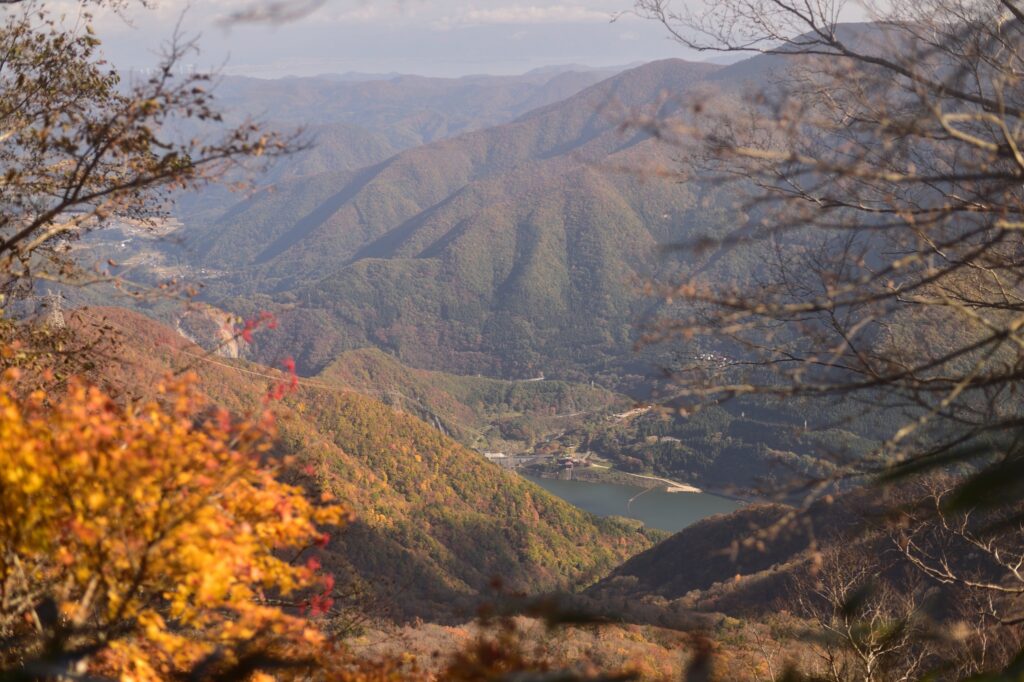
I pressed my palms together before the shrine, giving thanks for a safe ascent. I sat down and rested for a while. The essence of solo hiking is being able to spend such time undisturbed. Simply sitting in silence, listening to the sounds of the forest. The joy of achievement I kept restrained, deep in my chest. Reverence for the mountain is what befits this moment.
After about five minutes’ rest, I began my descent, retracing the ascent route. Descent is faster, but slippery with dead leaves. Especially on steep sections, each step needed to be placed with certainty. Calmly, without rushing. Descent is the true crux of any mountain journey. Reminding myself of this, I made calm judgments as I descended.
Through the viewpoint and observation platform, back to Ono Spring. I immersed my hand in the spring water again and washed my face. The cold was refreshing.
At 10:25 AM, I returned to the Ouchi trailhead. Total hiking time was two hours and forty-seven minutes. Brief, but a fulfilling mountain journey.
I got in the car and headed toward Ouchi-juku. In about ten minutes, I arrived at the post town’s parking area. Being Saturday, there were many tourists.
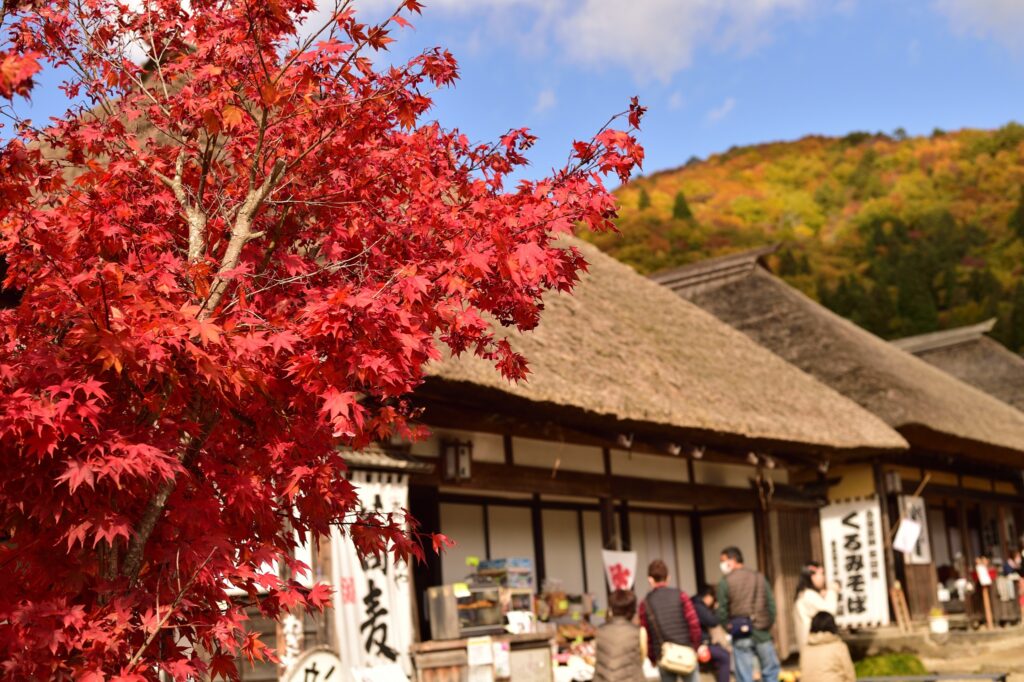
I found a bench with a sign reading “For Beautiful People Only.” A playful touch. I couldn’t help but smile. Such small gestures soften the atmosphere of the post town.
The sight of thatched-roof houses lining the old highway was indeed magnificent. As a post town preserving its Edo-period appearance, it has been designated as an Important Preservation District for Groups of Traditional Buildings. This settlement, which prospered as a station on the Aizu-Nishi Kaido road, continues to maintain its historical form.
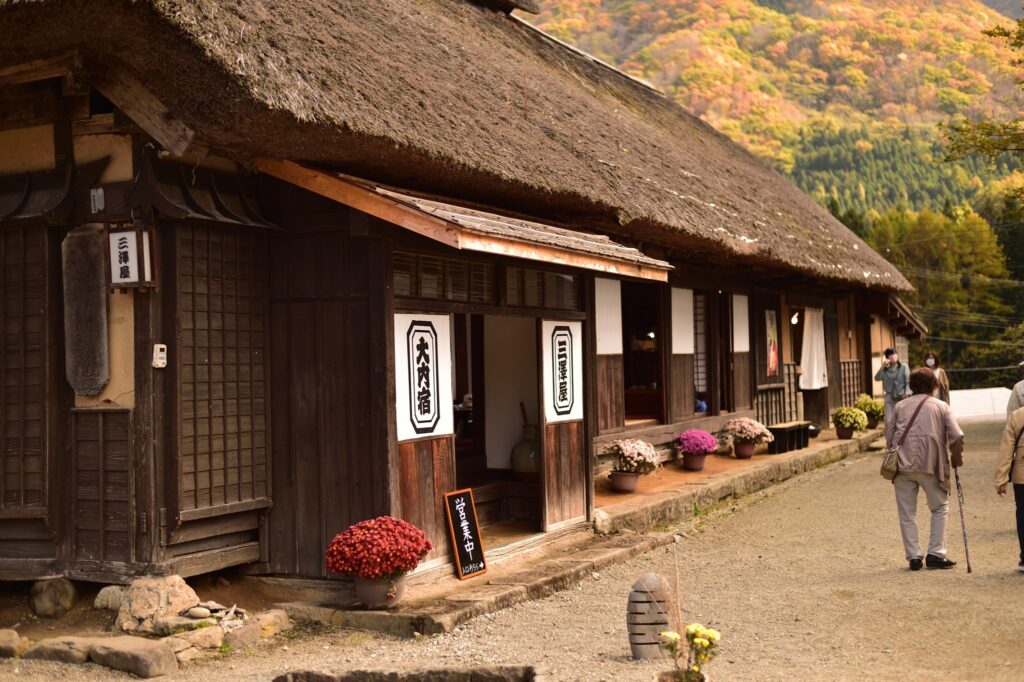
Thatched roofs, stone-paved roads, and autumn-colored mountains in the distance. The scenery viewed through the eyes of one who has walked these mountains stands apart from mere tourist bustle. Mt. Onodake is, as its name suggests, a small mountain. Yet in this season, there was an autumn splendor that could only be experienced on this mountain. And the post-descent stroll through the historic post town – a quiet, deep autumn day savoring Aizu’s low mountains and culture.
[LOG SUMMARY]