【Deep Dive Chronicle】Yakyusawa Right Fork — Late Autumn Stream Climbing in Ura-Myogi
北村 智明
稜線ディープダイブ

In mid-October, I led a group to Mt. Mitsuishi-yama, a 1,466-meter peak straddling the border between Hachimantai City and Shizukuishi Town in Iwate Prefecture. Despite knowing rain was forecast, I departed Fukushima, and we walked through the day beneath a steady drizzle. This rain-soaked day hike was filled with autumn colors and profound silence. Here is the chronicle of an autumn day spent walking with the sound of rain as our companion.
I departed central Fukushima at 4:30 AM. The sound of rain striking the windshield already told the story of the day’s weather. My vehicle, carrying six clients, headed north on the rain-soaked Tohoku Expressway.
We exited the highway and passed Koiwai Farm. The lingering stillness of society—still not entirely free from the effects of that unprecedented pandemic—overlapped with the rain-soaked morning landscape, inducing a somewhat introspective mood. Just the previous week, there had been news of a small mountaineering accident in this Tohoku mountain region, and I was reminded all the more acutely of my responsibility as a guide. Mt. Iwate remained hidden behind dark clouds.
Mt. Mitsuishi-yama—a 1,466-meter peak located roughly at the midpoint of the Ura-Iwate Ridge Traverse Route that runs from Mt. Iwate to Hachimantai, a famous mountain where autumn colors arrive early on Honshu’s main island—we arrived at the trailhead parking area around 9:30 AM. The rain showed no sign of stopping. I looked around at everyone’s faces, outwardly composed but inwardly rechecking today’s hiking plan once more.
“Given the weather today, let’s proceed without pushing ourselves.”
With those words, I confirmed that everyone had pack covers and rain gear properly equipped. A guide’s responsibility, above all else, lies in the safety of their clients. We began walking carefully on the rain-slicked surfaces.
The first hour and a half consisted almost entirely of forest road walking. Water flowing underfoot was an unavoidable reminder that we were entering nature’s domain. We moved quietly beneath the tree canopy. Nothing could be heard but the sound of rain. From time to time, I noticed one of the clients nearly slipping. With the footing so wet, caution was essential. This very cautiousness has been the foundational principle of my mountain journeys for many years. We passed the water source and finally entered what resembled a proper mountain trail. The gradient gradually increased, though it wasn’t steep enough to call a serious climb.
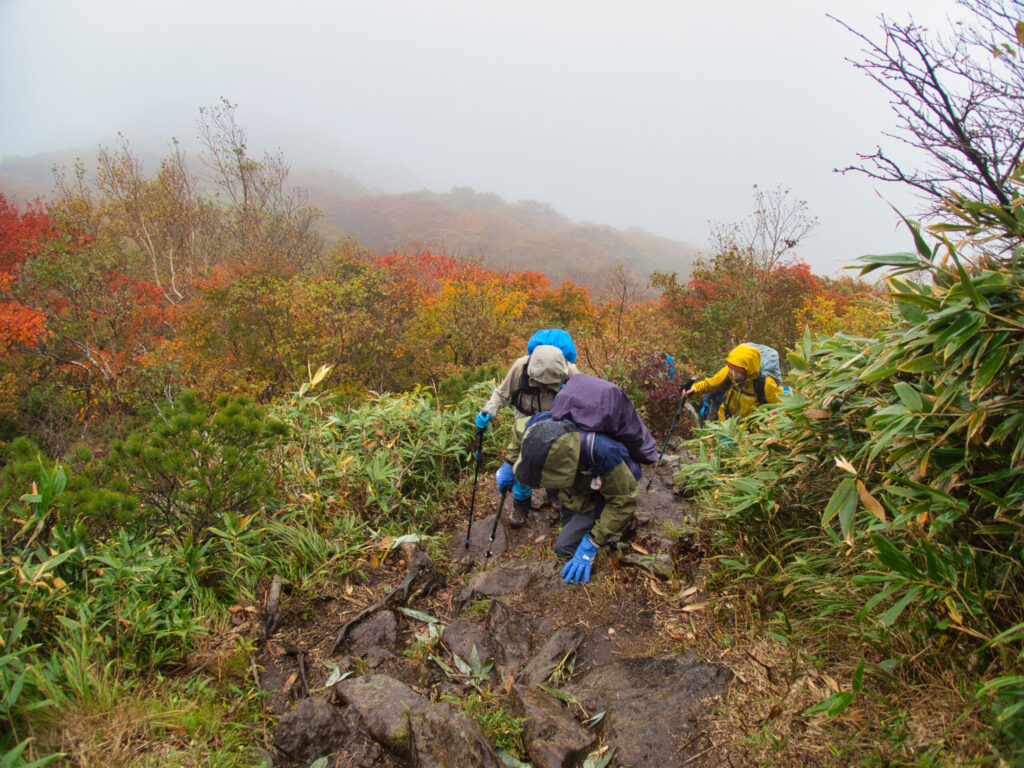
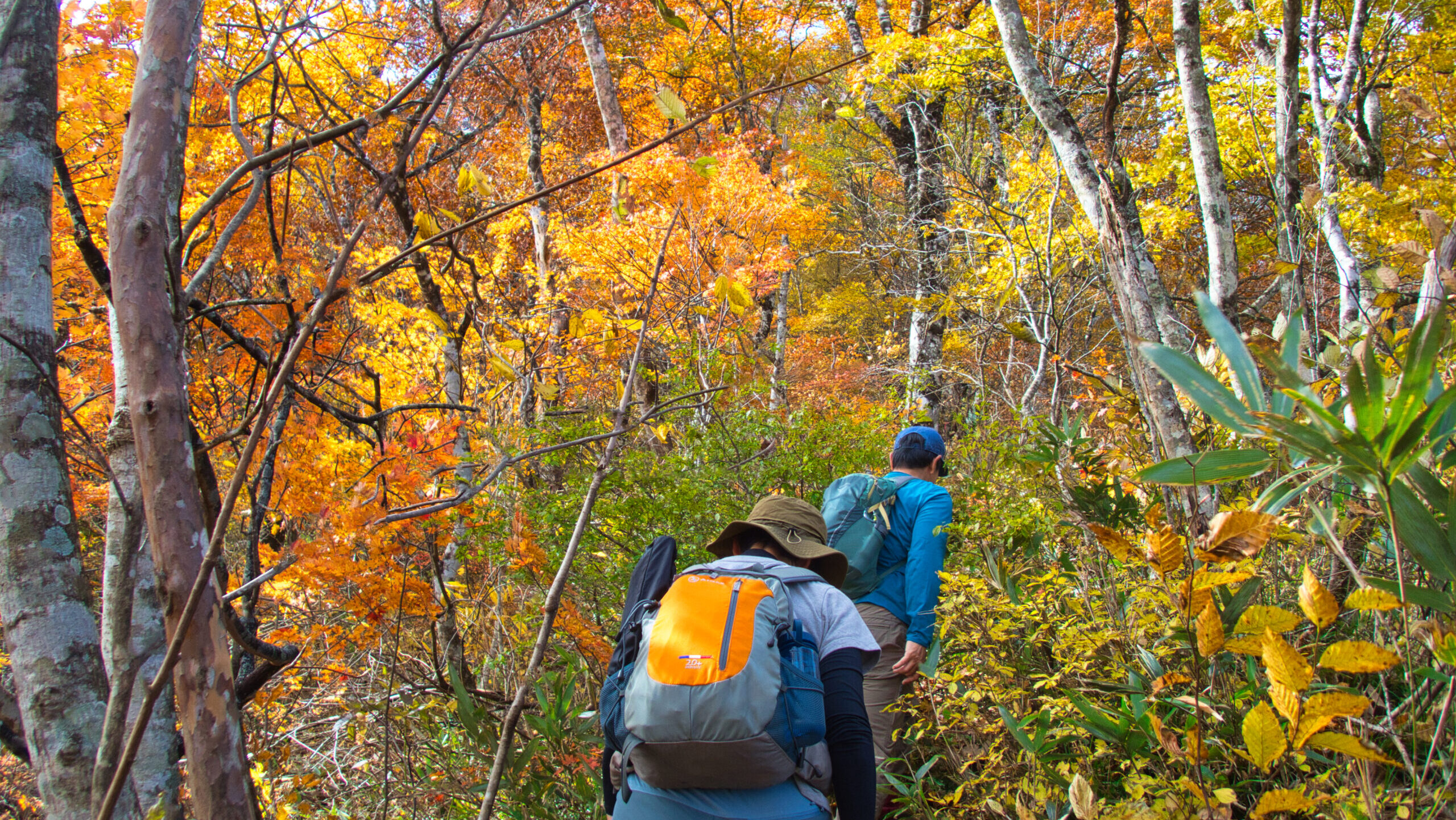
The beech forest was veiled in rain, creating a fantastical landscape. I felt that within this restrained beauty of a rainy day lay the essential appeal of mountains.
After passing the Takinoue Onsen junction and approaching the final stretch toward Mitsuishi-sanso (the mountain hut), an unexpected difficulty awaited us.
The trail just before the hut had transformed into a muddy swamp. Whether due to increased water from the rain or a characteristic of this mountain region, I couldn’t tell. The trail had already lost definition, covered in mud-slicked rocks and roots, with deeply carved puddles blocking our path. For a moment, I felt the need to calmly assess whether to turn back, but I estimated the swampy section wasn’t excessively long.
We advanced carefully. Despite this difficult situation, all the clients continued without complaint, walking silently and steadily. The mud was sticky, disrupting our balance.
“Be careful here. Don’t let it catch your feet.”
I continued calling out to those behind me as I walked at the front. The sensation of mud clinging to boot soles transmitted fatigue to the body more quickly. Some lost their balance when the mud caught their feet, but no one complained—they simply, quietly, planted each step with care. Their concentration and the quiet solidarity of sharing this difficulty gave me a sense of relief.
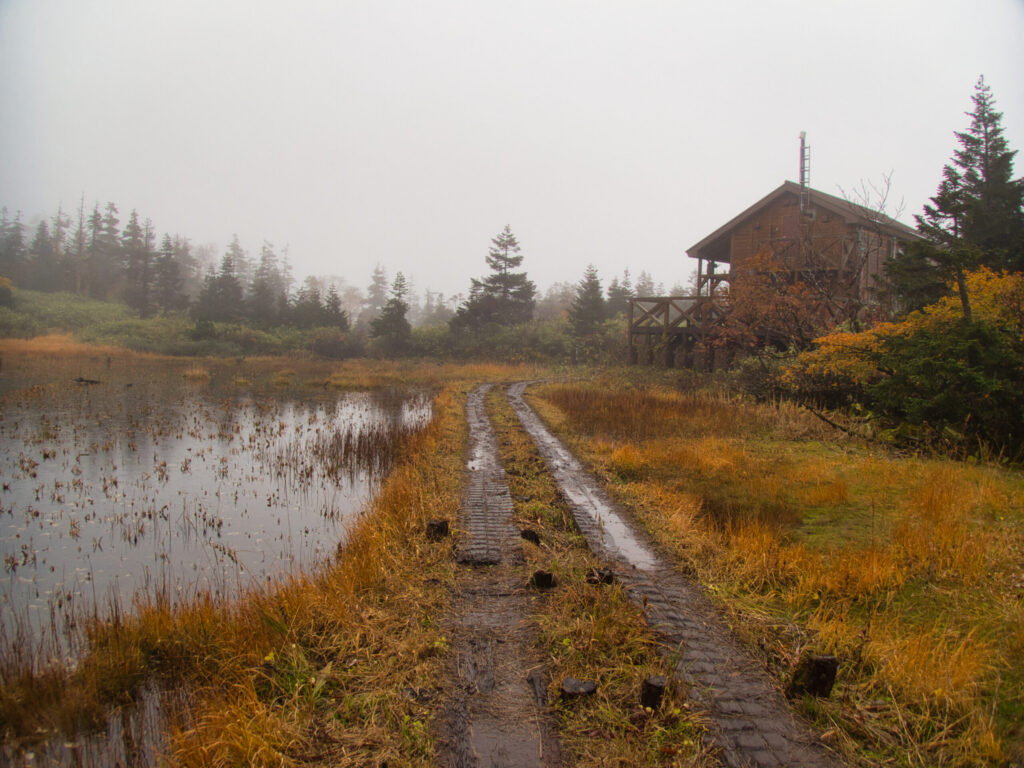
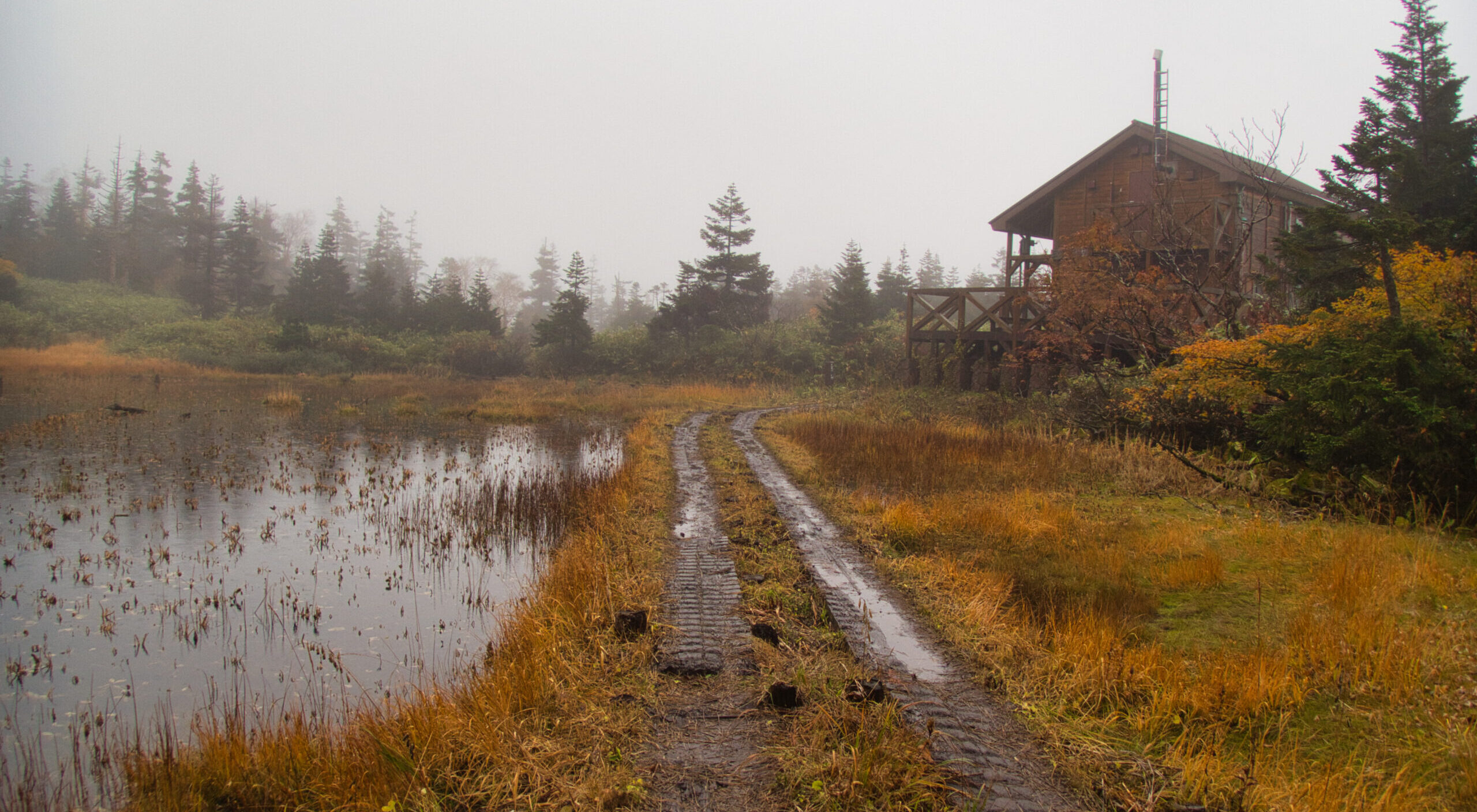
Just after noon, we finally arrived at Mitsuishi-sanso. When we opened the door to the log cabin-style shelter, several other parties were already resting inside. The scent of the wood stove mixed with the damp air of wet clothing—that distinctive mountain hut smell greeted us.
“You really came all the way up in this rain.”
A male climber said with a laugh.
“Same to you.”
I laughed in return. Among those who challenge rainy mountains—fellow enthusiasts of this peculiar rainy-day mountaineering—there existed a strange sense of solidarity. Though there was a stove in the hut, it wasn’t lit. We wrung out our wet gear, dried what we could, and took a light rest. The clients’ faces showed signs of fatigue, but no one voiced any weakness.
“Shall we go to the summit?”
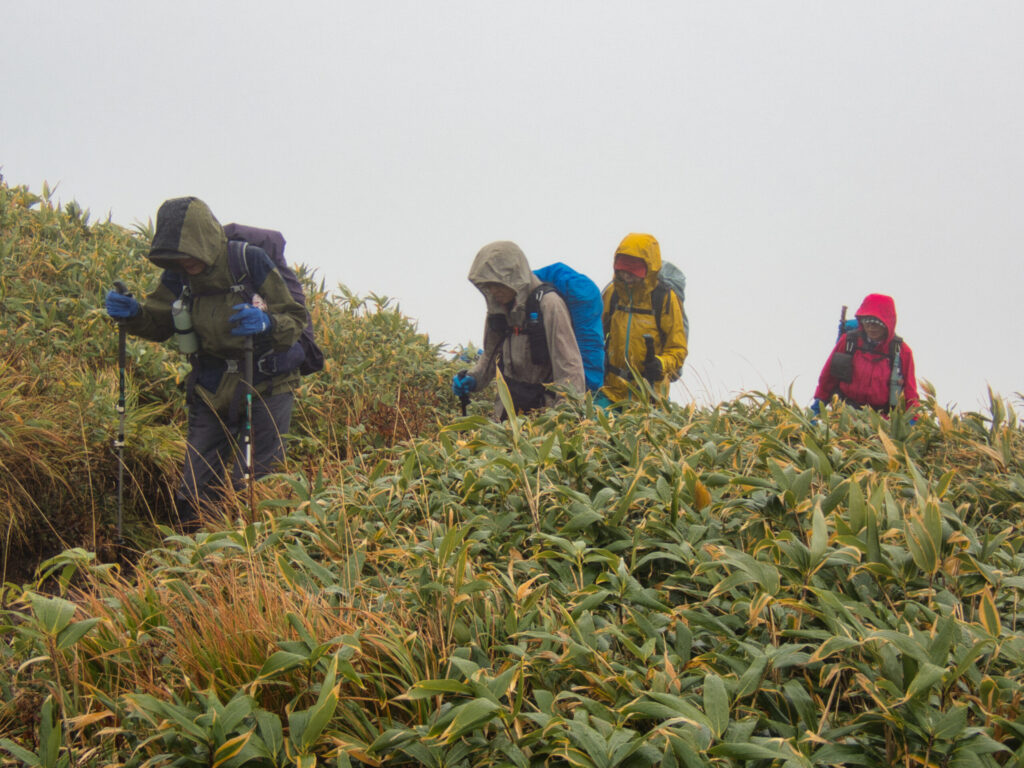
I asked while observing everyone’s condition. They all nodded. Then let’s go. It would be about a forty-minute climb. The trail leading to the summit area—where massive rocks jut up, appearing as three stones from any direction—climbed gently through dwarf bamboo fields. We must have reached the ridgeline. The rain and wind picked up slightly.
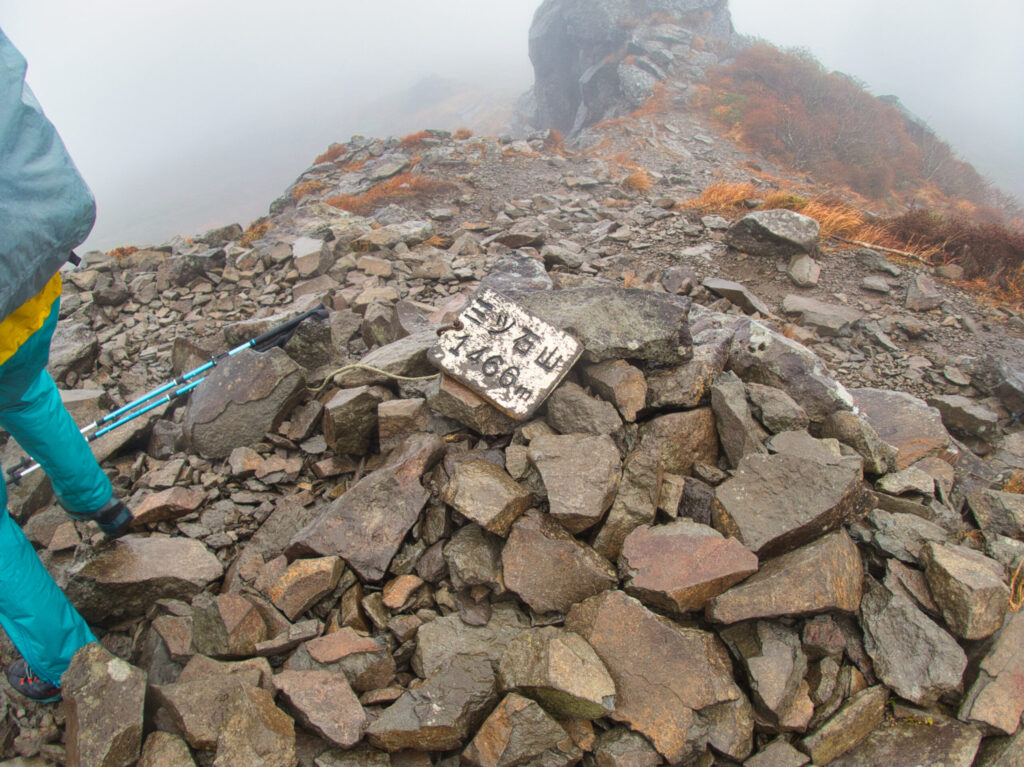
At 1:00 PM, we reached the summit. However, there was almost no view. In the rain and wind, we quickly took commemorative photos at the cairn-marked rocky area and promptly returned to the shelter. The weather was not conducive to lingering at the summit.
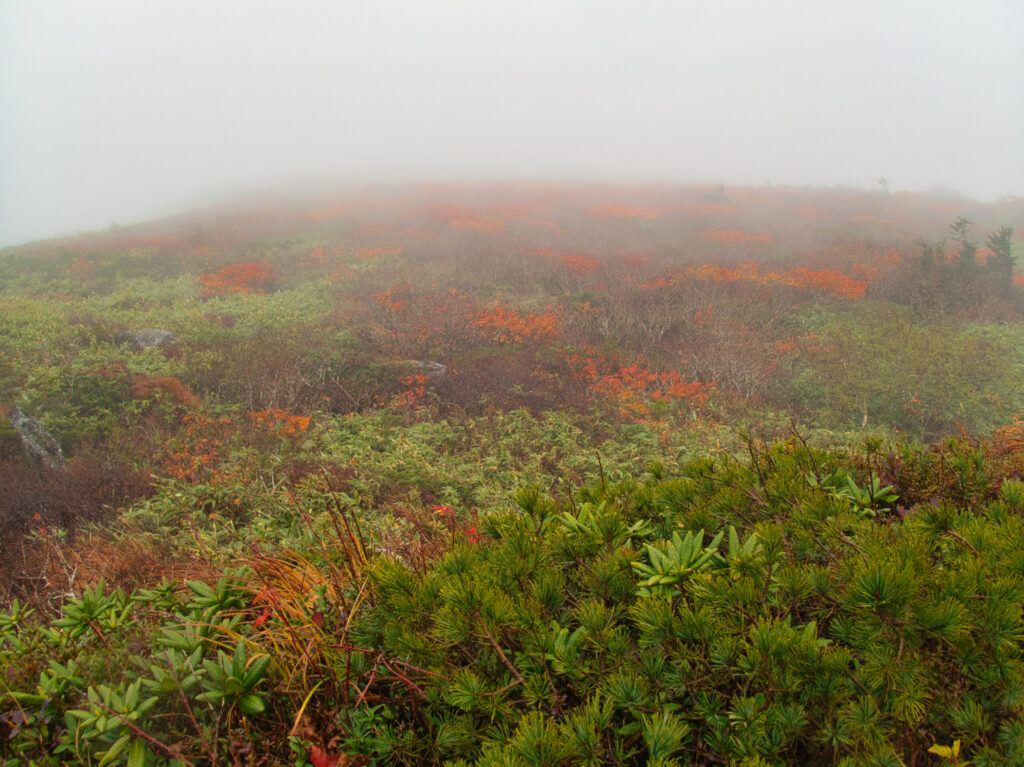
Back at the hut, we drank warm beverages and ate the lunches we’d brought. Glancing out the window, I could see the wetland covered in autumn grassland colors (kusa-momiji), shrouded in rain. The grass, displaying autumn hues like wet brocade spread across the landscape, held a different seasonal elegance from the brilliance of clear weather—a moist autumn atmosphere.
Shortly after 1:30 PM, we began our descent, retracing our route. We had to pass through the muddy swamp zone once more. Descending was more likely to catch the feet than ascending. I turned back frequently, carefully watching the clients’ progress. Despite falling several times, they all made it through the swamp under their own power.
Once we entered the forest zone, the rain continued as before, but the trees served as umbrellas. Fatigue was certainly present, but strangely, my heart felt full. The fact that everyone had safely and calmly completed their actions under difficult circumstances brought me deep relief and quiet satisfaction.
We passed the water source and walked silently along the forest road. At 2:43 PM, we returned to the trailhead parking area. The entire hike had taken approximately five hours.
Back at the car, we packed away wet gear. The clients all had tired faces, but simultaneously expressions of fulfillment.
“Good work today, everyone. We’re heading to the hot spring now.”
With those words, I drove to Genbu Onsen Lodge Tachibana. I felt relieved that, as a guide, I had been able to prioritize safety at all times without overconfidence in my judgments.
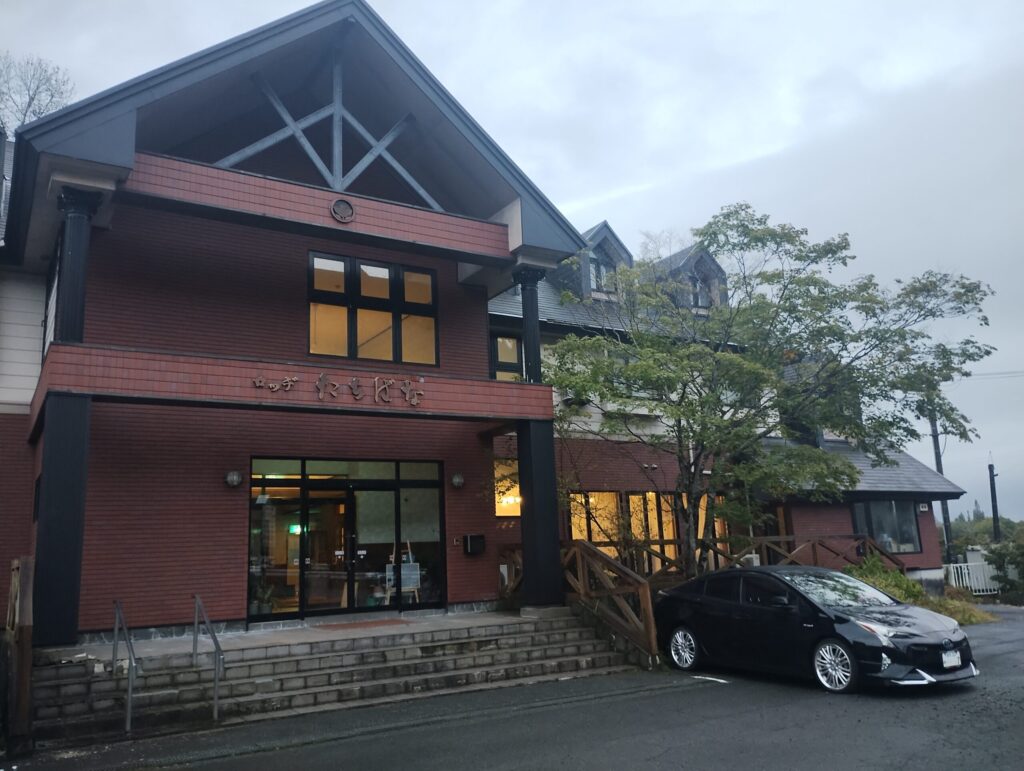
That evening, soaking in the hot spring, I reflected on the day. The rainy mountain had certainly been harsh. But within that harshness lies the essence of mountains. Mountains question the essence of those who climb them not only through the grace of clear weather, but through the trials of rain, wind, and mud.
Dinner was lavish: A5-grade Shizukuishi beef, heirloom rice (kodaimai), salt-grilled sweetfish (ayu), and tempura. Meals after descending from mountains are always exceptional.

Mt. Mitsuishi-yama’s autumn colors veiled in rain. And the quiet exchanges at the shelter. This day’s mountain journey was filled not with the brilliance of clear weather, but with the moist autumn atmosphere unique to rain. The experience of this day—walking with the sound of rain as companion and emerging together from the muddy swamp—will be etched in my record of mountain journeys like a particularly vivid piece of autumn brocade.
[LOG SUMMARY]
Genbu Onsen Lodge Tachibana: https://lodge-tachibana.lolipop.jp/