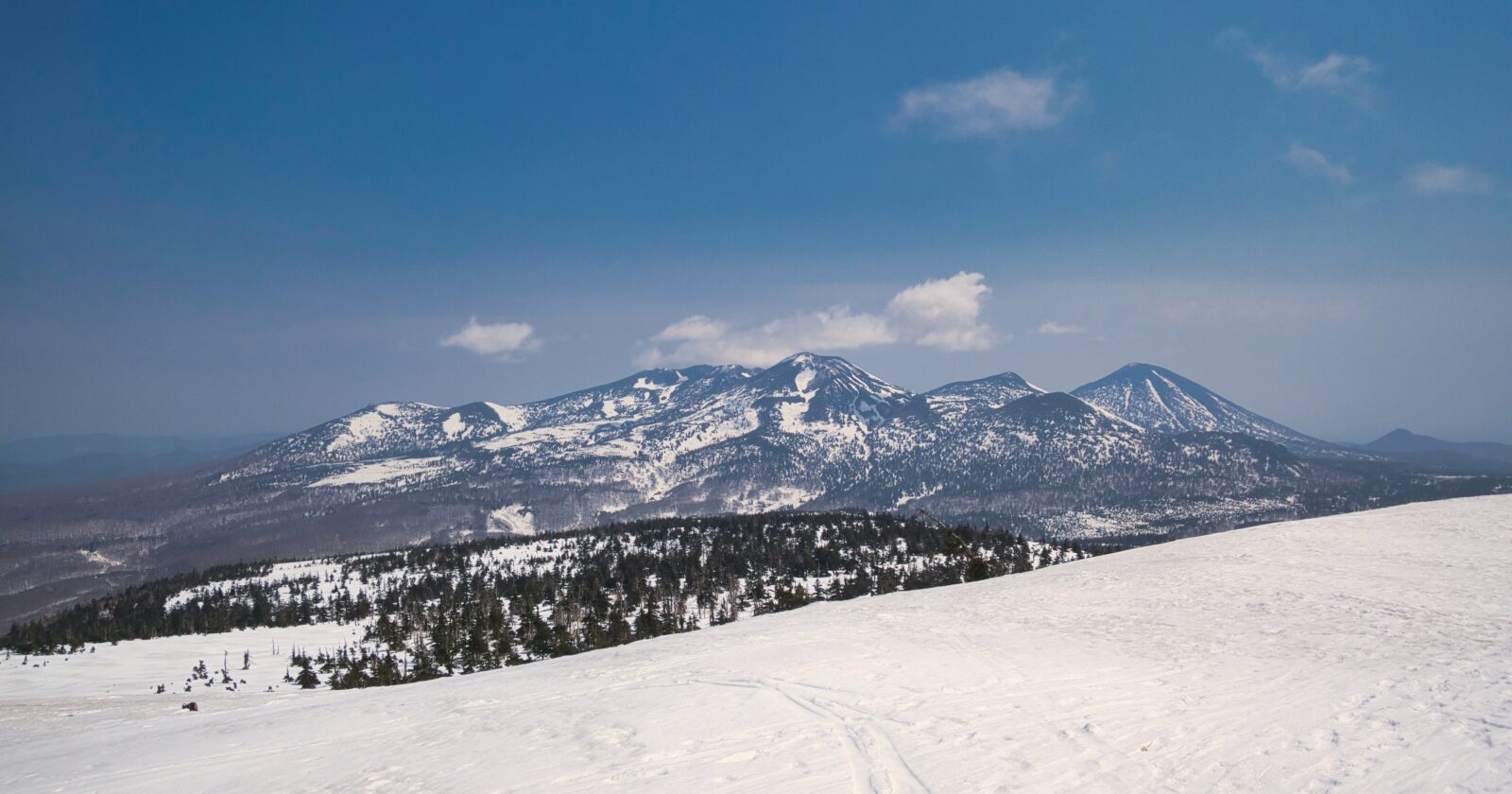
【Deep Dive Chronicle】Tanigawa-dake Higashi-one — A Line Carved on the Winter Ridge
北村 智明
稜線ディープダイブ

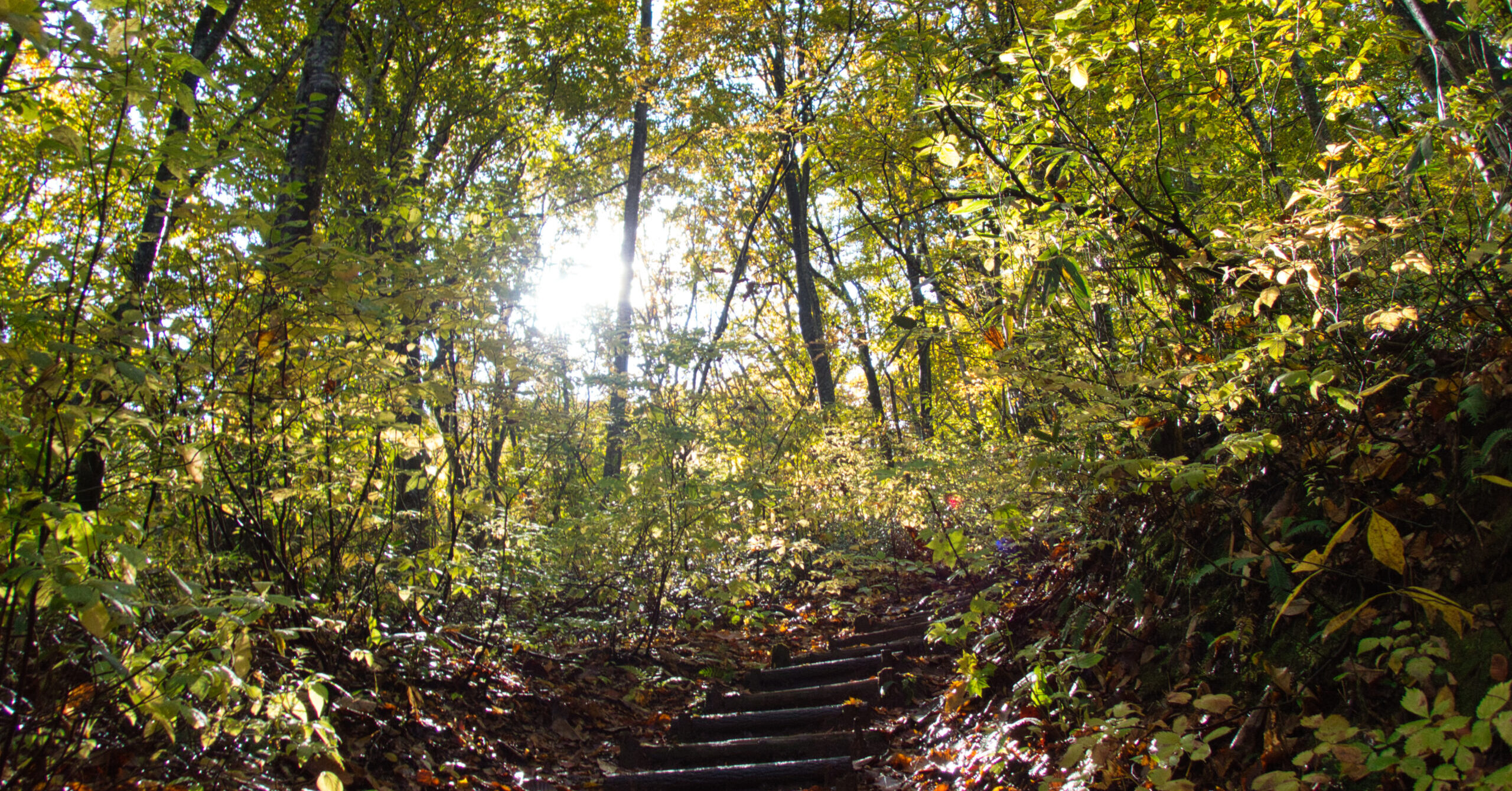
The day after completing a demanding ascent of Mt. Iwaki-san, we made our way to the beech forests of Shirakami-Sanchi, a UNESCO World Natural Heritage Site. Our original plan had been to reach Anmon Falls, but a trail closure forced us to reroute to the nature walk paths. What unfolded was a gentle, meditative mountain journey — a day steeped in golden beech forest and the living breath of Matagi (traditional mountain hunters of the Tohoku region) culture.
The morning that greeted us at the Route Inn in Hirosaki city was quiet, the fatigue from the previous day’s climb on Iwaki-san still settling into our bodies. The memories of that icy rockface — recalled the previous evening with our participants — already felt like they belonged to another world. Today, our destination was not a jagged summit but a primeval beech forest registered as a UNESCO World Natural Heritage Site.
Driving west from Hirosaki for roughly an hour and a half, we arrived at Aqua Green Village ANMON at around 10:00 AM. The parking lot was lined with tour buses, a testament to the fact that this place is not merely a mountain wilderness but a destination that welcomes visitors from around the world.
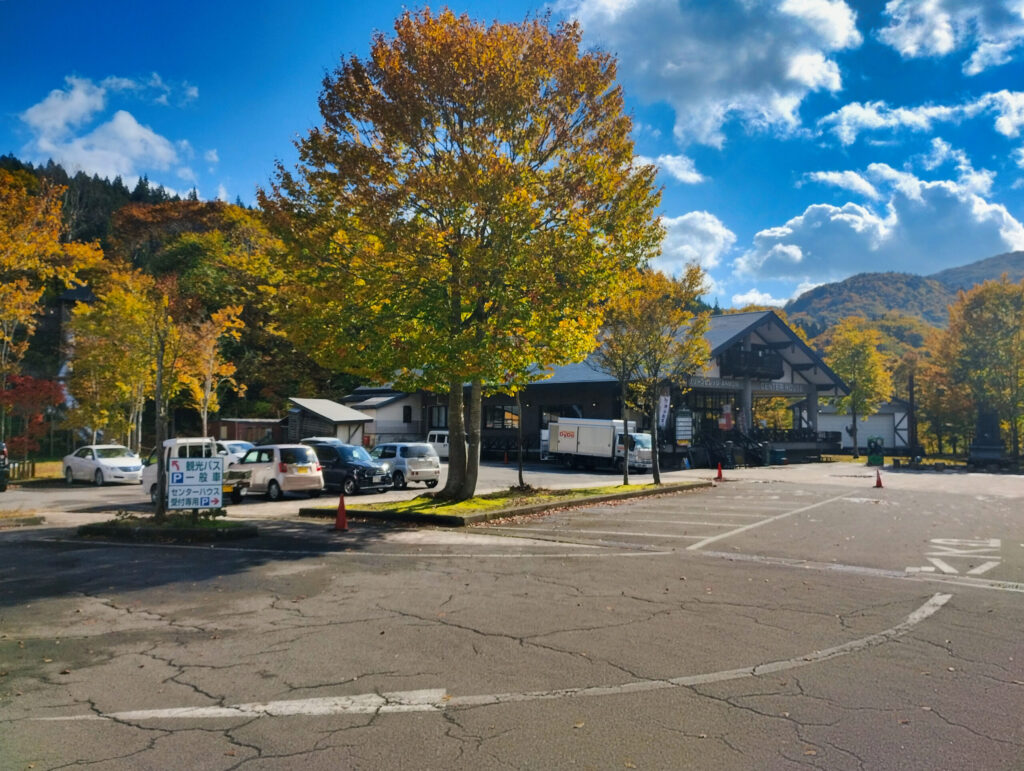
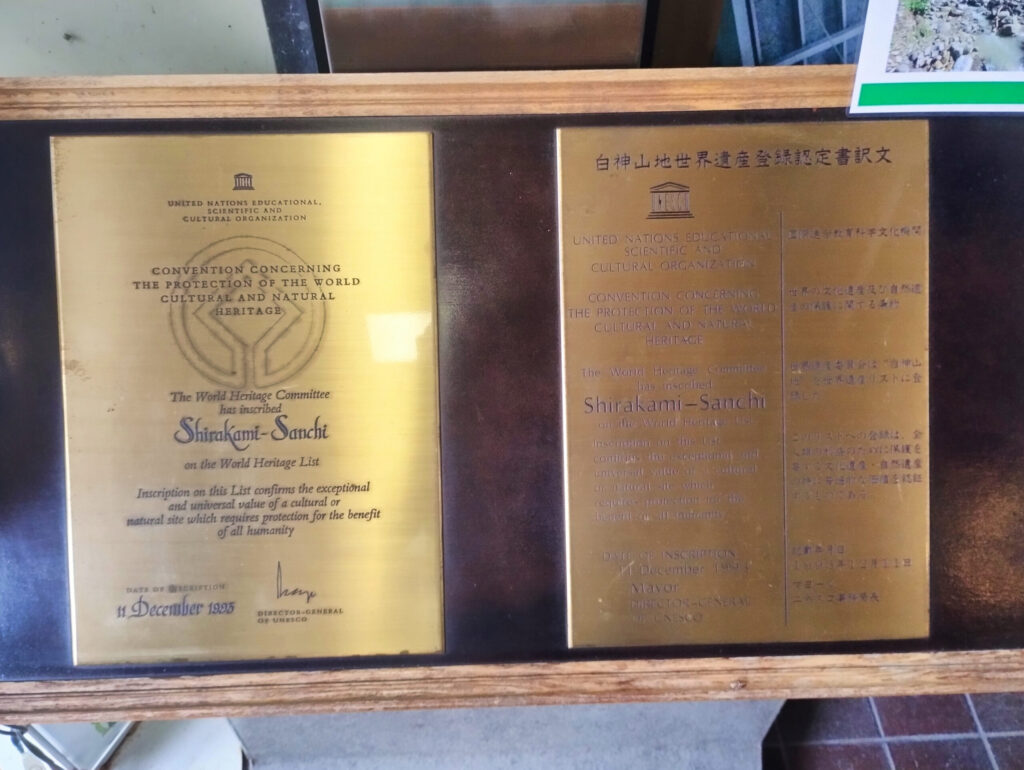
The presence of international tourists was striking — a reminder that the name Shirakami-Sanchi has crossed borders. Straddling Aomori and Akita Prefectures, these mountains harbor one of the largest primeval beech forests in East Asia. Designated Japan’s first World Natural Heritage Site in 1993, the area has remained untouched by human development. The Anmon district, which we were visiting, is one of its core zones — and under ordinary circumstances, the trail to Anmon Falls is one of its most popular routes.
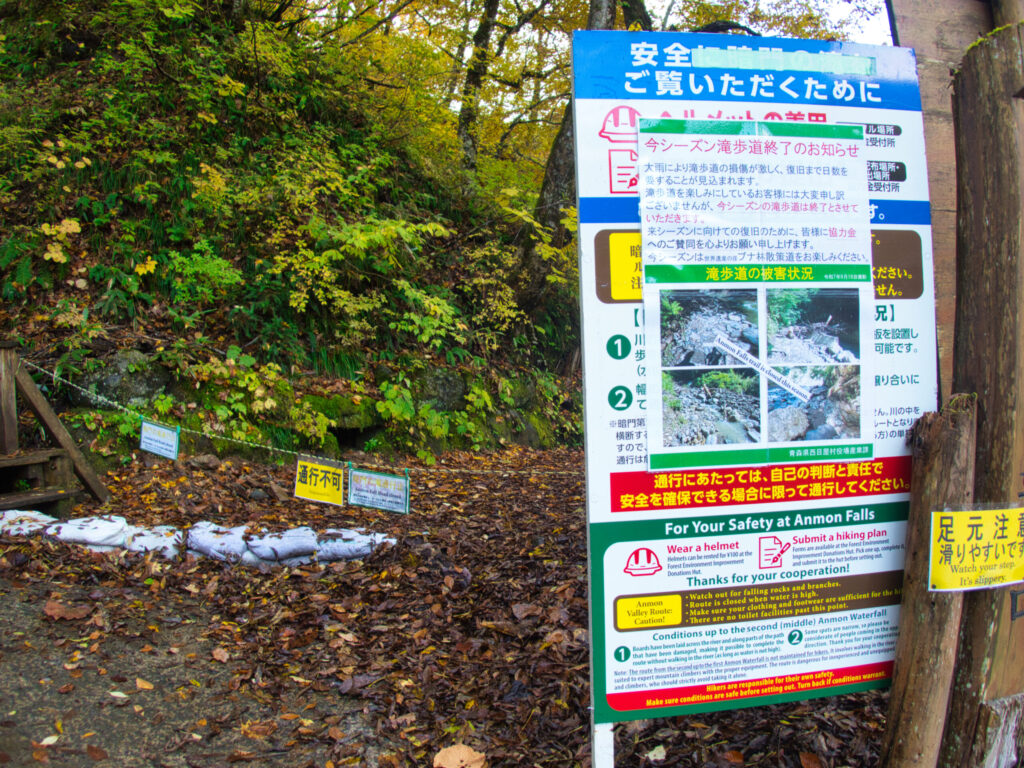
But a sign at the trailhead read: “End of Waterfall Trail for This Season.” Heavy rainfall had severely damaged the path, with no timeline for restoration. This forced a change of plans, redirecting us to the nature walk trails instead. Yet this was no cause for disappointment — the beech forest itself is the essence of Shirakami.
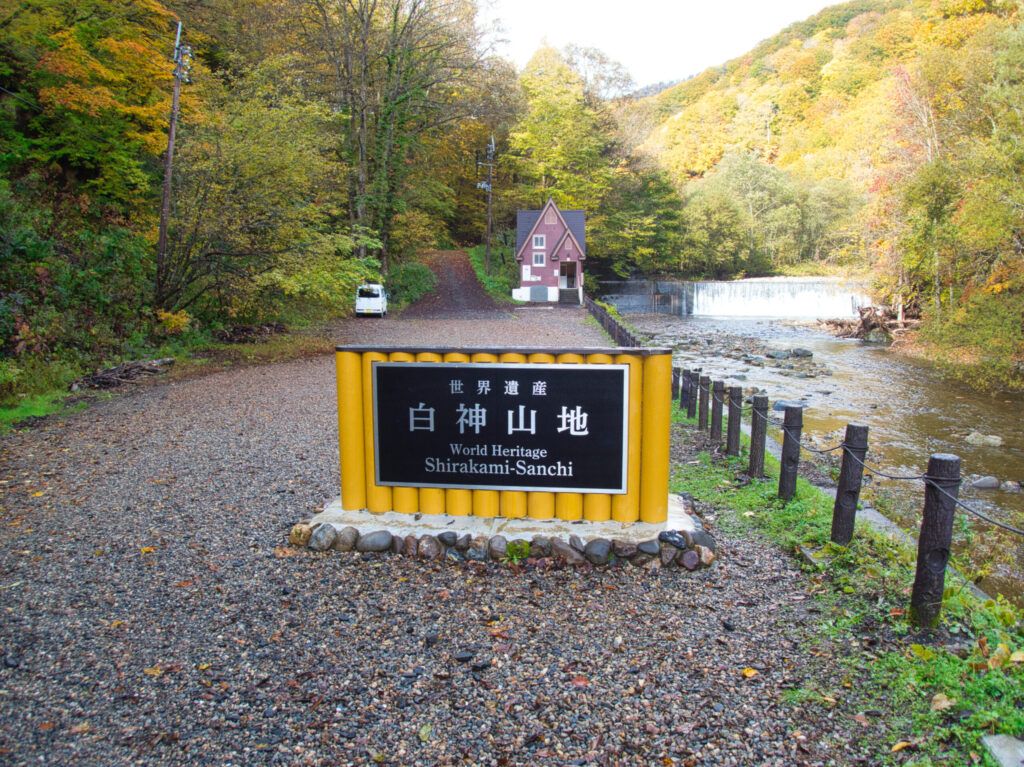
I gathered the participants and explained the day’s revised itinerary: no waterfall, but a full circuit of the large and small beech trail loops, to be walked at a leisurely pace. As their nature interpreter, I had prepared to speak not only of the forest’s ecology but also of the Matagi (traditional mountain hunters) hunting culture that has long shaped this landscape. My role as a guide extends beyond safe navigation — it is to convey the depth of the natural world and offer experiences that linger in the heart.
The moment we stepped onto the trail, the forest’s silence enveloped us. The noise of the parking lot seemed to dissolve into the trees, leaving only the sound of leaves underfoot and the distant murmur of a stream.
The beech forest was, at that very moment, turning gold.
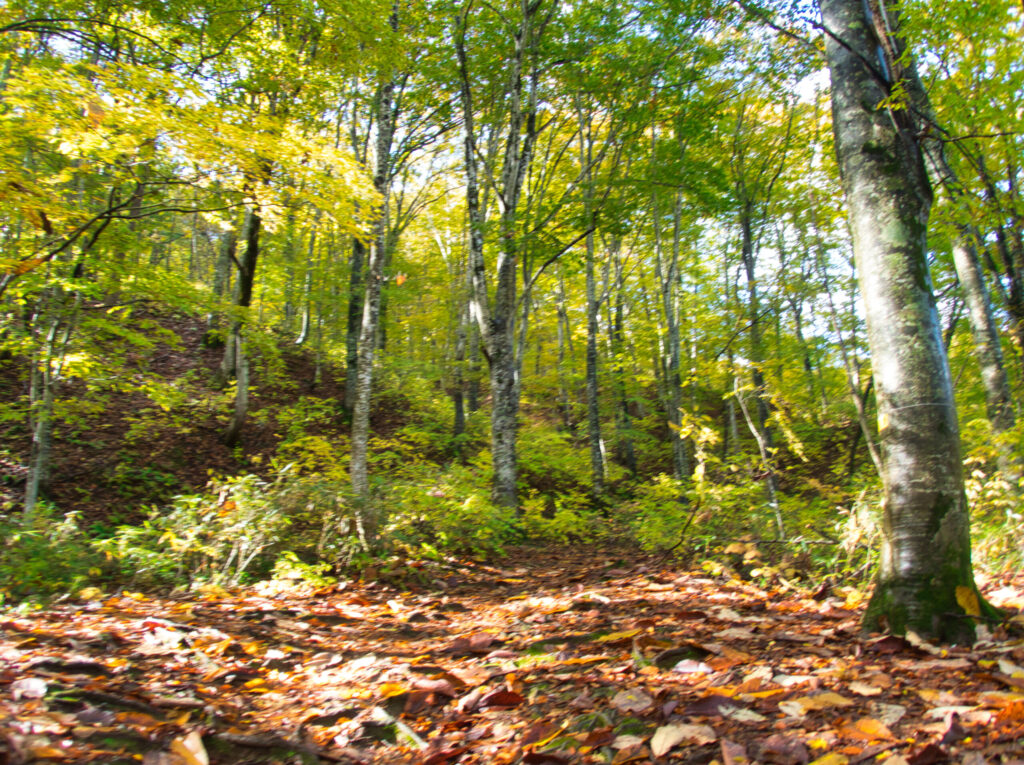
In the late October light, the beech leaves — bathed in autumn sunshine — seemed to emit a glow of their own, wrapping the entire forest in a soft, luminous warmth. Underfoot, layers of fallen leaves, heavy with the previous day’s rain, yielded not with the dry crunch of a clear-sky autumn but with a muted, damp compression. That contrast — the radiance above, the quiet give below — conveyed the full richness of the forest through every step.
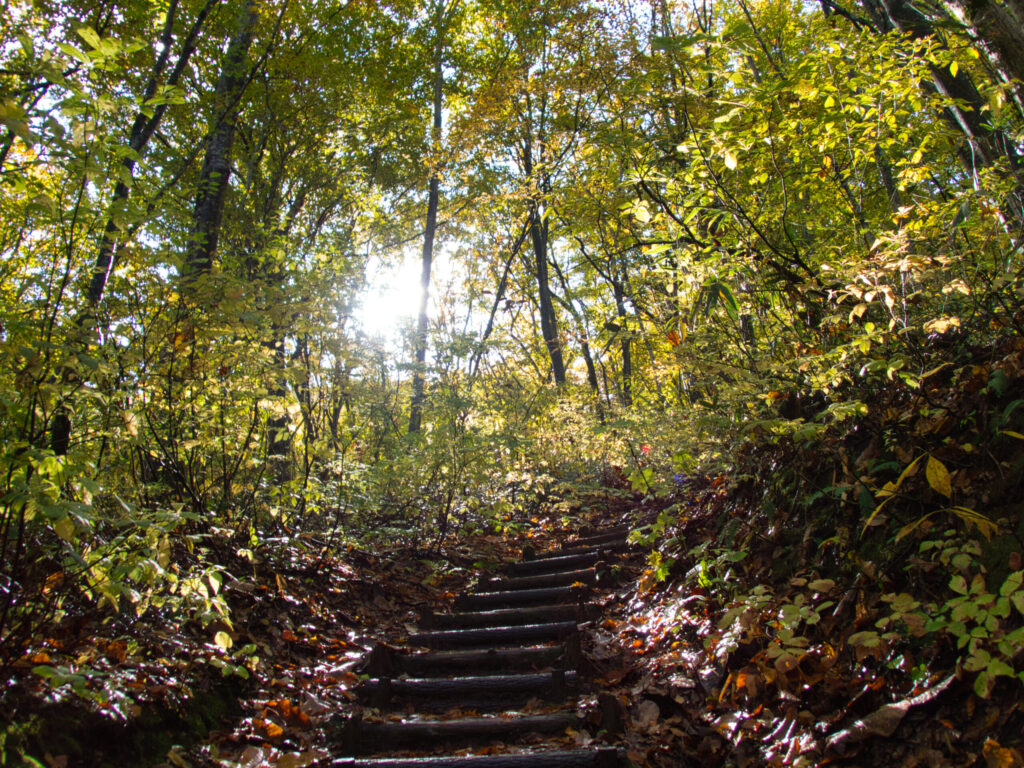
Some ten thousand years ago, as the last Ice Age drew to a close and temperatures rose, beech trees spread across the Japanese archipelago. Yet human activity has since claimed the majority of these forests, making primeval stands like Shirakami-Sanchi extraordinarily rare. Here, beeches hundreds of years old stand in countless numbers; moss carpets their roots, and new life sprouts from fallen trunks.
A forest in a perpetual cycle of self-regeneration — the cycle of life was visible everywhere.
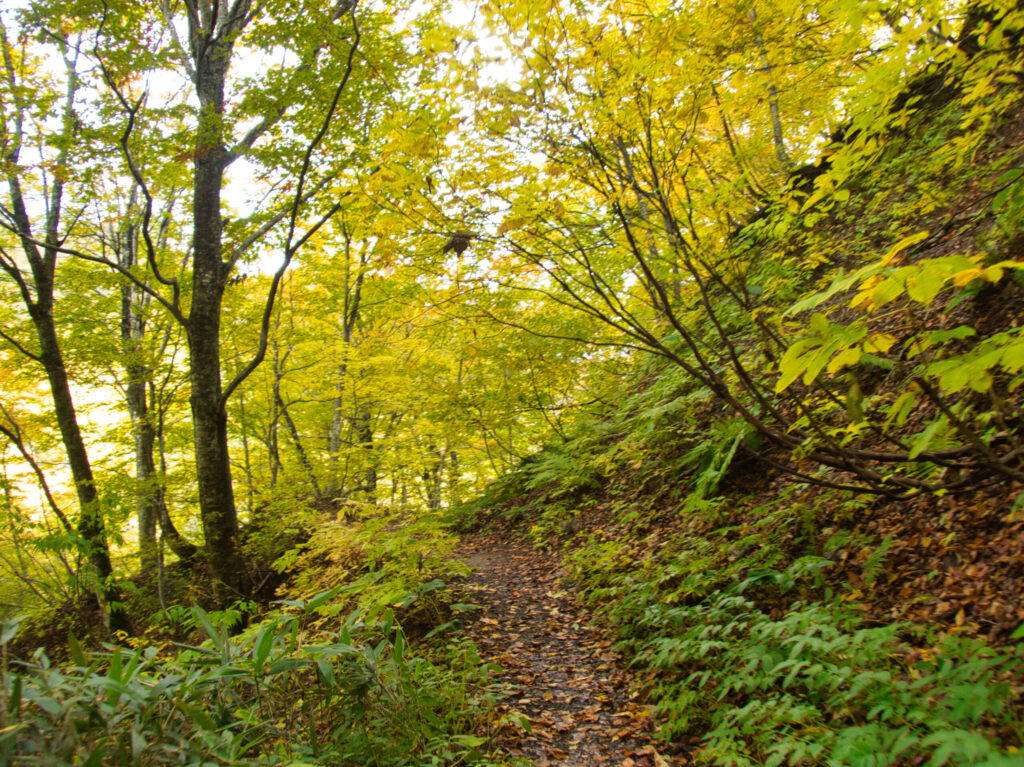
The large loop trail wound gently through the forest’s depths, rising and falling in easy undulations. Participants moved at their own pace — gazing upward into the canopy, picking up fallen leaves, drawing deep breaths of the forest air. It was contemplative, meditative — a striking contrast to the intensity of Iwaki-san the day before.
“This area was once hunting ground for the Matagi,” I told the group.
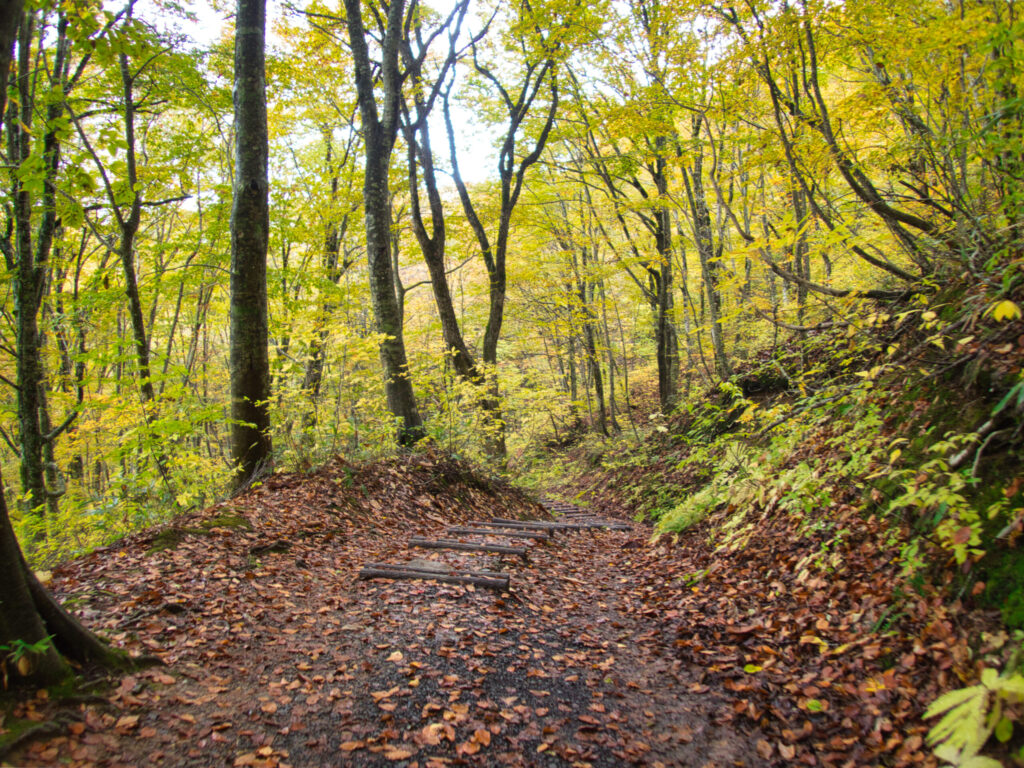
The Matagi — a traditional hunting community indigenous to the mountain villages of the Tohoku region — are people who have coexisted with the Shirakami forest for generations. They pursued bear, Japanese serow (Kamoshika), and hare, yet never ravaged the forest, never forgetting their reverence for the natural world. Their culture endures in this land to this day, and the trail beneath our feet may well be the remnant of an ancient path they once walked.
We moved on to the small loop trail — shorter, more accessible for families, yet no less beautiful. Shafts of light filtered through the beech leaves, casting pools of golden light onto the forest floor, as if the forest itself were smiling down at us.
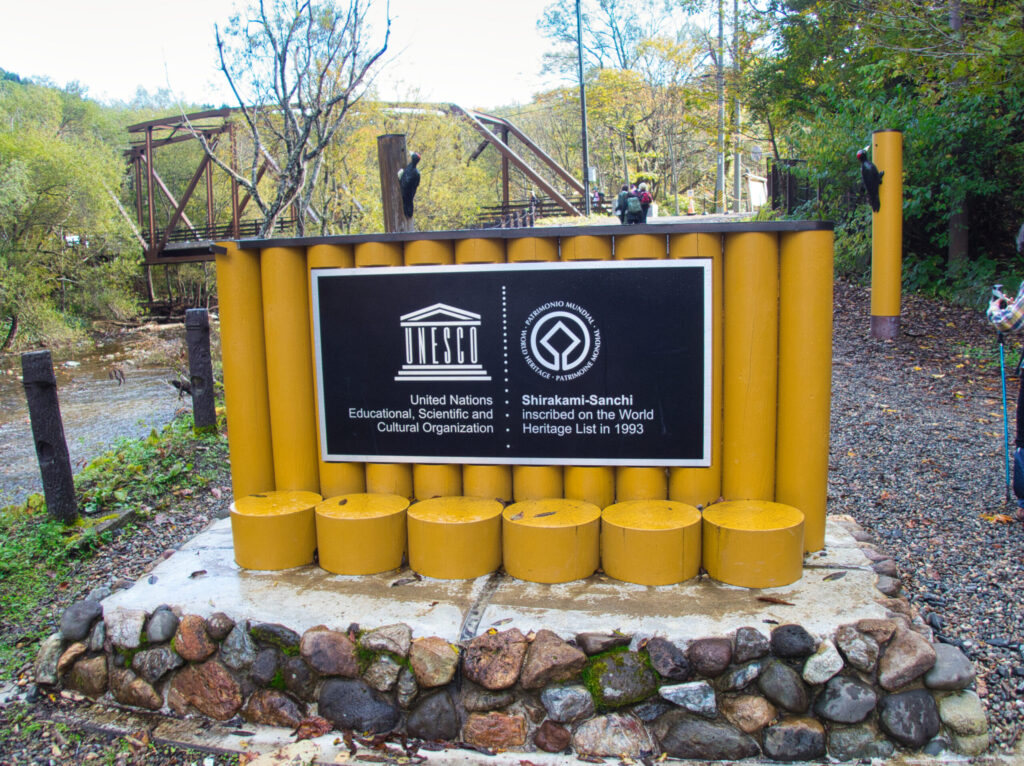
At around 11:30 AM, we completed the circuit and returned to Aqua Green Village. Total time on trail: approximately one and a half hours. Brief as it was, the faces of our participants carried the quiet satisfaction of those who had touched something still and beautiful.
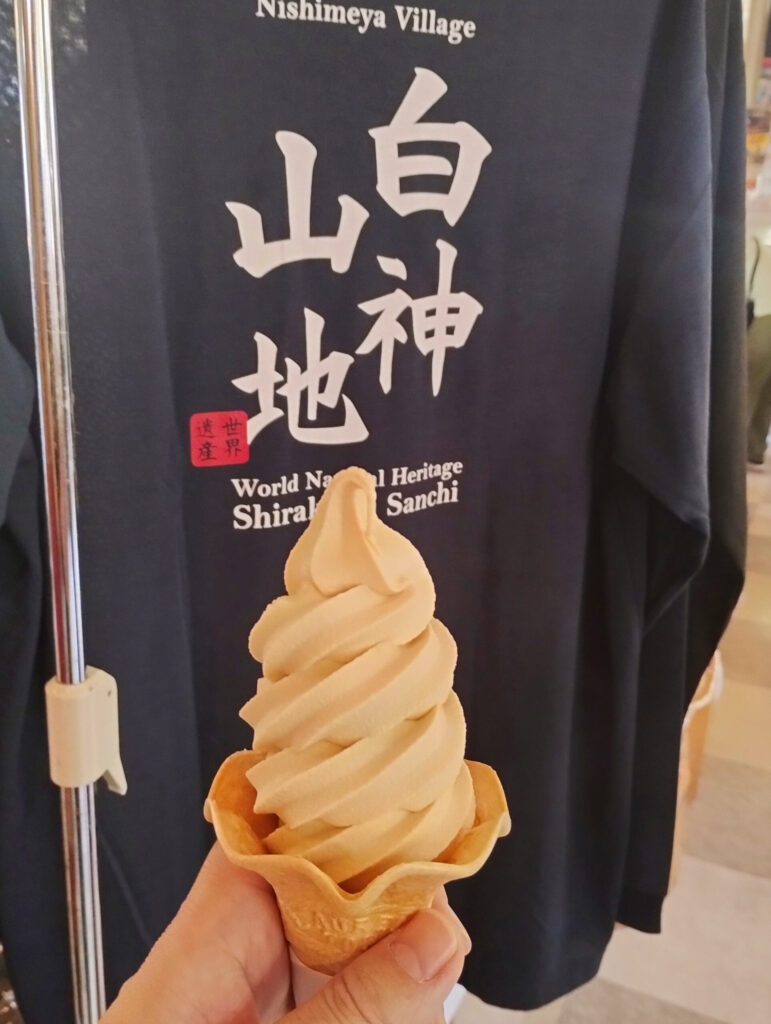
After the walk, our first stop was Aqua Green Village’s specialty: apple soft serve ice cream. Aomori is apple country, and this soft serve — made with locally grown fruit — was rich yet refreshingly light, soaking gently into bodies warmed by the walk through the forest.
With soft serves in hand, we reflected together on the morning’s trail. More than one person remarked that they hadn’t imagined a World Heritage site could feel so quiet, so gentle. There is, after all, something imposing in the phrase “World Heritage” — something that suggests grandeur and distance. But the beech forest of Shirakami-Sanchi offered no such barrier. It was a forest that welcomed all who came to it.
Leaving Aqua Green Village behind, we drove to Michi-no-Eki “Tsugaru-Shirakami” for lunch. And there was one dish in mind: kuma-don (bear meat rice bowl).
Shirakami-Sanchi is home to the Asian black bear (Tsukinowaguma), and the Matagi have hunted them in these forests for centuries. Kuma-don is a regional dish that carries that tradition forward. The bear meat, served over rice, is richer and more full-flavored than beef, with a distinct wildness to it. The sweet-savory seasoning held a trace of the mountain within it. A raw egg and pickled ginger were served alongside, and somehow, the combination was harmonious.
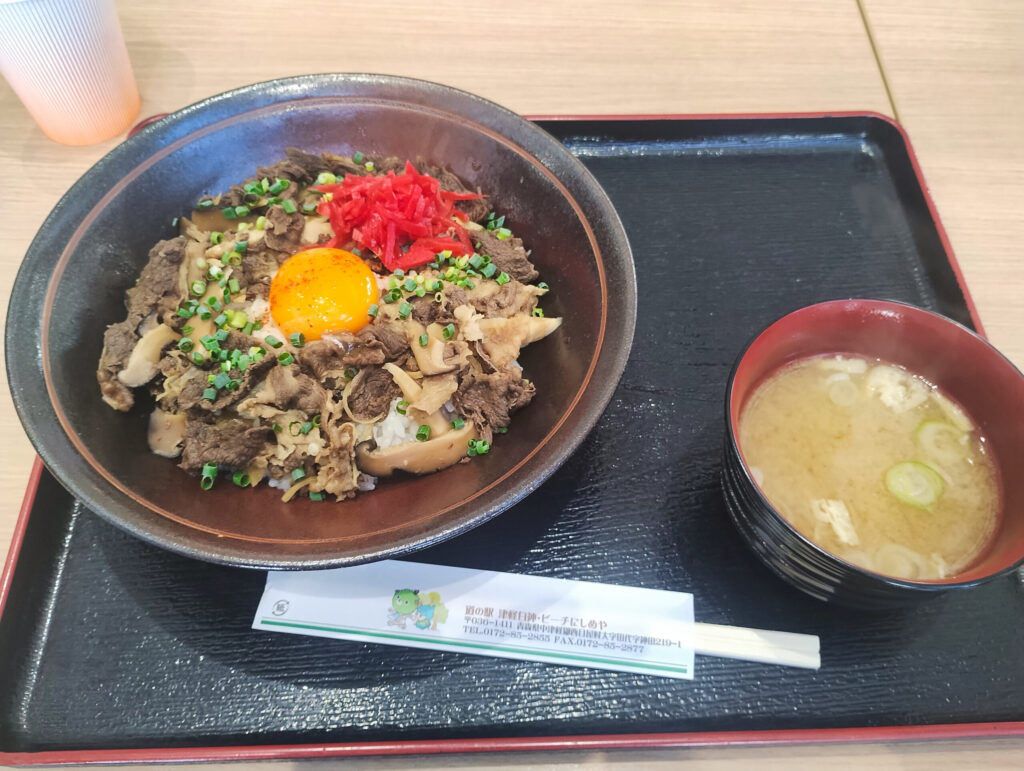
Among the participants, some watched curiously as I took the first bite, asking what it tasted like. Reactions varied — some found it delicious, others noted the distinctive flavor. But what we all felt, without exception, was this: this, too, is part of Shirakami-Sanchi. To walk the forest, and then to receive its gifts — that is the true reward of coming to this place.
With the meal finished, we set off for home. Through the bus windows, the Shirakami mountains receded into the soft afternoon light.
Two days in the mountains — the severity of Iwaki-san, and the gentleness of Shirakami. Two utterly different mountains had given us something in common: an encounter with the diversity of nature, and a humility in the face of it.
The golden light of Shirakami-Sanchi is etched somewhere deep in my chest. I closed my eyes quietly, hoping this forest will endure for generations to come.
LOG SUMMARY
Equipment Notes: